Robot Dog Buys Groceries: Risk Control Before Payment in Embodied AI
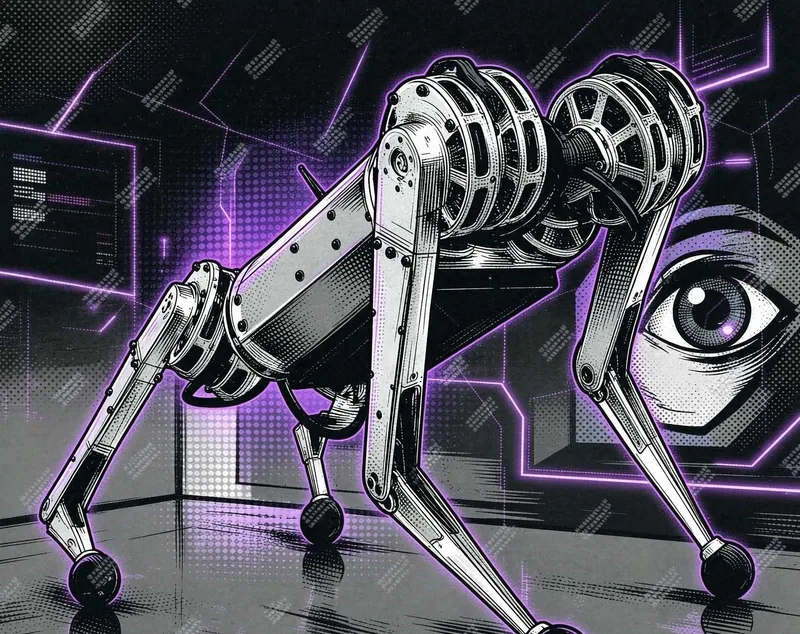
A quadruped robot dog moved through a commercial venue, located a stall, checked the goods, placed an order, and paid automatically, with no human intervention.
This was the September Bund Conference demonstration by Amap Momentum’s robot dog “Tutu,” described as the world’s first embodied AI product with full payment capability.
Beside it, Qwen AI glasses scanned products to complete payment, while iFlytek’s smart agent earphones handled phone credit top-ups and online orders via a single voice command.
Payment has crawled out of the phone. In fintech, that is more interesting than embodied intelligence itself.
The mainstream view calls it an interaction upgrade, an extension of frictionless payment. The article argues the opposite: the real hurdle for embodied AI payment is not perception or motion but liability attribution.
If a robot dog orders the wrong thing, or is induced to buy something it should not, who bears the cost?
Ant Group Vice President Yin Jun said finance has moved past debating whether to use AI and entered a stage of scenario deployment and value realization. The premise is that risk-control models can keep pace with expanding payment scenarios.
Ant Consumer Finance Chief Risk Officer Lin Jianan offered data: intelligent scenario risk control can identify more than 230 sub-scenarios—daily consumption, large purchases, travel, education—and match dedicated credit lines. Year to date, scenario-based precise limit increases rose 30% year on year, and non-performing loan rates for scenario-based credit users were 20% lower than overall users.
The numbers look good, but their subject is “users,” not “agents.” The 230 scenarios cover people ordering via phones, not robot dogs ordering for people.
When a person pays by phone, each action reflects clear intent. When a robot dog buys groceries, the intent is a remote procurement instruction; from instruction to payment, the dog must judge whether goods are acceptable, prices reasonable, and quantities accurate.
Each judgment can fail. For liability after failure, exhibition staff gave no answer, saying only that every transaction is protected by Alipay trusted identity authentication, with real-time tracking and full user control.