WRC 2026 Highlights: 100 Official Exhibits, 10 Categories
Why it matters: the official 100-exhibit selection shows nearly half of WRC 2026 sitting in supply-chain layers, and a full lineup of humanoids, quadruped robots and dexterous hands redefining what robots can do.

Embodied AI Frontier | August 2026
The organizing committee of the 2026 World Robot Conference (WRC 2026) published 100 officially selected "highlight exhibits" before the doors opened. Read the list closely and a clear structure emerges: 26 core components, 9 perception and compute products, 6 dexterous hands and tactile sensors, and 7 data, simulation and open-platform entries. That is 48 of 100, nearly half of the official selection, sitting in the supply chain layer rather than on the robot itself.
The other half is just as telling. Eleven humanoid platforms share the floor with a 160-centimeter body that can run, jump and backflip; a boiler water-wall inspection robot that compresses an overhaul from three weeks to one; a tactile glove with 368 sensing points; and a group-control system that orchestrates 200-plus robots in synchronized performance with sub-50-millisecond sync error.
Component makers now compete side by side on planetary roller screws, harmonic joint modules, encoders, tactile sensors and data-collection kits, with at least two suppliers in nearly every link. Whole-machine vendors, meanwhile, have mostly stopped selling "can walk" and started selling "can work," naming factories, warehouses, classrooms, kitchens and hospitals as their target floors. When the flagship annual show of China's robotics industry arranges its showcase this way, the industry's center of gravity has moved. The question is no longer whether humanoid robots can stand up, but who can supply the chain, scale the line and own the scene.
Article structure
- 1. Humanoid Robots (11 Exhibits)
- 2. Quadruped and Legged Robots (7 Exhibits)
- 3. Dexterous Hands and Tactile Sensing (6 Exhibits)
- 4. Core Components: Joints, Screws and Motors (26 Exhibits)
- 5. Perception and Compute: Chips, Vision and LiDAR (9 Exhibits)
- 6. Inspection, Special Operations and Industrial Applications (9 Exhibits)
- 7. Medical, Rehabilitation and Elderly Care (5 Exhibits)
- 8. Commercial Service and Home Consumer (16 Exhibits)
- 9. Data, Simulation and Open Platforms (7 Exhibits)
- 10. Mobile Chassis and Composite Platforms (4 Exhibits)
- 11. Industry Trends: What the 100 Exhibits Say
WRC 2026 runs August 19-23 at the Beiren Yichuang International Convention and Exhibition Center in Beijing E-Town (Yizhuang), the 11th edition of the event, under the theme "Symbiosis of Humans and Machines, Integration of Production and Demand." At the official press conference on July 6, organizers disclosed more than 300 exhibitors, an expected 2,000-plus exhibits, 150-plus debut products and 60-plus side events. Of the four exhibition halls, the 20,000-square-meter Zhichuang (Intelligence and Innovation) Hall opens for the first time; together with the Zhihe (Intelligence and Cooperation), Zhizao (Intelligence and Manufacturing) and Zhiqu (Intelligence and Discovery) halls, it maps the industry chain from core components to complete robots and from R&D to application scenarios. Before the opening, the organizing committee's official website published the full "Highlight Exhibits" list: 100 products, each with an official image and description. This article walks through all 100 by category and closes with three independent reads on where the industry is heading.
1. Humanoid Robots (11 Exhibits)
The 11 humanoid platforms trace two parallel lines. One line treats high-dynamics motion and hard labor as the design brief, making running, jumping, payload and reliability into measurable specs. The other writes the scene into the product definition, with education, guided tours, homes and stages each getting their own machine. Where the two lines meet, "can work" is replacing "can walk" as the main storyline of the category.
1.1 High-Dynamics and All-Around Work Bots
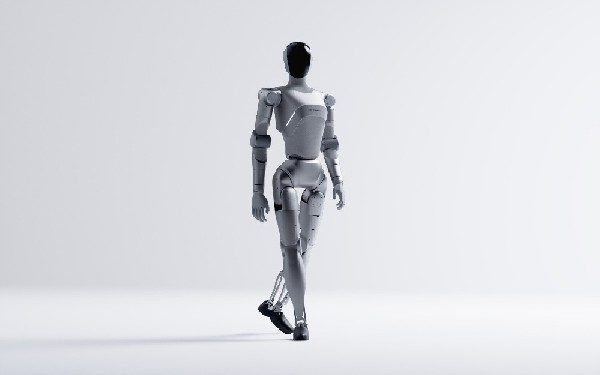
Fig 1 LimX Dynamics · LimX Luna full-size interactive humanoid robot
LimX Luna (LimX Dynamics): A 160-centimeter humanoid wrapped in soft materials with a feminine design, 27 degrees of freedom and a quick-release structure that supports running, jumping and backflips. A voice large model enables continuous dialogue and continuous commands, while gesture recognition and pose mimicry round out the interaction layer. Capabilities such as dance, motion, speech and vision are atomized so the system can parse customer requirements automatically and compose scene modes on the fly. Group control from a tablet coordinates 200-plus robots in synchronized or differentiated performances with motion sync error below 50 milliseconds, and the fleet can be extended with other robots and agents.
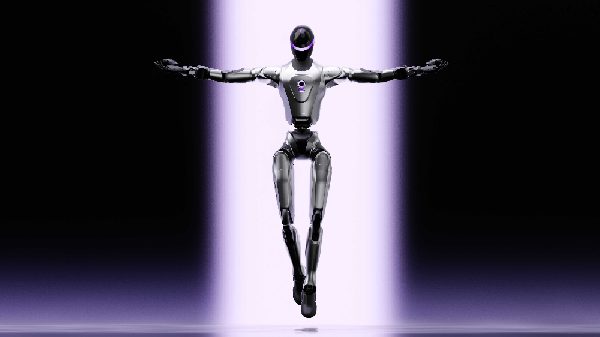
Fig 2 MagicLab · MagicBot X1
MagicBot X1 (MagicLab): Built around real application scenarios, the X1 carries 31 degrees of freedom and peak joint torque up to 400N·m. Aviation-grade lightweight materials and a dual hot-swappable battery design support 7×24 continuous operation. Open software and hardware interfaces allow AI algorithm deployment and secondary development, and the robot can be quickly adapted to inspection and security, industrial manufacturing, logistics delivery, guide and reception, events and entertainment, and public services.
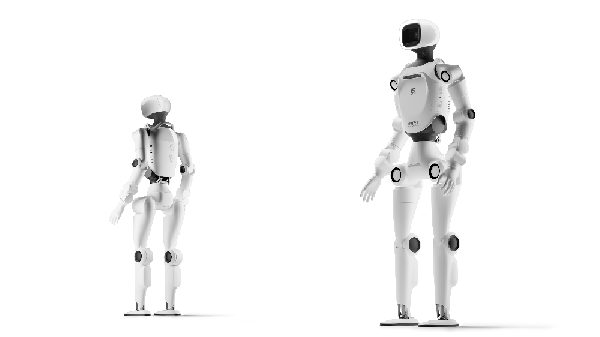
Fig 3 X-Humanoid (BHRIC) · TianGong Omni
TianGong Omni (X-Humanoid, BHRIC): The flagship platform of Beijing's humanoid robotics innovation center, now branded X-Humanoid (BHRIC), offers strong compute and rich degrees of freedom, with a full-stack open architecture that makes secondary development easy. It meets CE and CR certification standards, survives drop-level impacts with high stability, and uses multimodal perception to support movement across scenes while building an expansion ecosystem for future applications.
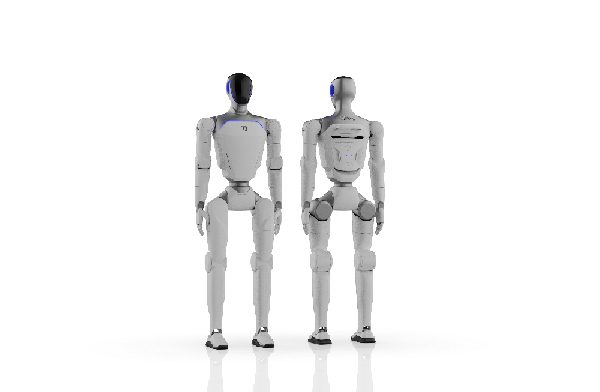
Fig 4 Galaxea · Kengo
Kengo (Galaxea): A 1.4-meter bipedal design with a curved display on the head. Single-joint torque exceeds 130N·m, enough to replicate demanding maneuvers. The whole-machine design is built for reliability: ten falls and drops leave it intact, and the fully hollow modular structure gives cable-bending life of more than 200,000 cycles, cutting maintenance costs over long commercial operation.
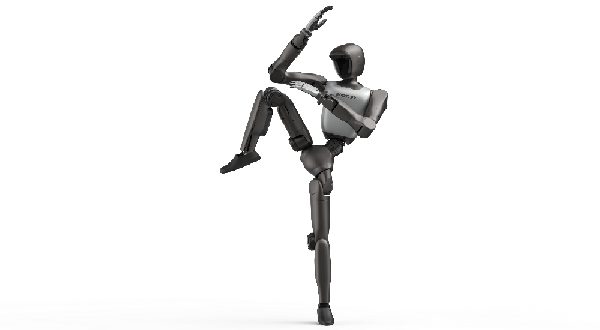
Fig 5 Accelerate Evolution · Booster T2
Booster T2 (Accelerate Evolution): Positioned as a flagship embodied-development platform with top-tier onboard compute, building a complete loop from perception to understanding to response. The marketing claim is direct: it not only sees the world, it understands it, and responds naturally and accurately across scenarios, giving developers a high starting point for embodied AI development.
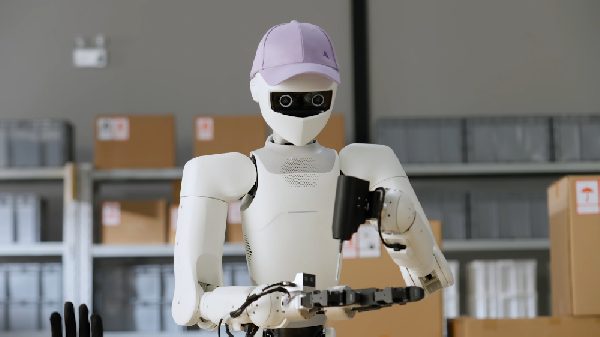
Fig 6 Astribot · Astribot T1
Astribot T1 (Astribot): End-effector top speed exceeds 10m/s and maximum acceleration exceeds 100m/s², with a chassis top speed of 2.0m/s, covering fast grasping, handling and dynamic manipulation. End-effector payload reaches 5kg with repeat positioning accuracy of ±0.3mm. Runtime is roughly 2.5 to 4 hours, charging takes no more than 1 hour, and the robot supports battery quick-swap and automatic recharging, backed by a full secondary-development toolchain.
1.2 Scene-Customized and Open Platforms
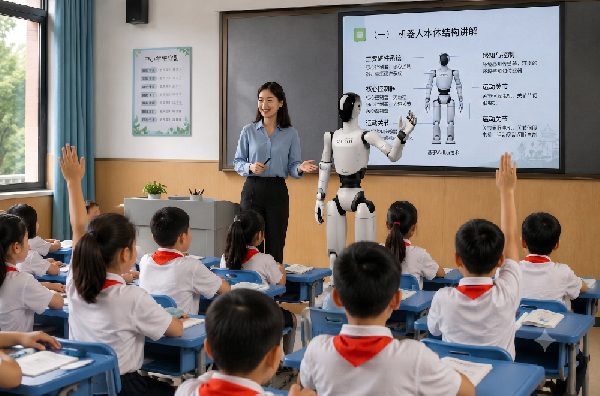
Fig 7 UBTECH · TutorC
TutorC (UBTECH): A teaching-assistant robot for schools. It enters real classrooms and campuses under teacher guidance to help with explanation, demonstration, interaction, recording and some standardized service work. It can deliver lesson introductions, knowledge points and class summaries, make abstract content concrete through movement, gestures, facial expressions and body language, and run classroom Q&A with guided interaction. Teachers can pause, skip, modify or take over at any time; nothing executes until the teacher confirms it.
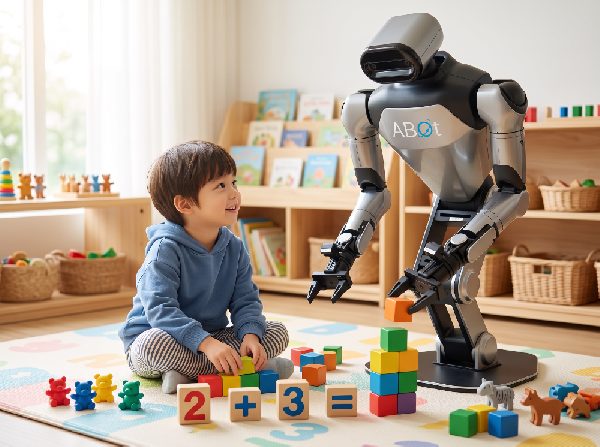
Fig 8 Glide Momentum · Glide Momentum humanoid robot
Glide Momentum Humanoid Robot (Glide Momentum): Built by the robotics arm of AutoNavi (Gaode Maps), the company behind China's leading navigation app, this humanoid is designed for real-scene service on the in-house ABot full-stack technology system with closed-loop iteration. It claims millimeter-level perception and centimeter-level manipulation, and supports one-click deployment in homes, stores, parks and guided-tour scenarios, showing how a map platform extends spatial intelligence into embodied intelligence.
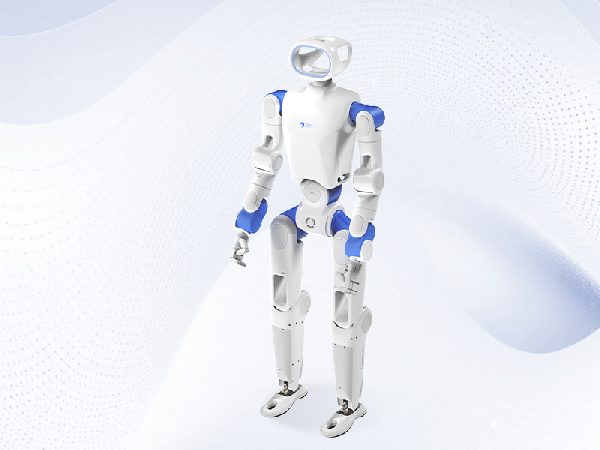
Fig 9 RoboParty · ROBOTO 01 (RP1)
ROBOTO 01 (RP1) (RoboParty): An open-source humanoid platform for individual developers, research and education. Modular construction offers 24/30 degrees of freedom, a top speed of 4m/s, a rated per-arm payload of 5kg and at least 3 hours of runtime. It carries an in-house power module, the BFM motion foundation model and a VLA system, supports hot-swap batteries and optional heads, dexterous hands and perception sensors, and opens up its software and hardware development ecosystem.

Fig 10 BIGAI · Whole-Body Collaborative Humanoid for Home Tasks
Whole-Body Collaborative Humanoid (Beijing Institute for General Artificial Intelligence, BIGAI): Focused on whole-body collaborative work in home scenes, it chains together walking, squatting and dual-arm operation into continuous multi-pose motions, autonomously handling tidying, retrieval and opening and closing cabinet doors. It adjusts its posture dynamically according to the space, improving flexibility and adaptability in complex home environments, with noticeably smooth motion flow and home practicality.
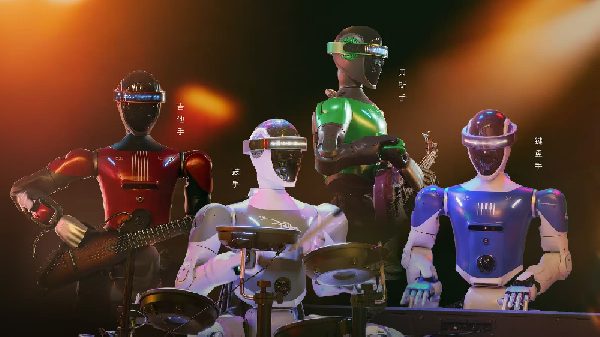
Fig 11 CAS-Bot · CASBOT BAND robot band
CASBOT BAND (CAS-Bot): A robot band that performs on stage alongside human singers, delivering multiple classic tracks in timed segments. It combines robot motion control with stagecraft to demonstrate what humanoid robots can do in group performance and entertainment.
2. Quadruped and Legged Robots (7 Exhibits)
Quadrupeds are splitting into specialized versions faster than most expected. Explosion-proof, heavy-load and wide-temperature variants answer the question "where can it go," while open-environment autonomous working versions answer "what can it do once it gets there." Both are on the same floor.
2.1 Heavy-Duty and Special-Duty Quadrupeds
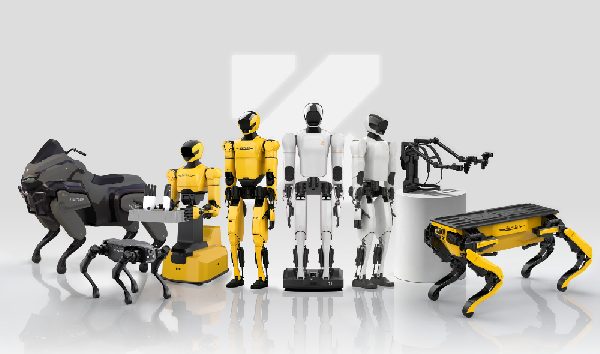
Fig 12 Kepler Robotics · Qilin series heavy-load quadruped
Qilin Series (Kepler Robotics): A large, long-endurance quadruped built for heavy loads, leveraging in-house planetary roller screws to reach near-ton-class full payload. One charge delivers 8 hours of continuous walking, supporting all-day operation under high self-weight and load. Whole-machine IPX5 protection and IP67 on core components, a 45° maximum climbing grade, and the ability to walk, jog, cross obstacles and wade outdoors suit it to industrial transport, mountain logistics and emergency rescue.
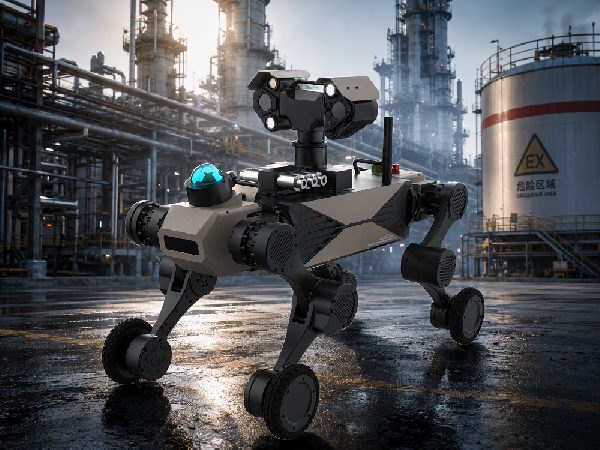
Fig 13 GENISOM AI · Shot Put SP1
Shot Put SP1 (GENISOM AI): An explosion-proof quadruped with Ex IIC T6 Gb design, all-terrain mobility and sustained stable operation in flammable and explosive environments, aimed at inspection and hauling in petrochemical and other high-risk settings.
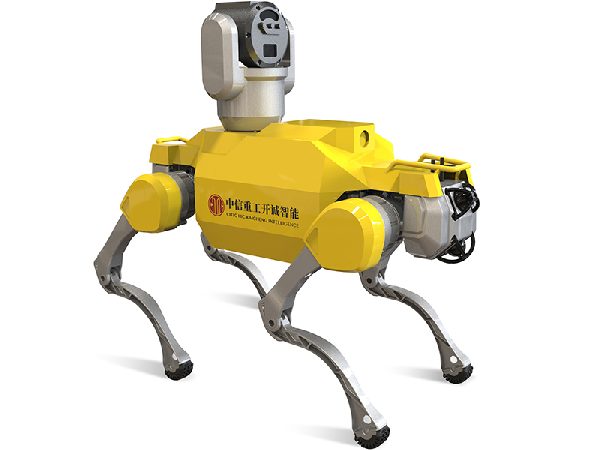
Fig 14 CITIC HIC · Explosion-proof quadruped inspection robot
Explosion-Proof Quadruped Inspection Robot (CITIC HIC): Built mainly for Class II explosive atmospheres at petrochemical plants, oil and gas stations, hazardous-chemical plants and civilian blasting companies, it replaces manual inspection to reduce labor intensity and safety risks. A typical deployment of explosion-proof quadrupeds in industrial settings.
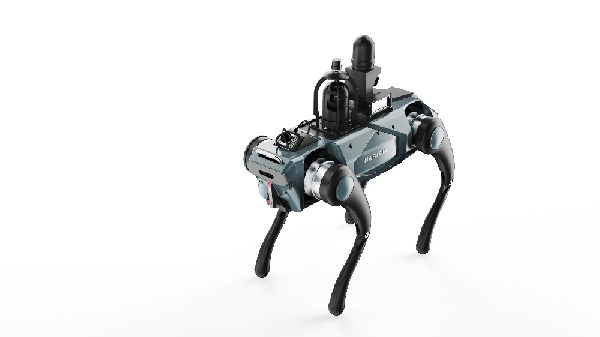
Fig 15 Huahui Robotics · XR-01
XR-01 (Huahui Robotics): Engineered for high-altitude inland environments with large day-night temperature swings. The torso structure, joint modules and battery modules all use protection ratings of at least IP67, and the system runs stably from -40℃ to +50℃. Long electrical endurance with fast autonomous charging supports high-load, high-efficiency continuous walking and complex terrain adaptation.
2.2 Intelligent Movement and Open-Environment Work
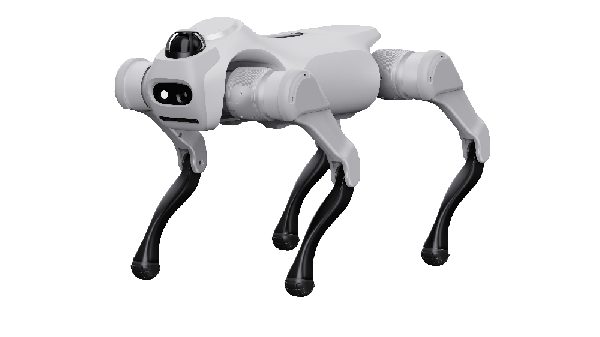
Fig 16 MagicLab · MagicDog T1
MagicDog T1 (MagicLab): Around 18kg, it can be carried and deployed by one person, with a sustained payload of up to 15kg and about 3 hours of no-load continuous operation, backed by auto-recharging and battery-swap options. It tops out at 5m/s, climbs 18cm obstacles and 40° extreme slopes, and walks stably over complex terrain. RGB/RGBD vision fused with a 16-line LiDAR enables autonomous navigation, smart obstacle avoidance, target tracking and real-time video transmission, and its hardware interfaces accept arms, inspection equipment and other industry modules.
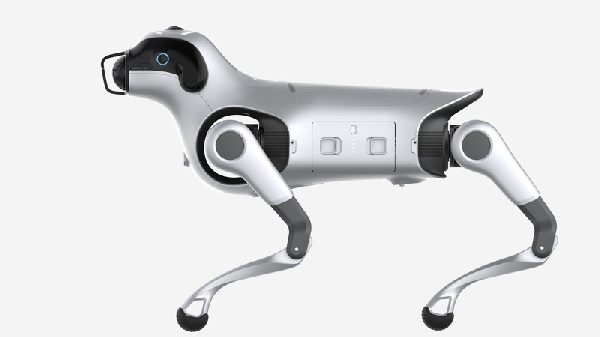
Fig 17 Glide Momentum · Tutu robot dog
Tutu (Glide Momentum): Claimed as the world's first quadruped that works autonomously in unstructured open environments. Built on the in-house ABot full-stack system with closed-loop iteration, it needs no preset routes or human remote control; it perceives in real time, decides autonomously and moves nimbly, understanding natural language and the rules of the physical world to extend human perception and action.
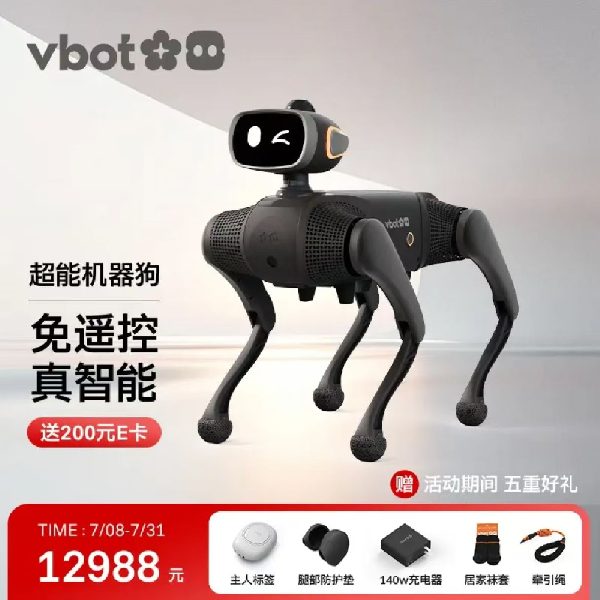
Fig 18 Vita Dynamics · Joyinside Edition super robot dog
Joyinside Edition Super Robot Dog (Vita Dynamics): No detailed specs were disclosed on the official page. Judging from the name and category, it is positioned as a consumer and family-oriented robot dog focused on companionship and entertainment.
3. Dexterous Hands and Tactile Sensing (6 Exhibits)
The organizers gave dexterous hands and tactile sensing their own category this year. A 20-DOF fully direct-drive hand, a 368-point tactile data-collection glove and high-precision force-tactile sensors share the floor, a sign that dexterous manipulation is moving from laboratory demos toward trainable engineering capability.
3.1 High-DOF Dexterous Hands
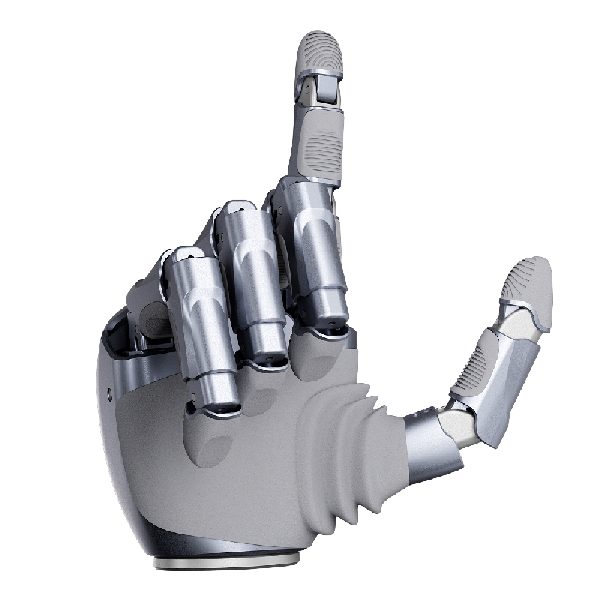
Fig 19 LinkerBot · Linker Hand O30
Linker Hand O30 (LinkerBot): A fully direct-drive dexterous hand that replicates human palm size and achieves 20 fully independent active degrees of freedom, one of the highest-DOF hands at this year's show. The high-DOF direct-drive approach supports fine, dexterous manipulation.

Fig 20 Xynova · Xynova prima direct-drive dexterous hand
Xynova prima (Xynova): A 22-DOF bionic design with full direct drive and zero backlash, decoupled motion for millisecond-level precision control, and vision-tactile multimodal fusion that is friendly to AI algorithms. It balances an extreme load-to-weight ratio with human-like engineering aesthetics, survives a million-cycle durability test, and handles wide-temperature operation with impact resistance.
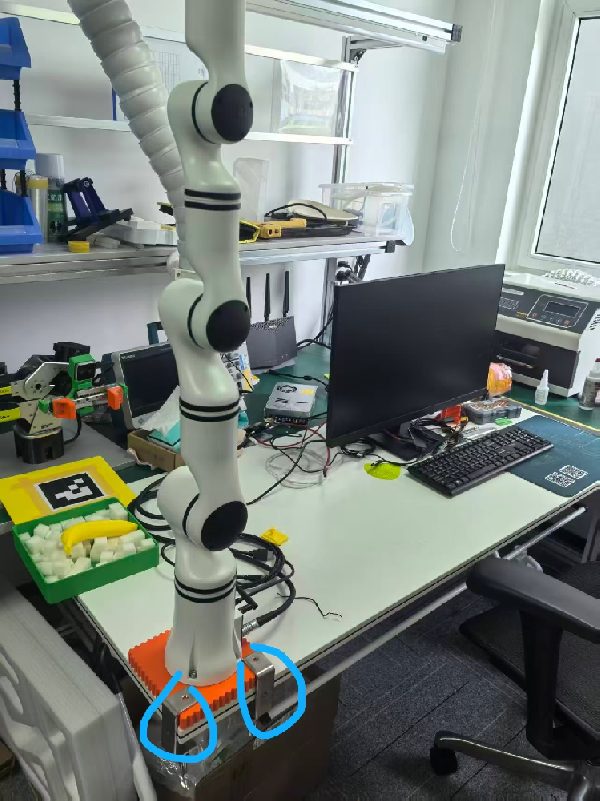
Fig 21 Leadshine · DH116 series enhanced dexterous hand with multi-axis force-tactile sensor
DH116 Series Enhanced Dexterous Hand with Multi-Axis Force-Tactile Sensor (Leadshine): An integrated combination of an enhanced dexterous hand and a multi-axis force-tactile sensor, emphasizing sensitivity, high precision, multi-dimensional sensing and internal cabling. It provides a force-feedback loop for dexterous operation and is a typical "hand plus touch" combination solution.
3.2 Tactile Sensing and Precision Feedback
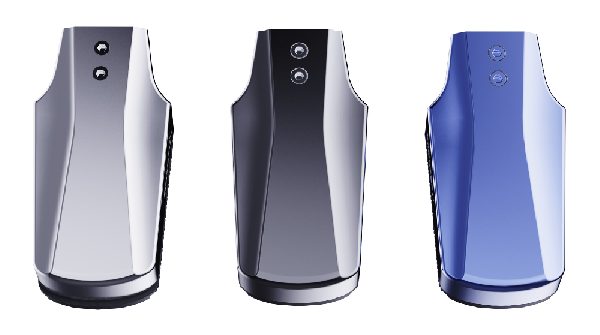
Fig 22 Huaweike · Wanxiang series ultra-high-precision tactile sensor
Wanxiang Series Ultra-High-Precision Tactile Sensor (Huaweike, 华威科): Accuracy reaches 1%FS with repeatability of 0.5%FS, trigger force as low as 0.05N and measurement resolution of 0.04N. Time drift stays within 1%FS/h and temperature drift within 0.06%FS/℃, with a maximum 200N range and over 7x overload capacity. UART/IIC/SPI protocols are supported, and waterproof, heavy-load, high-precision, miniature and 3D-force variants are available.
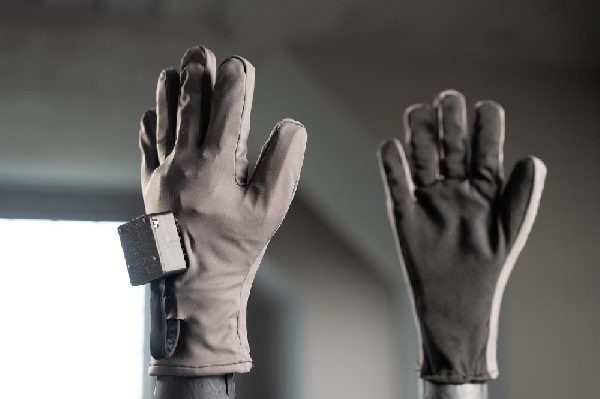
Fig 23 Moxian Tech · Tactile data-collection glove
Tactile Data-Collection Glove (Moxian Tech, 墨现): Measures hand contact-pressure distribution for contact-timing judgment in manipulation and force-feedback learning in dexterous-operation training. Based on flexible pressure sensing built on percolation materials, the standard configuration provides 368 sensing points at a density of 9 points/cm², breaking the bottleneck of achieving high spatial resolution on flexible fabric.
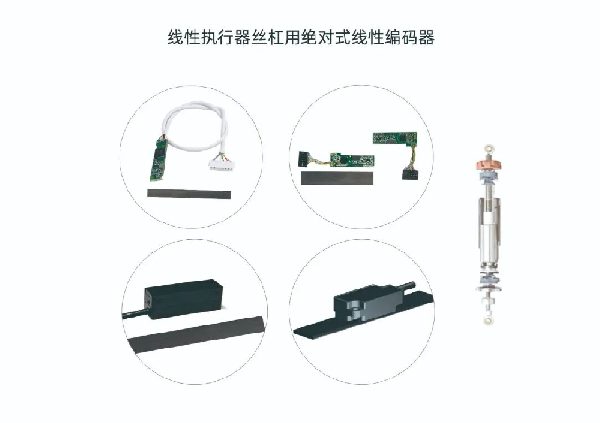
Fig 24 Sinomags · Linear encoder
Linear Encoder (Sinomags, 希磁): Resolution of 0.05μm and repeatability of 1μm, with travel customized on demand. It shrugs off dust, vibration and oil contamination, suiting precision linear scenarios such as robot dexterous hands, linear actuators, linear motors and servo modules.
4. Core Components: Joints, Screws and Motors (26 Exhibits)
Twenty-six core components form the largest single category in the 100-exhibit official selection. From planetary roller screws and harmonic joint modules to encoders, torque motors and oil seals, every link of the humanoid supply chain has a corresponding exhibit. "Full chain" finally has physical evidence.
4.1 Joint Modules
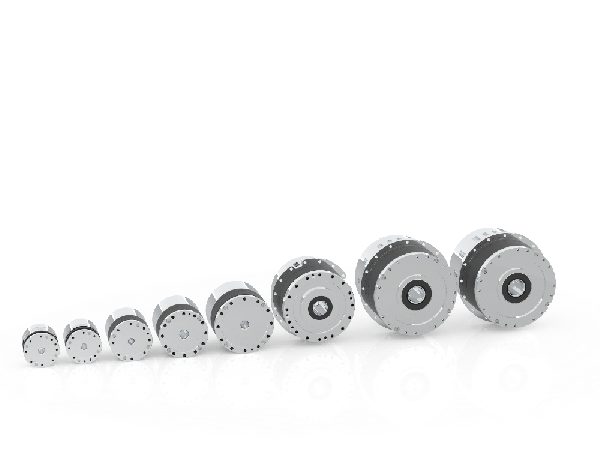
Fig 25 Crabnova · Harmonic joint module
Harmonic Joint Module (Crabnova, 巨蟹智能): High torque density with extreme lightweighting and compact structure to raise whole-machine integration and load performance. It comes with 23-bit high-resolution dual magnetic encoders for dead-angle-free position feedback, a fully integrated drive and control system fused with motor control algorithms, and a high-performance frameless motor directly coupled to an in-house precision harmonic reducer with transmission backlash under 30 arcseconds. Brakes and force-control sensors are optional for emergency-stop protection and high-dynamics force-control scenes.
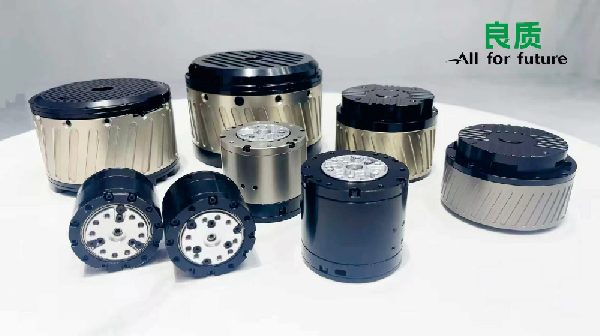
Fig 26 Liangzhi Joints · Planetary joint module
Planetary Joint Module (Liangzhi Joints, 良质关节): No detailed specs were disclosed on the official page. From the name and category, it is positioned as a planetary-reduction joint module for humanoid robots, supplying joint components on the planetary-reduction technology route.
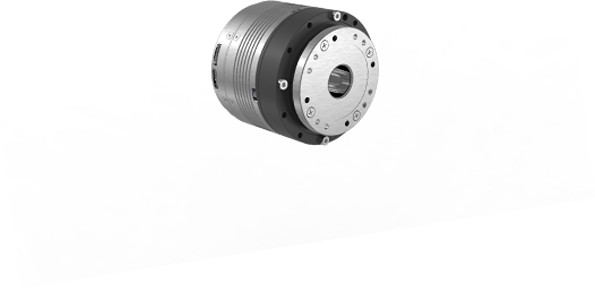
Fig 27 Zhuoyu Electric · Harmonic module