Boston Dynamics Spins Off Dynamic Creatures to Rent Plush Robot Dogs
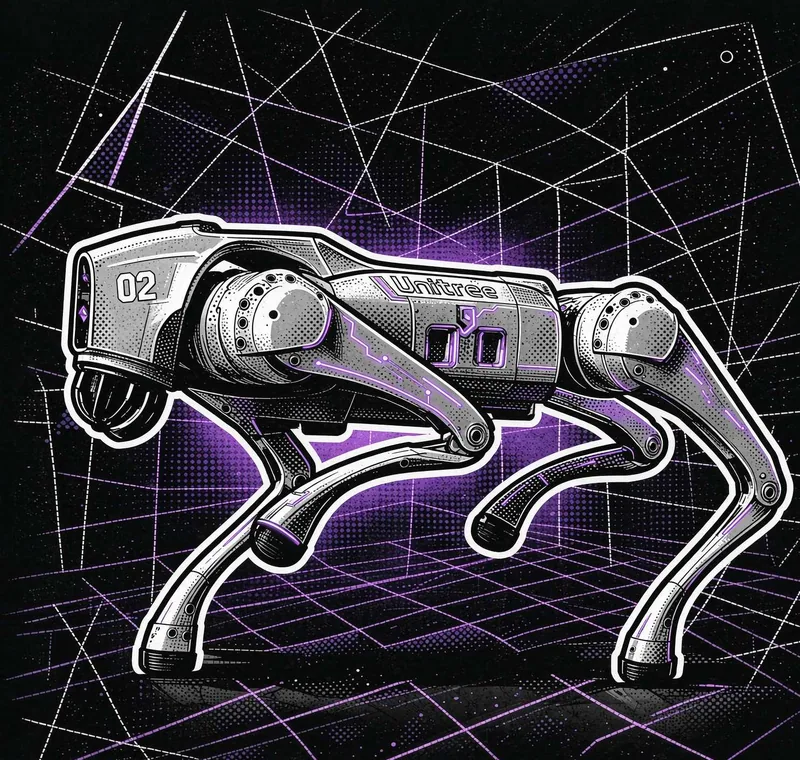
A Spot robot dog had its sensor array and industrial shell removed, then was covered in purple plush, blinking eyes, and a grinning mouth. At a September 8 launch event, it wobbled out from behind the camera like a poodle eager for a hug.
No one mentioned its ability to climb stairs in rubble or asked how many kilograms it could carry. Its job now is to make tourists reach for their phones.
Boston Dynamics has spun the business into a new company called Dynamic Creatures. Its CEO is Marc Theermann, former chief strategy officer at Boston Dynamics and a Google alumnus. Its CTO is Farbod Farshidian, formerly a research lead at the RAI Institute who worked on Atlas's agile locomotion. A commercialization executive paired with a motion-control expert, making plush robot dogs: the combination itself is a statement.
A mainstream view would call this Boston Dynamics doing entertainment as a downgrade, a natural extension of technology spillover, or a high-end platform finding new scenarios. The contrarian assessment is the opposite: this is not a downgrade but a remedial lesson. The company has spent three decades at the top of robotics engineering, yet it never truly learned how to make ordinary people want a robot.
Atlas can backflip, Spot can inspect oil fields, and Stretch can move boxes. Each is an engineering masterpiece, and each has a tiny pool of buyers. After Hyundai Motor took full ownership of Boston Dynamics, Atlas's target became 30,000 units a year by 2028 for Hyundai and Kia factories. For a factory capacity that is volume; for a consumer product category it is less than a rounding error.
So Dynamic Creatures is not chasing the label of entertainment robot. It is chasing the rental model. Theermann said clearly that character robots based on existing platforms can be deployed within months and will be rented rather than bought. Theme parks and cruise lines would not need to spend millions upfront on a pack of robot dogs; they could pay monthly.
That logic bypasses the biggest obstacle to hardware sales: customers cannot make the return on investment add up. An industrial Spot sells in the $100,000 range. For a theme park to deploy a robot fleet that creates an interactive experience, the hardware investment alone could fund a live performance team for years. Rental turns capital expenditure into operating expenditure and changes can we afford it into are we willing to try it.
On the demand side, the data does show movement. Hong Kong Disneyland launched the free-roaming robot Olaf in April this year, interacting with guests in the Frozen area. MSC Cruises has already tested Unitree robot dogs on the Bellissima this year, arranging meet-and-greets, parades, and children's workshops. In August, AgiBot signed a strategic partnership with Chimelong to build what it calls the world's first embodied AI theme park, covering robot circus shows, cyber parades, and robot service hotels. These moves point to one signal: the themed entertainment industry has real demand for moving characters and is willing to adjust operations for them.
But the technical path of Dynamic Creatures is narrower than its own marketing suggests. The core capability of the SnowJay platform is converting animation data into robot motion, paired with reinforcement learning to make movement natural. This works on Spot's quadruped chassis because Spot's motion control is already the industry ceiling. The key to an interactive character, however, is not locomotion but decision-making. When a visitor approaches a purple robot dog, the dog must judge whether the person is smiling or nervous, and whether to crouch for a touch or leave after the photo. SnowJay integrates third-party embodied reasoning models for scene understanding, but public information contains no data on real-time interaction success rates. Whether the interactions in demo videos are scripted or live is unknown.
The real question is not whether the first purple robot dog will be popular in a theme park. It is whether Disney will buy one. Disney has spent decades on Audio-Animatronics, and this November a new project at Animal Kingdom will feature a next-generation animatronic figure. Disney's figures are fixed on stage; Dynamic Creatures' robots roam the floor. If Disney chooses external procurement instead of in-house development, that would show the mobile interactive character category has taken hold. If Disney keeps building behind closed doors, Dynamic Creatures' customer list may forever be limited to mid-sized parks without their own R&D.
Boston Dynamics has placed its commercialization bet in a field it does not excel in. For 30 years it excelled at keeping robots from falling. Now it must learn to make robots liked.