Live Briefs 2026-10-03 · Full coverage of embodied AI
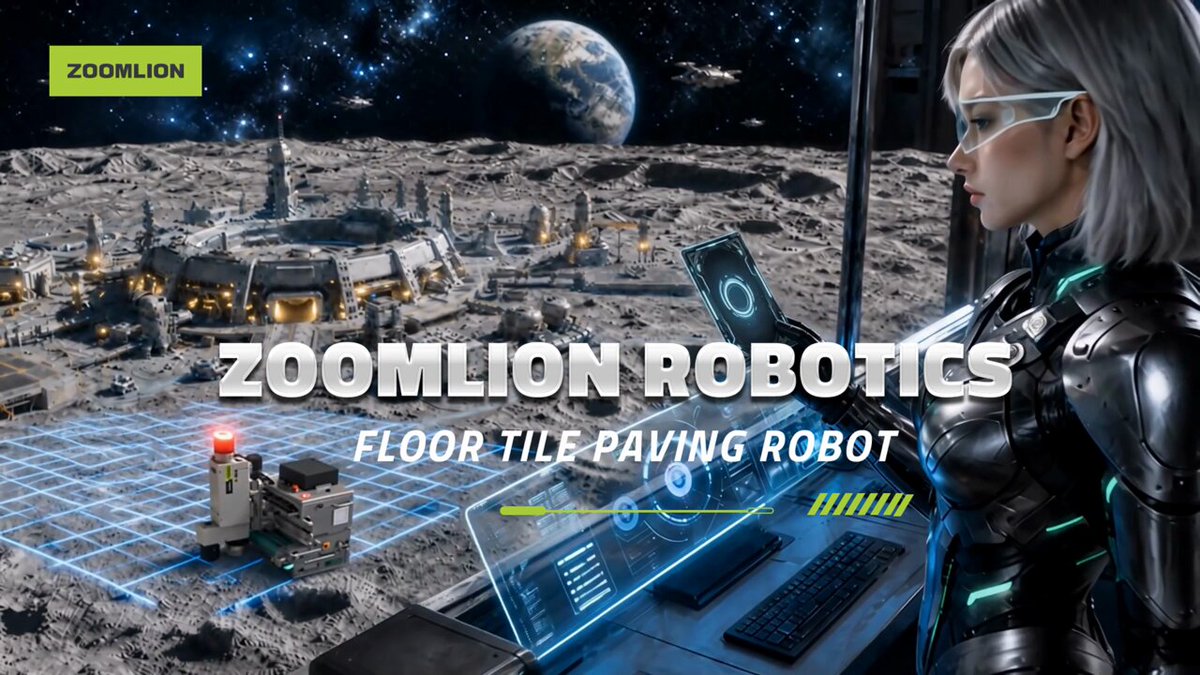
ZOOMLION unveils floor tile paving robot with 3 mm accuracy
ZOOMLION has introduced a floor tile paving robot that pairs laser sensing with integrated pressing and grinding. The machine offers efficiency of up to 24 m² per hour, with paving accuracy held within 3 mm over a 2-meter span.
Swarmer to acquire Ukrainian UGV maker Ratel Robotics for up to $224M
Swarmer Inc. has agreed to acquire Ukrainian uncrewed ground vehicle maker Ratel Robotics in a cash-and-stock deal worth up to $224 million if earnout milestones are met. The deal would add more than 300 Ratel employees to Swarmer and combine battle-tested UGVs with Swarmer's swarm-control autonomy software.
Sanctuary AI Highlights Episodes 60-64 on Dexterous Manipulation
Sanctuary AI has published highlights from episodes 60 through 64 of its Robots Doing Stuff series. The five episodes cover different sides of automating complex physical work, including welding, failure recovery, bimanual threading, power tool use and delicate object handling. The company says the episodes showcase a range of Physical AI and dexterous manipulation capabilities under development at Sanctuary AI.
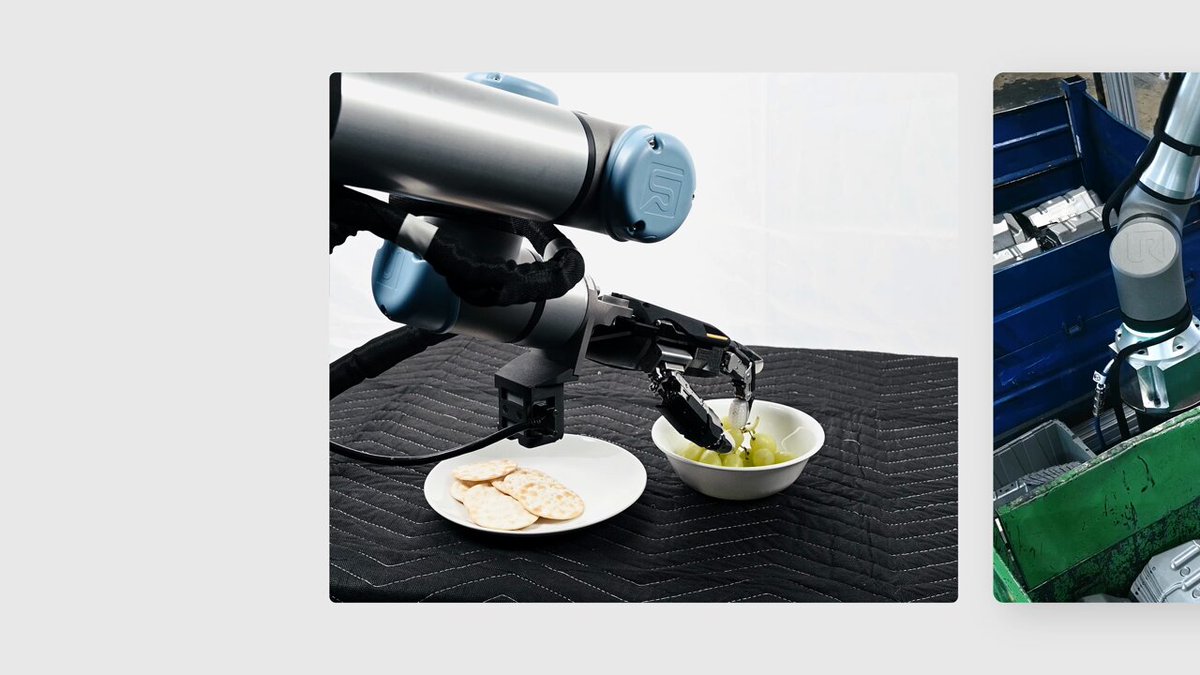
Agility Details How Digit's Safety Systems Evolved Across Generations
Agility published a look at how the safety systems on its Digit humanoid have evolved across generations. The company said the safety architecture improves through real-world experience, and the piece covers lessons learned from deploying Digit in industrial environments.
Boston Dynamics posts corrected software update notes
Boston Dynamics published a corrected notice pointing robot owners to its software update and release notes, asking users to refresh their robots' software and check the notes.
Skild AI hits $100M ARR 10 months after starting deployments
Skild AI said it reached $100 million in annual recurring revenue within 10 months of beginning deployments. The company's robots are now working on factory lines, on construction sites, in kitchens and in data centers, taking on tasks including cleaning, welding, building and cooking.

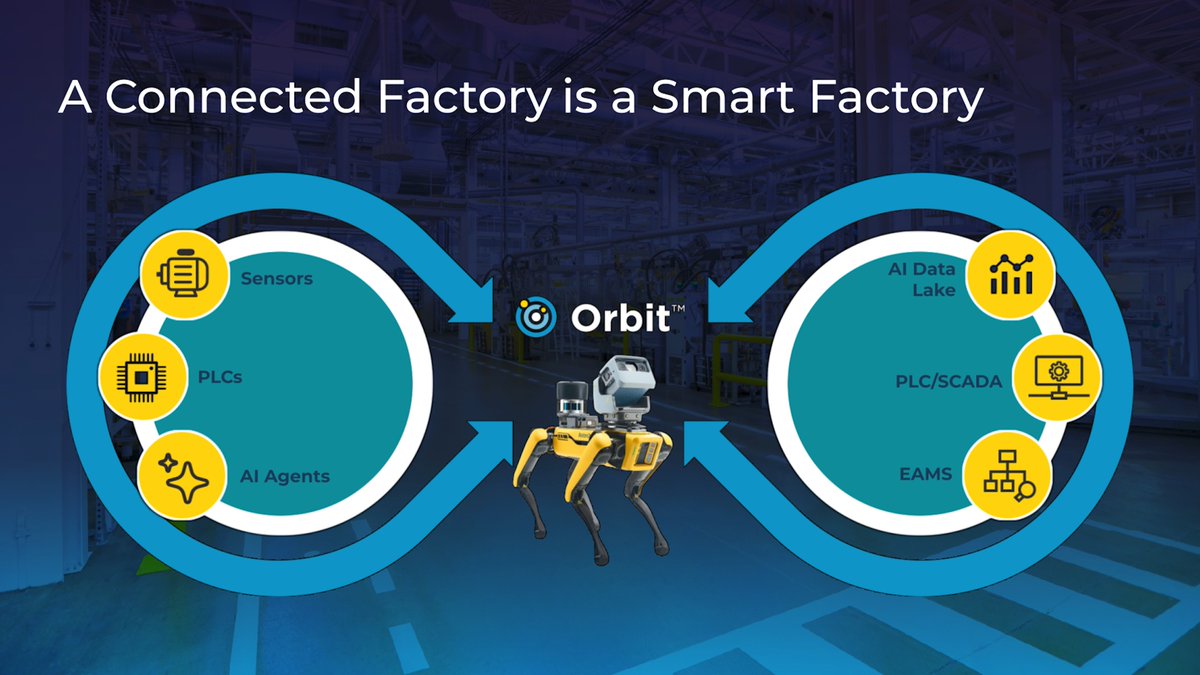
Boston Dynamics ships Spot and Orbit 5.2 with agentic workflows
Boston Dynamics released Spot and Orbit 5.2, a software update that adds a connective layer aimed at breaking down data silos at industrial sites. The company says the release enables agentic workflows that reason across plant systems, so Spot robots can be deployed where they are actually needed.
RoboSense to Sell Embodied Robot Business in Connected Deal, Focus on Core Parts
RoboSense announced plans to sell its embodied robot complete-machine business and assets for RMB 59.878 million. The buyer is 35% controlled by Chairman and Chief Scientist Dr. Qiu Chunxin, making the deal a connected transaction aimed at optimizing robot business layout and strengthening core operations.
RoboSense Divests Embodied Robot Business to Focus on Core Components
RoboSense is selling its embodied robot business and assets for RMB 59.878 million to refocus on core robotics components.
Huashi Technology Discloses Robot-Related Business via Investment in Yuchuang Robotics
Huashi Technology (301218.SZ) stated on an investor platform that it is involved in robot-related business, mainly through an investment in Hangzhou Yuchuang Robotics Technology Co., Ltd.
Humanoid Robot Learns to Sprint and Spin Kick via AI Trained on Human Motion
A humanoid robot has learned to sprint and perform spin kicks using AI trained on human motion data. This advancement could lead to more versatile robots capable of handling a broader range of tasks in real-world settings.
PaXiniTech builds data, tech foundation for Physical AGI at scale
PaXiniTech says it is building the data and technology foundation needed to scale Physical AGI, with the goal of bringing embodied intelligence closer to real-world deployment. The company positions large-scale data and technology infrastructure as the prerequisite for moving embodied AI out of the lab and into practical applications at scale.
Noetix Robotics launches Scalabot sub-brand for robot brains
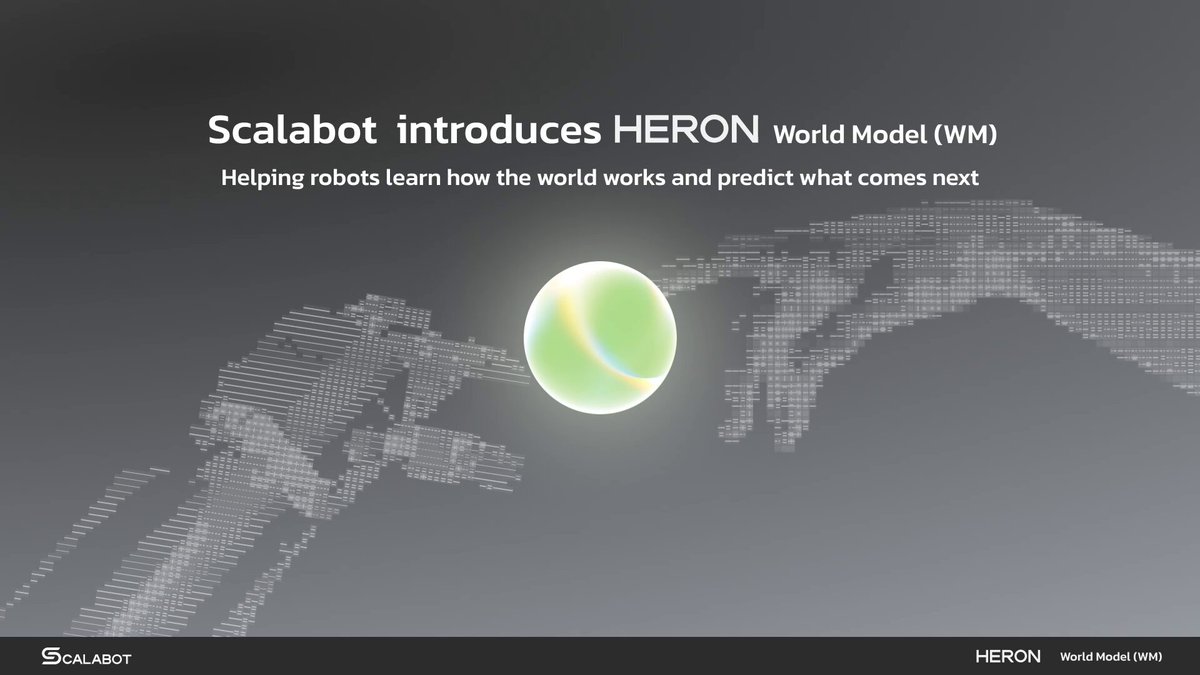
Noetix Robotics announced on September 8 the launch of Scalabot, a new sub-brand. The company is best known for building robot bodies, while Scalabot will focus on building the brains that power them. Noetix also released a video giving a quick look at what Scalabot is working on and where it is headed.
LimX podcast: RAI's Vera Kovaleva on memory and autonomous robots
LimX Dynamics shared an episode featuring RAI founder Vera Kovaleva, who gives an independent technical view on persistent memory, continuous learning and autonomous decision-making. She also discusses why open robotic platforms matter for developing and validating new intelligence, and how a sensing and acting body closes the loop from understanding to execution in changing physical environments.

Unitree open-sources UnifoLM-WLA-1.0 embodied model
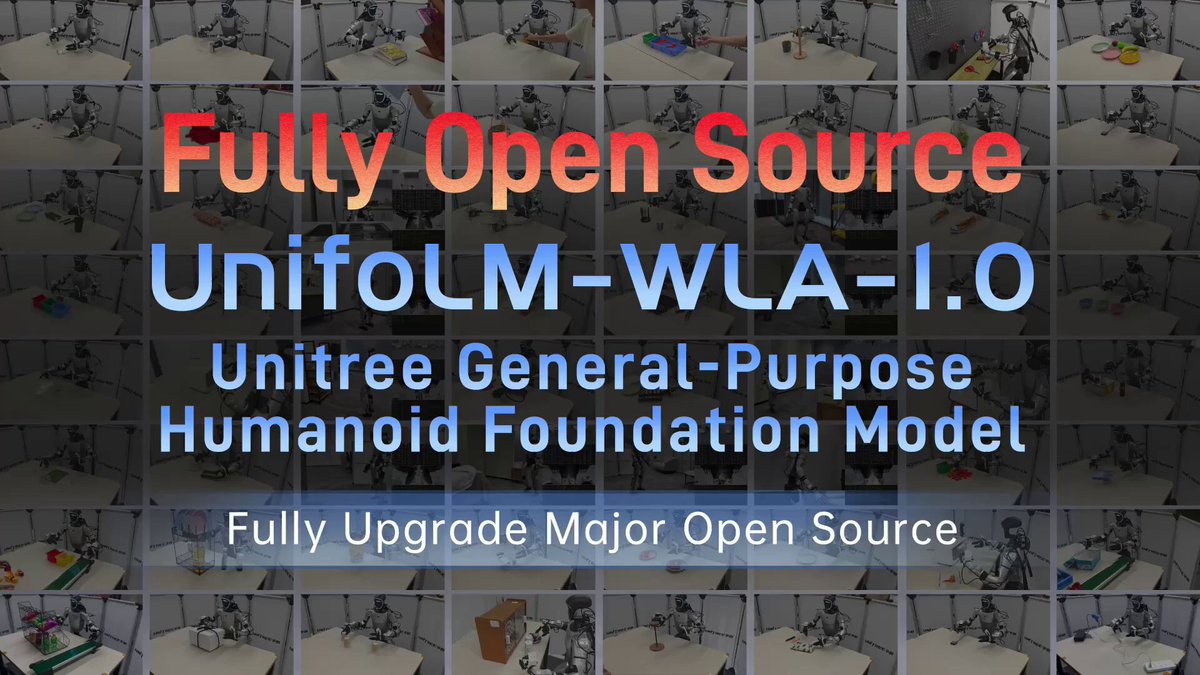
Unitree has fully open-sourced its UnifoLM-WLA-1.0 embodied foundation model, claiming new SOTA results across multiple benchmarks among open-source models worldwide. A single model coordinates desktop and whole-body mobile manipulation, and supports cross-task and cross-end-effector generalization.
China's Humanoid Boom: When Will Robots Get Their ChatGPT Moment?
China's humanoid robot industry is scaling fast, with five companies holding 86% of global shipments in early 2026, driven by low costs, heavy funding and a broad testing market. The real test is turning impressive demos into reliable, repeat-order commercial workers—a 'ChatGPT moment' that still awaits better data, software and safety.
Unitree Open-Sources UnifoLM-WLA-1.0 Embodied Foundation Model for Robot Manipulation
Unitree Robotics has open-sourced UnifoLM-WLA-1.0, an embodied foundation model that unifies tabletop and whole-body mobile manipulation and supports cross-task and cross-end-effector generalization.
Anlogic's Phoenix, ELF, Dragon Chips Enter Humanoid Robot Applications, Customer Validation
Anlogic Technology said at a recent investor briefing that some Phoenix, ELF and Dragon series chips have been adopted in humanoid robots and other fields. The chips mainly target motion-control and intelligent-perception modules and are undergoing product introduction and validation with head customers in the field.
Ananda (603350.SH) Says It Currently Has No Plans to Develop Robot Joint Modules
Ananda (603350.SH) said on an investor interaction platform on Sept. 10 that it currently has no plans to develop robot joint modules, without giving further details.
From Stage to Production Line: China's Humanoid Robot Industry Hits Mass Production Turning Point
XPeng Motors has launched an automated production line for its humanoid robot IRON in Guangzhou, aiming for mass production by the end of 2026. The move highlights China's rapid rise in the humanoid robot industry, where companies like Zhiyuan and Unitree dominate global shipments, though challenges remain in commercializing the technology.
UBTech Secures Over 50 Million Yuan in Overseas Orders, Accelerating Global Commercialization
UBTech has secured over 50 million yuan in overseas orders from Europe, Japan, and South Korea for its humanoid robots. The company reported strong H1 2026 financials, with revenue doubling and humanoid robot sales soaring, as it accelerates its global commercialization strategy.
Tactile Sensing Sector Booms as Chinese Sensor Firms Accelerate Commercialization
Tactile sensing has become a focal point in robotics as funding tops RMB 7 billion in 2026 and tactile sensor penetration in commercial humanoid dexterous hands rises above 60%. Chinese startups such as Qianjue Robotics are advancing multimodal tactile sensors, data collection systems, and VTLA embodied models to enable precision assembly and flexible grasping.
Robot 'Protest' in Warsaw Raises Question: Who's Liable for AI?
On September 7, about 30 robots staged a 'protest' in Warsaw, Poland, organized by Democratism to discuss AI's impact on jobs. The event, however, was a PR stunt by a robotics company CIO, highlighting the pressing issue of accountability when AI systems cause harm.
Hard Tech's Big Squeeze: Primary Market Frenzy Meets Secondary Market Doubt
China's primary market is pouring roughly 90% of hard-tech capital into the same handful of themes — AI, robotics, world models, fusion and commercial space — pushing valuations up within weeks. Secondary markets are far less convinced, as Unitree's post-IPO slide and Mech-Mind's flat debut show, while regulators warn against herd behavior.
Thundersoft: No Plans for Humanoid Robot Bodies, Focus on AIOS
Thundersoft (300496.SZ) said on an investor interaction platform that it currently has no plans to build humanoid robot bodies. The company instead emphasized its focus on AIOS and intelligent agents to help robots become AI carriers in the physical world.
Unitree Robot Learned to Fight, But That May Not Be the Point
Unitree's G1 humanoid robot was shown fighting a human in a fully autonomous demo, but independent analysis suggests the AI may run on an external computer. The real concern is not the fight itself, but the lack of safety frameworks for increasingly capable humanoid robots after a G1 kicked a child at an amusement park.
150 Companies Crowd Humanoid Robotics, but Building Robots No Longer Valuable
Funding in embodied AI has surged, with 7 companies now valued over 10 billion yuan, but over 77% of robot companies remain at seed or early stages. The real challenge is mass production and cash flow, not technology demos.
CyberHero Robot League: A Flashy Arena, Not a Fast Track for Tech Iteration
The CyberHero humanoid robot sports league launched in Riyadh, with plans for an eight-city global tour. However, an analysis argues that the entertainment-focused competition is unlikely to drive core breakthroughs in humanoid robotics technology.
InHand Networks Advances Embodied AI Robot Research for Industrial Flexible Manufacturing
InHand Networks (688080.SH) is conducting forward-looking research on embodied AI robots, focusing on 3D vision, dexterous actuators, motion control, and autonomous learning for industrial flexible manufacturing.
PHYMI Raises Nearly $100M in Seed Funding to Build Embodied AI Agents
PHYMI, an embodied AI startup founded by former DeepRoute.ai executive Liu Nianqiu, has raised nearly US$100 million in seed funding led by IDG Capital. The company is developing 'Physical Agents' that can understand goals, manipulate objects, and complete tasks in open, dynamic environments.
Ant Lingbo Showcases Cross-Body General Robot Brain at 2026 Bund Conference
At the 2026 Bund Conference, Ant Lingbo Technology demonstrated robots performing practical tasks like pharmacy picking and logistics sorting without flashy moves. The company's LingBot-VLA 2.0 model, an embodied general brain, adapts to 17 robot brands and 20 configurations, enabling real-world deployment from labs to physical environments.
Don't Be Fooled by Demos: Embodied AI Profit and True Generalization Differ
At the 2026 Inclusion Bund Conference, Poke Robot founder Xu Huazhe argued that embodied AI's two commercialization paths — scenario post-training for cash flow and large-model generalization — carry inherently conflicting resource demands. He stressed that polished demos and closed-scenario wins do not prove a general-purpose robot brain has matured.
Thunder Software's Mobile Robots Deployed in Logistics Automation at Fortune 500 Firms
Thunder Software Technology announced that its mobile robot product matrix, including latent, forklift, composite, and embodied robots, has been deployed in production and warehouse logistics automation projects for several Fortune 500 companies.
UBTech Secures Over 50 Million Yuan in Overseas Orders for Humanoid Robots
UBTech has signed contracts with customers in Europe, Japan, and South Korea, securing over 50 million yuan in overseas orders for its humanoid robots, including the Walker C1 and U World U1.
Humanoid Robots Take Sanitation Jobs as Qiaoyin Partners With National Center
Qiaoyin City Management and the National Local Joint Humanoid Robot Innovation Center signed a strategic agreement in September 2026 to build China's first urban-service embodied AI humanoid robot hub. The partners will validate robots in real sanitation work in Guangzhou's Liwan district and Maoming, locking a product version by end-2026 and deploying in 2027.
Cars and Robots Converge: 20 Automakers Enter Embodied AI with 70% Tech Overlap
At the Aggregated Intelligent Industry Development Conference 2026, Zhang Yongwei said the auto industry's next focus is on 'work without wheels' as embodied intelligence becomes a key trend. With tech stack overlap exceeding 70%, nearly 20 automakers are entering the field, signaling that cars and robots are becoming the same business.
When Code Bugs Become Physical Harm: Embodied AI's Perilous Leap
In an April 2026 security demonstration, a commercial quadruped robot was hijacked remotely and turned on a human dummy, prompting 360 founder Zhou Hongyi to warn that embodied AI converts code flaws into physical destruction. Research by DARKNAVY and others found a well-known humanoid robot could be fully compromised in under eight hours, and the Unitree G1's "UniBLEed" flaw chain may even be wormable, while standards and security investment race to catch up.
Robot Dance Videos Reveal the Real Gap: Performance vs. Deployment
Viral robot dance demos at CES, IFA and TV shows showcase controlled choreography, not real-world capability. While China dominates humanoid shipments, effective operating time in actual jobs remains near zero, exposing a deployment gap the industry often glosses over.
Xpeng's Humanoid Robot Line Starts, Shifting Race to Mass Production
Xpeng has activated a humanoid robot production line and says its IRON robot completed automated final assembly and walked off the line, with over 80% of core processes automated. The move shifts competition toward mass manufacturing, as Xpeng, Tesla and Figure pursue different technical and commercialization paths.
Sixth Graders Teach Robots to Breakdance, Signaling a Shift in Robotics Education
At Punahou School in Hawaii, sixth graders programmed wheeled robots to perform breakdance moves, illustrating a shift in robotics education from hardware assembly to programming and algorithms. The exercise involved coordinate transforms, timing, feedback, and motion planning, mirroring industry demand for talent able to program complex robotic actions and correct errors in real time.
XPeng Robotics Opens World's First Automated Humanoid Robot Production Line
XPeng Robotics has launched what it calls the world's first automated production line for general-purpose humanoid robots, with its first unit walking off the assembly line under its own power. The event signals XPeng's push to transfer electric-vehicle manufacturing know-how into robotics, though core embodied-AI challenges remain.