Live Briefs 2026-10-02 · Full coverage of embodied AI
Clone Robotics shows teleoperation of Torso 3 Hand
Clone Robotics posted a demo of teleoperated control of the Hand of Torso 3, the company's final legacy hand design, with the hand following operator input in real time.

Sanctuary AI Explains Robotic Dexterity in New Series
Sanctuary AI published Part 1 of its Dexterity Explained series, outlining what manual dexterity is, why it matters, and how robotic hands and Physical AI work together to add skill, precision and control to physical tasks. The company said the more dexterous robots become, the more complex industrial work they can take on.

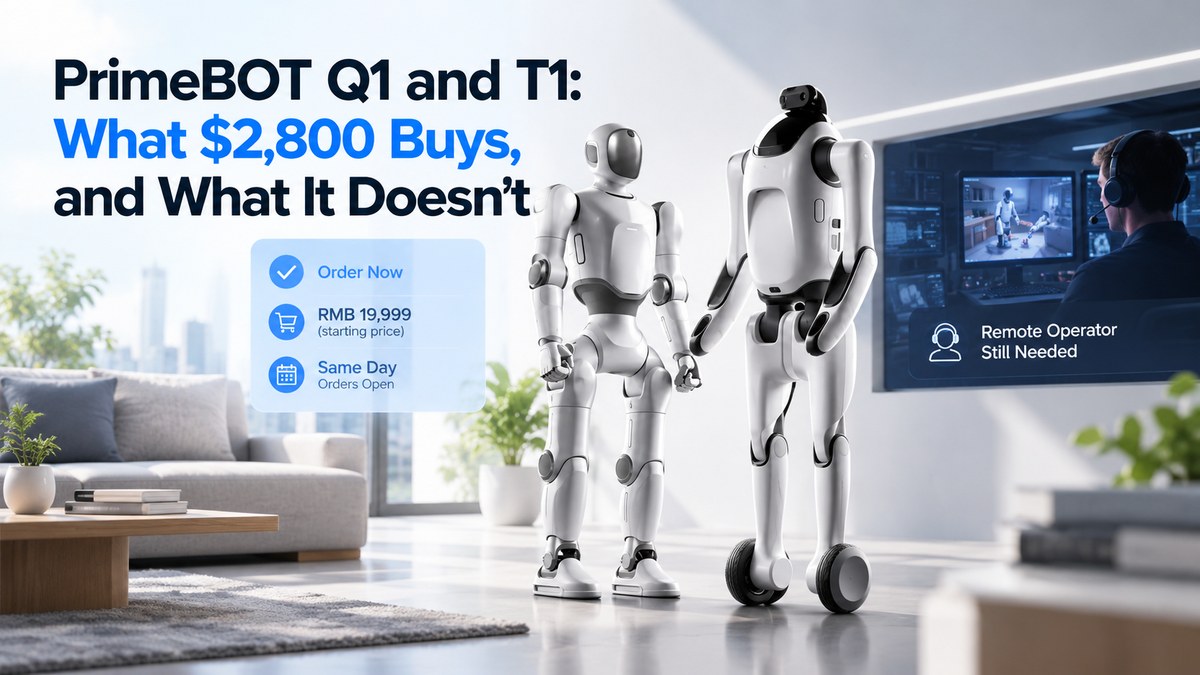
PrimeBOT Q1 and T1: What $2,800 Buys, and What It Doesn't
On September 20, a Chinese company put two personal robots on sale in China, starting at RMB 19,999 (about $2,800). Anyone typing "a robot that does my chores" into a search box now has, for the first time, an option they can actually order. It does not do chores. The one that does sits on the other side of the Pacific, costs roughly seven times as much, and still keeps a remote operator on call for the hard tasks. Article structure: - 1. What People Search For, and What Is Actually on Sale - 2. What $2,800 Buys - 3. The Price Tag on Chores - 4. Why Companionship Comes First - 5. What to Watch Over the Next Twelve Months
LATENT wins IROS 2026 Best Entertainment Paper Award
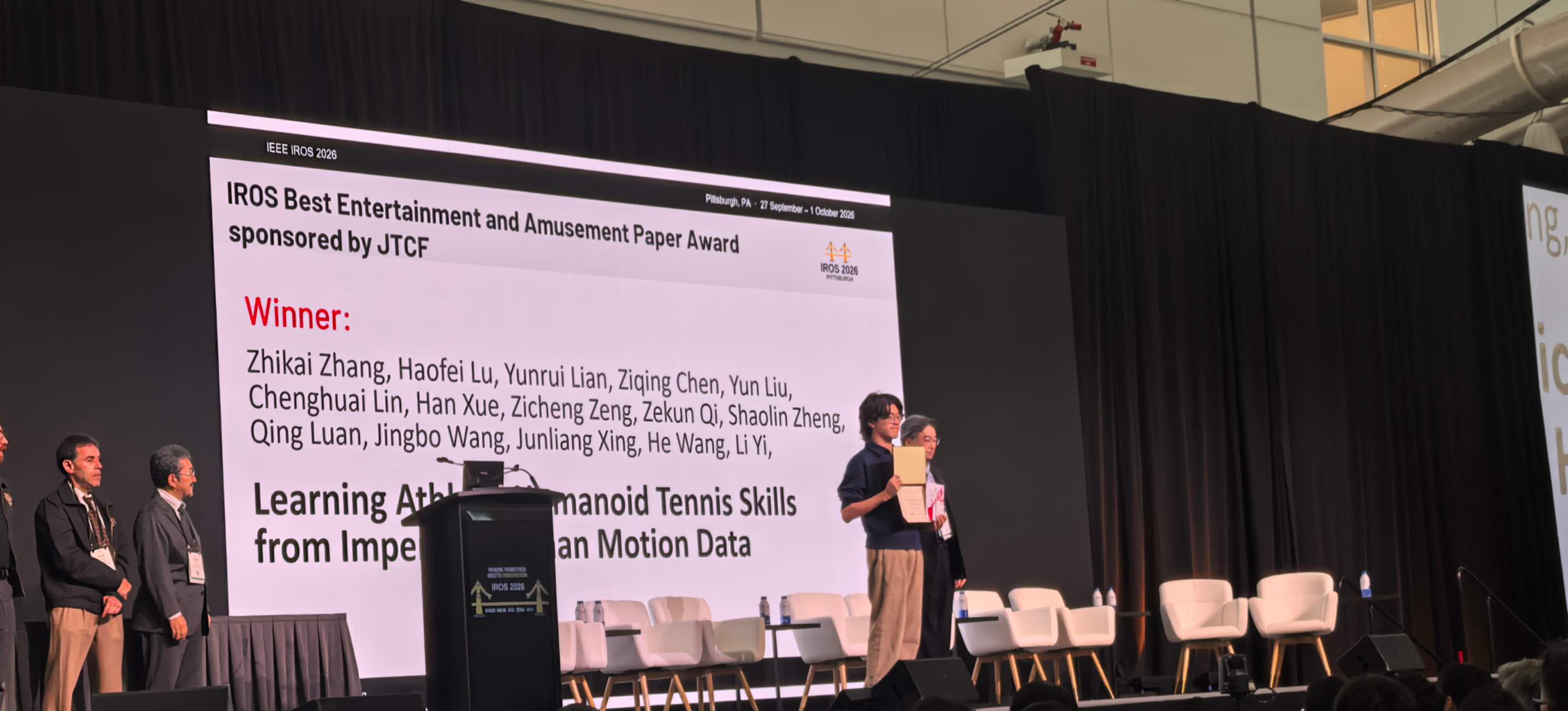
Galbot announced that LATENT, a project that turns imperfect human motion data into real-world humanoid tennis rallies, won the Best Entertainment and Amusement Paper Award at IROS 2026. The team thanked all coauthors and collaborators. Project page, arXiv paper and code are available.
Boston Dynamics Gives Atlas New Dexterous Hands and Drops the Pinky
Boston Dynamics has equipped its electric Atlas with new 13-DoF hands designed for real work in simulation-first development. The company dropped the pinky after tests showed most tasks remained unaffected, saving actuators and signaling a shift toward scalable commercial labor.
Agility exec: humanoid robot safety among robotics' hardest problems
Agility Robotics' Senior Director of Robotic Safety, Kevin Reese, says safety is a single word, and that is exactly what makes it easy to underestimate. Building it into a humanoid robot, he argues, ranks among the hardest problems in robotics. The company released the discussion as a full episode.
Sharpa W01 spins a pen with five-finger dexterity at 180 FPS
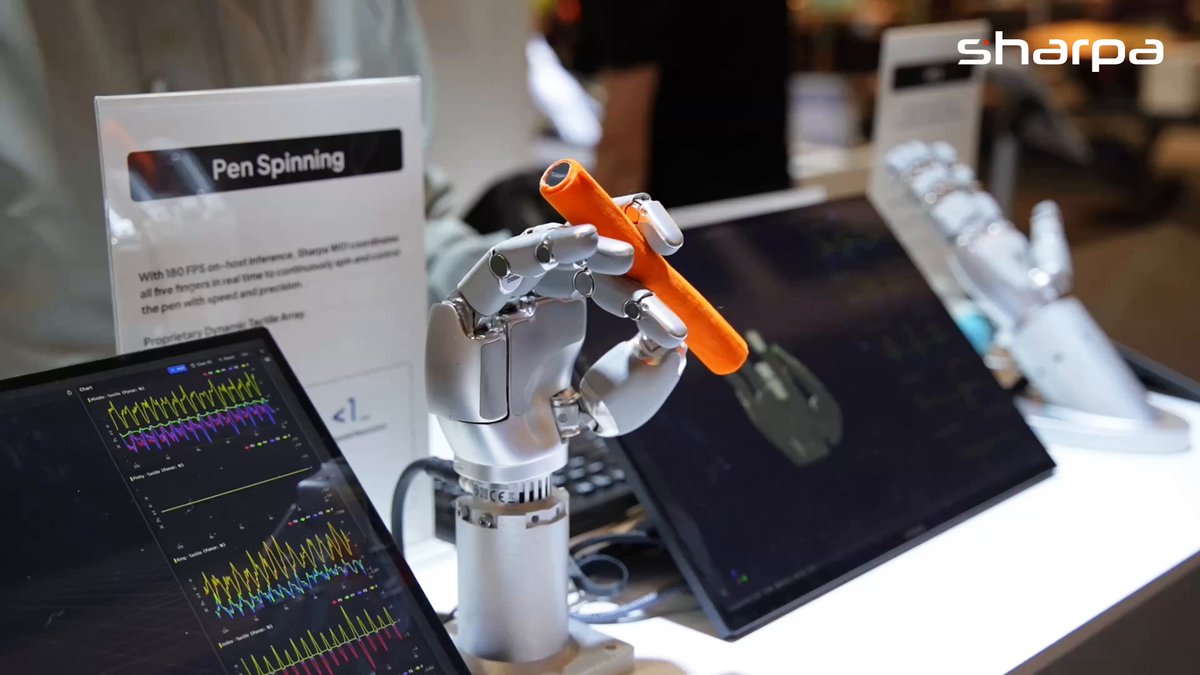
Sharpa's W01 dexterous hand can continuously spin and control a pen, coordinating all five fingers in real time with 180 FPS on-host inference. Its proprietary Dynamic Tactile Array provides more than 1,000 tactile pixels per fingertip, 1 mm spatial resolution and 20 mN pressure sensitivity.
Sharpa demos two multi-finger dexterous manipulation modes
Sharpa says dexterity goes beyond grasping: continuous manipulation requires all five fingers to coordinate in real time while keeping control of an object in motion. The company's W01 and W01 SE hands demonstrate two forms of multi-finger dexterous manipulation.
Figure: robots trained to jump autonomously, then into molten steel
Figure said it trained robots to jump autonomously, shipped them to Finland and had them leap into a vat of molten steel. The company also attached behind-the-scenes footage of the action to the post.
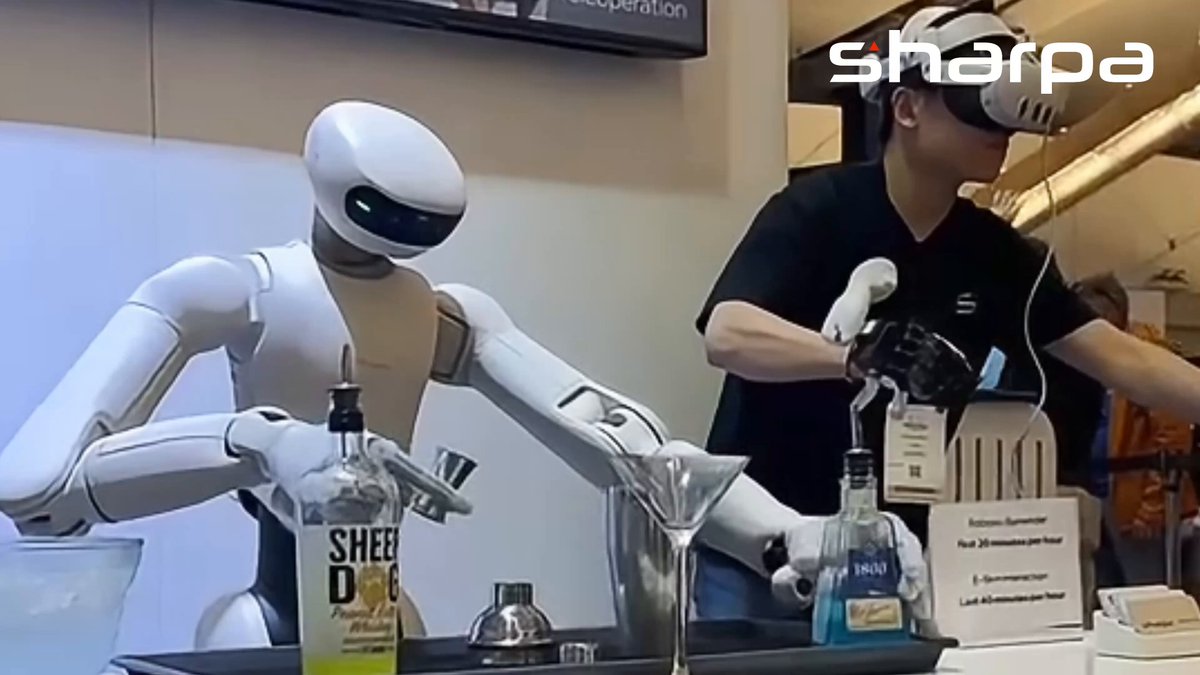
Sharpa D01 robot bartender runs full drink-making sequence
Sharpa showed its D01 robot performing a full bartending sequence, from uncapping to pouring, shaking and mixing. D01 is teleoperated through the AE01, a 22-DoF hand-glove twin that maps the operator's hand movements directly to the robot. The company said D01 combines fine manipulation with high-speed motion and 1:1 human-scale spherical wrist joints, with maximum end-effector speed above 10.5 m/s.
Soccer-Playing Humanoid Robots Score Major Goal for Coordination
A research team has developed a new system to help humanoid robots move and react more reliably, using soccer-playing robots as the testbed. The work targets coordination and dynamic movement, aiming to close the gap between lab demos and real-world performance.
Roboticist Says Safety Must Come First for Humanoid Robots
Roboticist Aaron Ames says safety is the crucial missing element before humanoid robots can take on larger roles in society. He warns that dazzling demonstrations of jumping, dancing, and kickboxing should not distract from the need for rigorous safety design.
Innodata opens motion-capture lab to train humanoid robots with sub-millimeter data
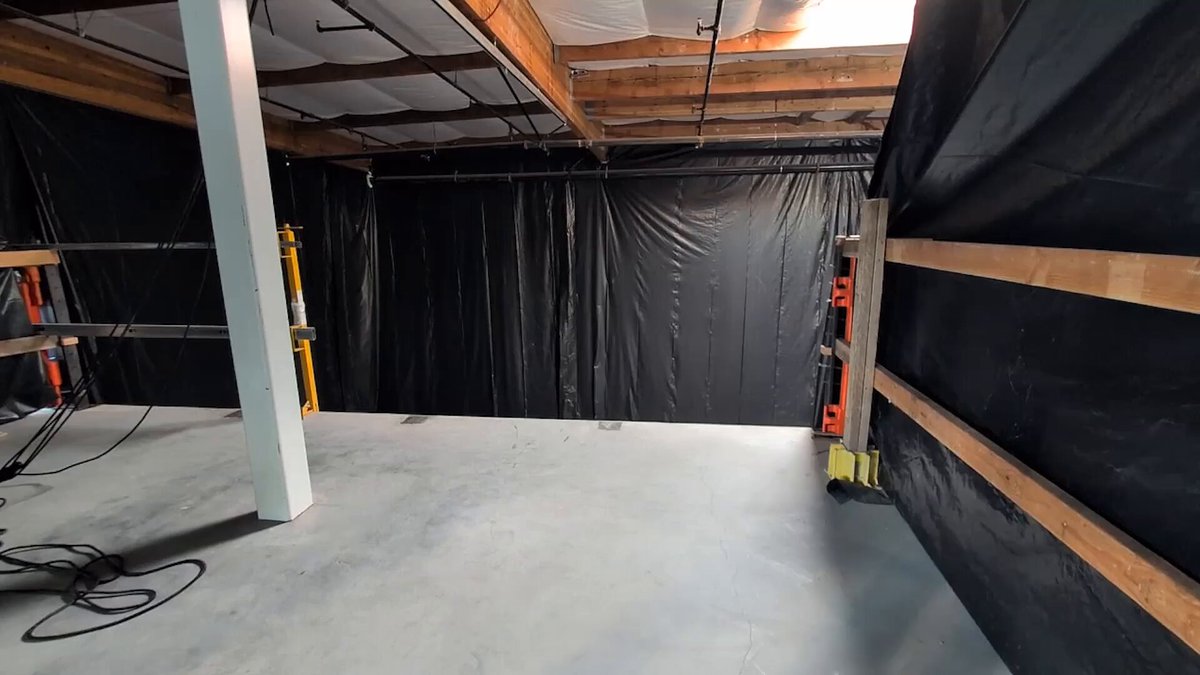
Innodata has opened a motion-capture lab in New Jersey that captures 3D body motion at sub-millimeter accuracy to train humanoids and other physical AI. Built with Vicon, the facility also independently validates robot performance data and offers off-the-shelf or custom training datasets.
IEEE Experts Debate What 'Robotics and Automation' Really Mean
At a recent IEEE RAS Communications Board meeting, experts unpacked the common pairing of 'robotics and automation.' They explored whether robotics is a subset of automation, how definitions affect statistics and education, and why language keeps shifting with research trends.