Humanlike Robot Charm Boosts Trust—Until It Starts Making Mistakes
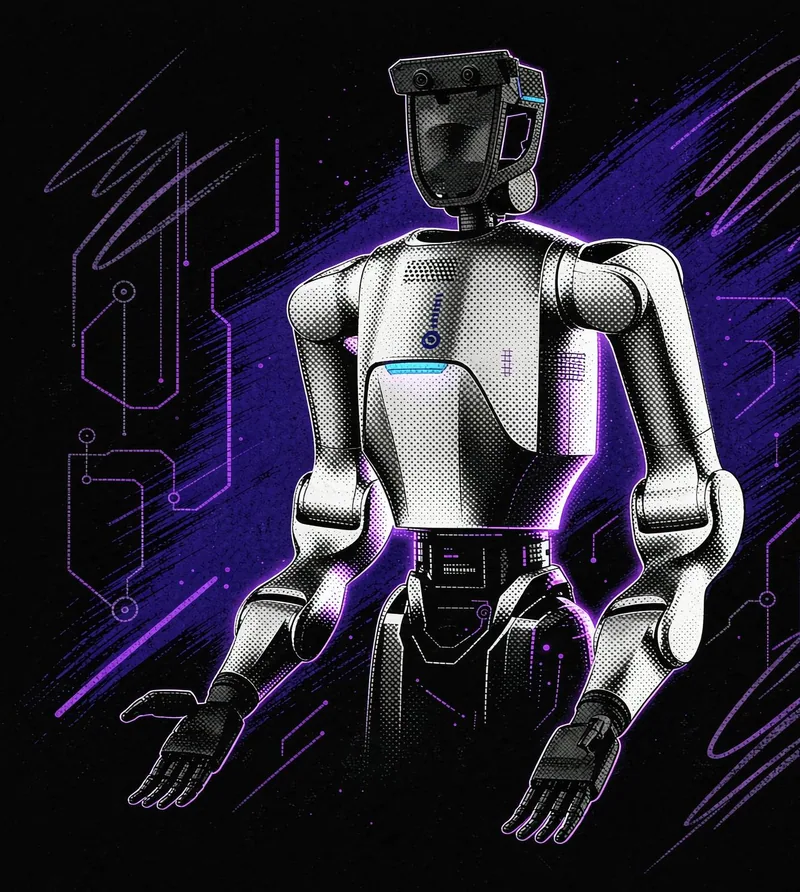
Does making a robot seem more human make people trust it more? A Drexel University study offers an uncomfortable answer: humanlike social expressiveness can amplify a robot’s influence, but only as long as it does not make mistakes.
The study recruited 50 adult men to talk face-to-face with a humanoid robot, Pepper, for two and a half hours. Half interacted with an “expressive” Pepper that made eye contact, gestured while speaking, nodded, and responded with acknowledgements such as “uh-huh” and “mm.” The other half faced a “wooden” Pepper that said identical lines but stayed motionless and gave no nonverbal signals.
Pepper was controlled in real time by researchers behind the scenes, using the “Wizard of Oz” paradigm common in human-robot interaction. Participants believed the robot was operating autonomously, but a person was speaking through it.
The experiment had three phases. In the first two rounds, Pepper performed normally, giving reasonable and logically coherent answers. In the third, it began deliberately making errors: interrupting participants, saying irrelevant things, and defending its views with nonsensical reasons. These were designed as social breaches, not mechanical failures.
Finding one: social expressiveness is a trust amplifier, not a source of trust. Data showed that regardless of whether the robot had expressions, participants’ trust fell sharply after errors. The robot’s influence on participants’ decisions dropped from 0.25 to 0.10—one mistake erased more than half its persuasiveness. The expressive group initially formed a stronger connection with the robot, but after the errors, that connection made trust collapse even more visibly.
Finding two: how the brain processes a robot’s mistakes depends on how humanlike it seems. The team used functional near-infrared spectroscopy to record prefrontal activity. When the expressive Pepper erred, participants showed increased activity in regions linked to uncertainty, social norm violations, and interpreting others’ intentions. The same errors from the wooden Pepper did not produce that pattern.
In other words, when a robot that nods and makes eye contact makes a mistake, the brain tends to judge it as “this person is unreliable.” When a motionless robot makes a mistake, the brain tends to judge it as “this machine is broken.” The first is an interpersonal judgment; the second is a technical one. The first is far harder to forgive.
Finding three: oxytocin is not a synonym for trust, at least not in human-robot interaction. Oxytocin is often called the “bonding hormone,” linked to intimacy and trust. But the experiment found an anomalous result: when the expressive Pepper made errors, participants’ oxytocin levels rose while their trust declined.
The researchers explain that oxytocin may not be a simple “trust hormone” but an amplifier of social salience. The more a person treats a robot as a social actor, the more the body monitors its every move, including its failures. A rise in oxytocin may mean the person is processing a social threat more seriously, not feeling intimacy.
The study has clear limits: participants were only adult men, only one robot model, Pepper, and the cultural background was mainly Western. But its design implications are concrete: for social robots in hospitals, schools, and customer service, build reliability first, then consider adding expressions. Once a robot starts making mistakes, all the social goodwill it accumulated can become fuel that accelerates trust collapse.
One question remains unanswered: after a robot errs, can it restore trust through social means such as apology, explanation, or a stated willingness to improve? The researchers say that is the next experiment.