Live Briefs 2026-11-22 · Full coverage of embodied AI
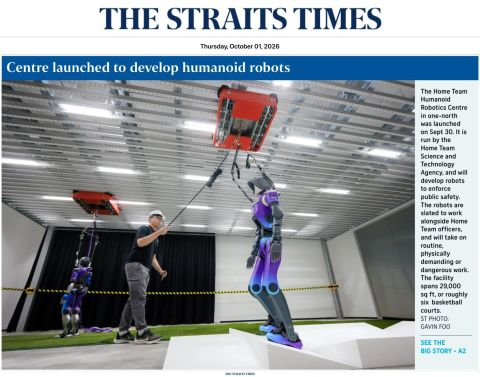
DEEP Robotics' DR02 humanoid joins Singapore H2RC for public safety
DEEP Robotics says its DR02 humanoid robot has joined Singapore's Home Team Humanoid Robotics Centre (H2RC), a facility dedicated to advancing humanoid robotics for public safety. The move places the Chinese company's humanoid platform in a Singapore public safety testing environment.
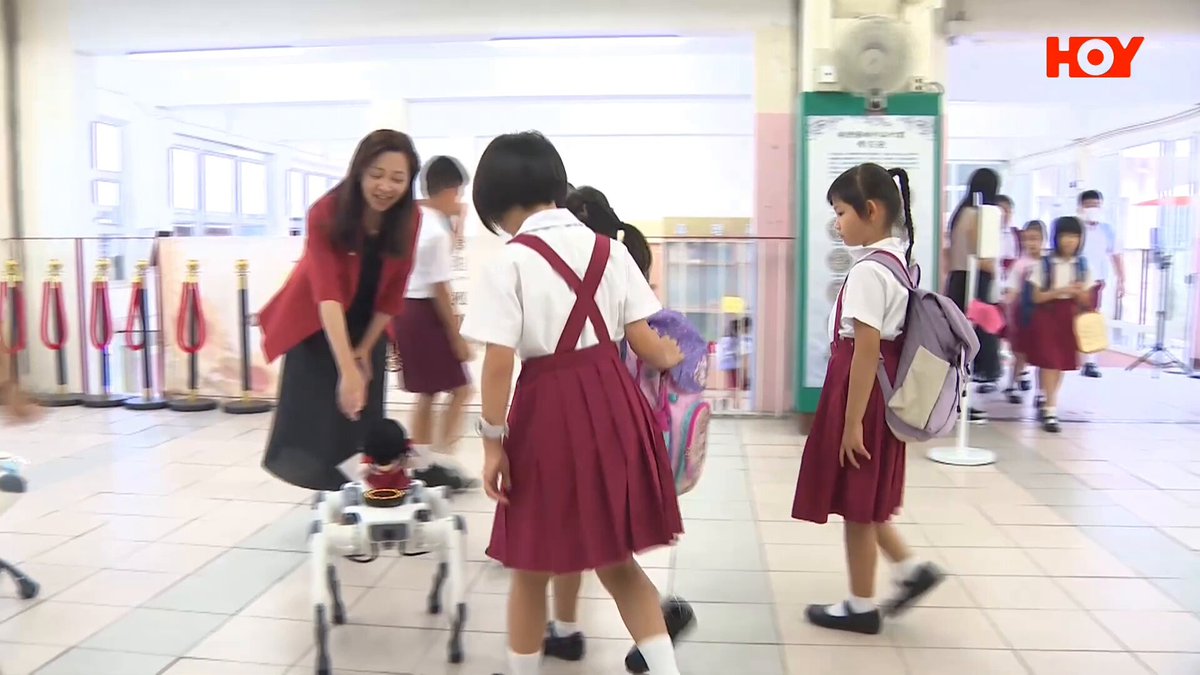
DEEP Robotics robot dogs bring STEAM lessons to Hong Kong classrooms
DEEP Robotics says its robot dogs are stepping into Hong Kong classrooms, helping students explore AI and robotics through hands-on STEAM education. The company frames the effort as bringing robotics into everyday schooling.
Embodied AI Attracts Over 2 Billion Yuan, Inland Universities Dominate
The embodied AI sector has attracted over 2 billion yuan in investment, with inland universities emerging as key players.
FieldAI Seeks $700M at $10B Valuation Without Building Robots
FieldAI, a startup developing AI software for autonomous robots, is reportedly raising $700 million at a $10 billion valuation. The company focuses on risk-aware navigation and decision-making, attracting significant investor interest.
Leju Robotics, HUST Sign Deal on Flexible 3D Tactile Sensing for Embodied Robots
Leju Robotics (01236.HK) said it has signed an agreement with Huazhong University of Science and Technology to cooperate on flexible three-dimensional tactile sensing for embodied robots.
FieldAI Seeks $700M at $10B Valuation Without Building Robots
FieldAI, a robotics software startup that does not build hardware, is reportedly seeking about $700 million in new funding at a $10 billion valuation. The deal underscores investor interest in foundation models for autonomous machines.
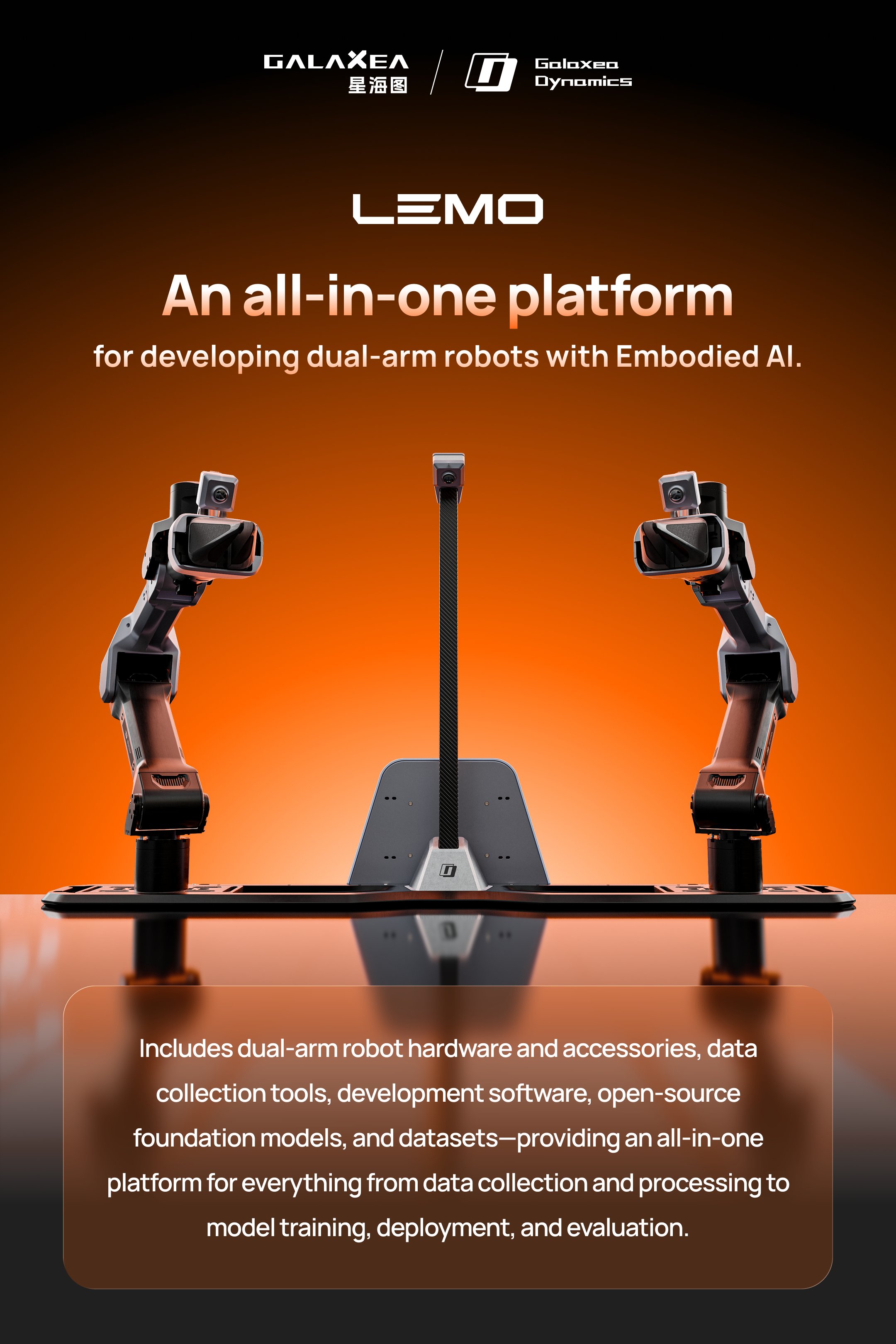
Galaxea opens orders for LEMO dual-arm development platform
Galaxea has opened orders for LEMO, an all-in-one dual-arm development platform. It combines high-performance dual-arm hardware, isomorphic teleoperation, multimodal data collection, and an open development toolchain. The platform supports the full workflow from data collection and model training to on-robot deployment and validation, targeting embodied AI research and application development.
2026 Canton Fair Design Innovation Award: Zhangxue Motorcycle and Capsule Robot Win Top Gold
The 2026 Canton Fair Design Innovation Award (CF Award) has announced 222 winning products from 174 companies. Zhangxue Motorcycle's 820RR and the Zhixun capsule robot gastroscopy system received the top Supreme Gold Award.
UBTECH and Xiamen C&D Sign Strategic Deal to Sell 10,000 Humanoid Robots by 2030
UBTECH and Xiamen C&D Inc. signed a strategic cooperation agreement in Xiamen on Oct. 9 to form a joint venture and jointly sell at least 10,000 UBTECH humanoid robots by 2030. The JV will operate the “UBTECH Ecological Technology Center Fujian Headquarters.”
Robot Rental Prices Drop 70% as Unitree G1 Falls to 289 Yuan a Day
Robot rental prices in China have fallen more than 70% within a year, with Unitree's G1 humanoid dropping from 8,000 yuan per day to as low as 289 yuan, as supply ramps up and demand shifts toward real work scenarios.
Kyland, LimX Dynamics Unveil First Fully Domestically Produced Robot in Historic Embodied AI Step
Kyland Technology and LimX Dynamics have jointly unveiled what they describe as the first fully domestically produced robot, a milestone for China's embodied AI sector.
Kuawei Intelligence Pushes 100-Site Humanoid Robot Deployment to Put Robots to Work
Kuawei Intelligence is advancing a 100-site deployment plan for humanoid robots, aiming to move them from demonstrations to real workplaces. The company says the rollout will validate reliability and task adaptability at scale.
Lumos Robotics wraps IROS 2026 with NIX, Station Lite demos
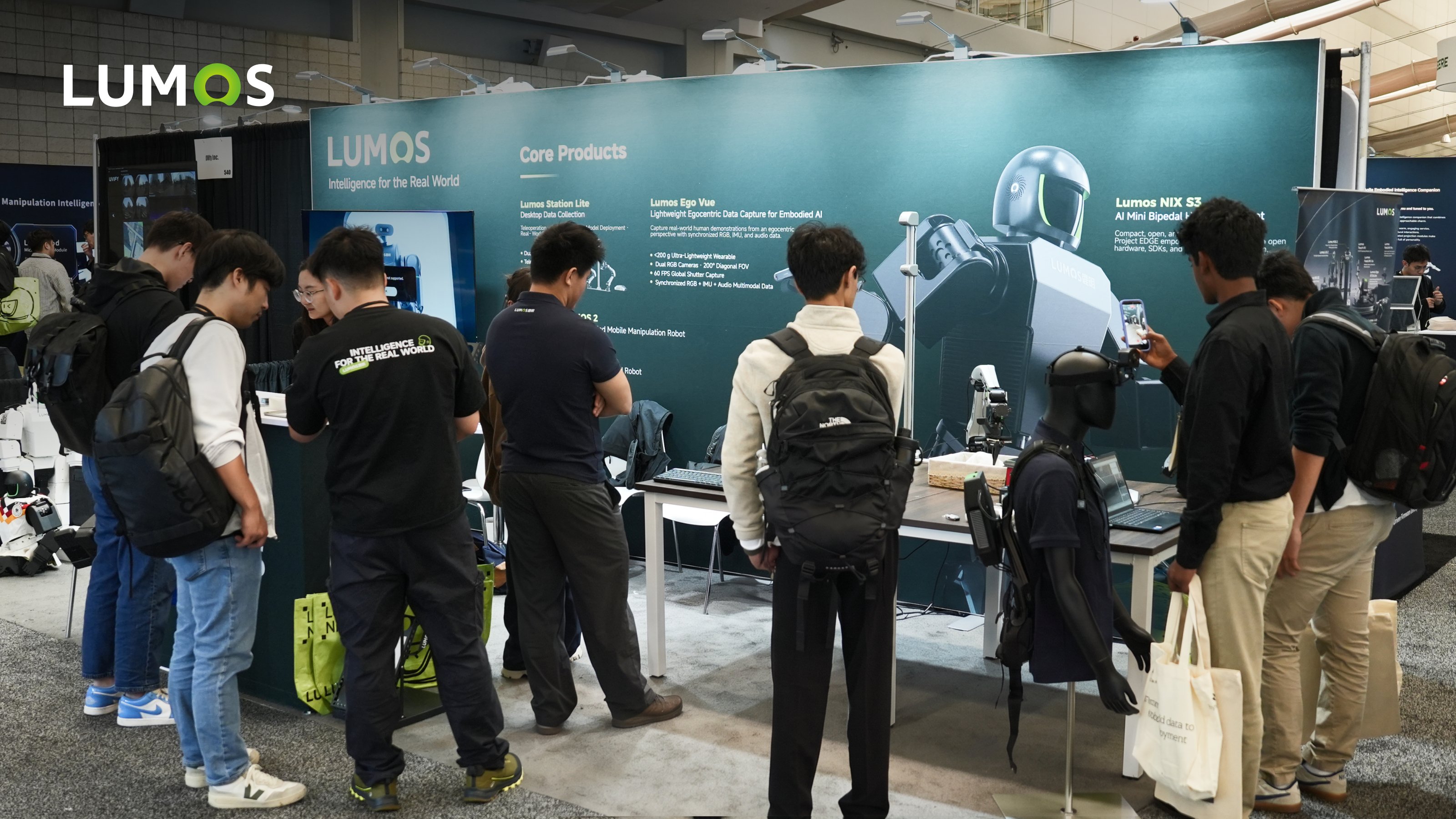
Lumos Robotics closed out IROS 2026, where the Lumos NIX robot drew crowds with engaging interactions and Station Lite demonstrated advanced model capabilities in action. The company also presented its integrated hardware and software systems for real-world data collection and embodied AI development, and thanked visitors who stopped by its booth.
Aishida Deploys 100 Humanoid Robots as Store Guides, Sales Rise 39%
Aishida placed 100 Aibao humanoid robots in 100 stores as shopping guides, and a three-day trial reportedly lifted average sales by 39%.
LivSyn Robotics Raises Series A to Link Robots With AI Models
Beijing-based LivSyn Robotics has closed a Series A round of at least RMB 100 million, announced on October 8. The company's RUDA platform aims to connect diverse robot hardware with AI models and agents, with industrial deployments already underway.
Dobot unveils CRH series, shows demo at CIIF Shanghai Oct 12-16
Dobot Robotics has introduced its all-new CRH series robot, which the company says features a simpler design and greater flexibility. The latest CRH demo is set to be shown at CIIF in Shanghai, China, from October 12 to 16, with more details promised later.

Amazon Open-Sources Physical AI Toolchain to Help Build Real-World Robots
Amazon launched the Physical AI Toolchain, an open-source stack on AWS, to help manufacturers build machines that can perceive, reason, and act in the physical world. It uses NVIDIA's physical AI stack and draws on Amazon's own robotics experience.
RoboAware Learns to Coordinate Embodied Skills from Counterfactual Outcomes
A new arXiv paper introduces RoboAware, a framework that helps embodied agents coordinate modular robot skills by predicting which frozen policy will succeed in the current physical state. It uses counterfactual outcomes to learn skill composition without retraining the underlying policies.
OmniDex Scales Dexterous Hand Grasping to 2.6 Million Cluttered Scenes
A new arXiv paper, OmniDex, targets the data bottleneck in dexterous grasping by scaling learning to 2.6 million cluttered simulation scenes. The work aims to improve robust grasp policies for embodied AI in realistic, messy environments.
Sodexo Campus and Avride Sign Deal to Expand Robot Delivery to 425 U.S. Colleges
Sodexo Campus and Avride have signed an agreement to expand autonomous robot delivery across Sodexo Campus’s roughly 425 U.S. college and university partners. Avride’s sidewalk-navigating robots are already operating at several campuses, including Ohio State University and the University of Arizona.
180,000-Yuan Robot Enters Octagon Cage, Drawing 8 Million Views
A robot priced at 180,000 yuan has been placed inside an octagon cage, and the video has drawn more than 8 million views, according to Leaderobot. The clip highlights robotics' push into entertainment and combat spectacles.
Robot-Assisted Radical Hysterectomy Shows Limited Perioperative Benefit in Early Cervical Cancer
A secondary analysis of a phase 3 trial finds that robot-assisted radical hysterectomy in early cervical cancer yields fewer intraoperative complications than open surgery, but the difference is mainly driven by minor events. Postoperative outcomes and one-month quality of life show little separation.
ETH Zurich Robot Hand Walks on Fingertips as Self-Contained Machine
Researchers at ETH Zurich have turned an off-the-shelf robotic hand into a fully self-contained robot that walks on its fingertips and uses those same fingers to manipulate its surroundings. They suggest such a design could let robots operate controls and handle objects in spaces conventional robotic arms cannot reach.
Shenzhen Delivery Robots Begin Night Shifts as City Automates
Bloomberg reports that Shenzhen's delivery robots are expanding into night shifts, with a grocery manager summoning a sensor-equipped vehicle after 10 p.m. in Longgang District. The move reflects the city's push toward round-the-clock automation.
AI Recycling Robot Deployed in Sarasota County to Capture Missed Containers
Sarasota County, Florida, has introduced an AI-powered recycling sorting robot that operates 60 picks per minute to capture items missed on the recycling line. The robot, from Glacier, aims to divert an additional 1 million containers from landfills annually.
Beijing Unveils Plan to Expand AI-Powered Consumer Electronics Supply
Beijing has issued a plan to deepen its international consumption center status during the 15th Five-Year Plan, focusing on 'AI+ consumption' to boost supply of AI phones, computers, wearables, and robots. It also encourages AI-assisted content creation and ultra-HD media.
Sixteen Humanoid Robots Dance K-pop in Times Square in Galaxy Demo
Galaxy Corporation staged a synchronized K-pop performance by 16 humanoid robots in New York’s Times Square, calling it a peace flash mob tied to UN International Peace Day. The Korean entertainment-tech company says the event demonstrates how robots can join live entertainment and public performances.
World's First Human vs Robot Combat Match Halted by California Commission
The world's first human vs robot combat match, organized by startup Robot Entertainment Kombat, took place in San Francisco on the 18th of last month but was halted by the California State Athletic Commission. The event featured humanoid robots, including one named T800, fighting against YouTube influencer Frankie Lapena, sparking controversy.
Shen Yanan's Third Act: Build Homes Robot-Ready, Then Let Robots Move In
The 1962 cartoon The Jetsons imagined a home designed for robot Rosie, not just robots for homes. Shen Yanan's third venture reverses the usual order: adapt the home for robots first, then bring robots in.
Robot Dog Rentals Fall to 100 Yuan, Humanoid Robots to 1,000 Yuan, Market Faces Reshuffle
On October 10, Red Star Capital Bureau reported that robot rental prices have plummeted, with humanoid robot daily rents down over 70% from last year and quadruped robot dogs down about two-thirds. With supply surging and platforms rushing in, the market faces a reshuffle.
Juxie Intelligent Secures Over 100 Million RMB in A+ Funding to Scale Robot Joint Production
Wuxi Juxie Intelligent Drive Technology has raised over 100 million RMB in an A+ round led by Huatai Zijin, with participation from Johnson Electric, Ninebot Capital, and others. The company plans to expand production capacity for robot integrated joints to meet surging demand.
Musk Lands Rockets, but Why Can't His Robots Hold a Cup?
Tesla's 2026 flexible tactile sensor patent aims to make electronic skin conform to finger curves, addressing robots' difficulty grasping cups. Yet the real bottleneck lies in three downstream problems: sensing tangential force, integrating high-frequency touch with vision, and scarce tactile data.
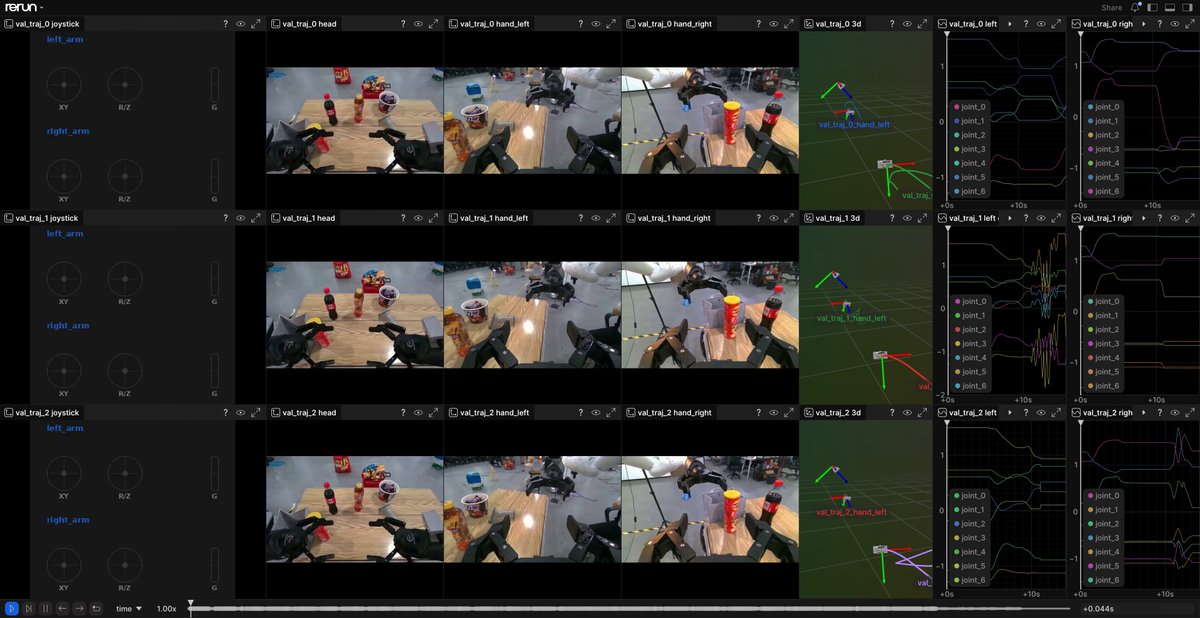
D-Robotics' Uranus simulates robot actions in a learned world
D-Robotics describes action-controllable generation in Uranus, its data-driven robot simulation platform. Instead of testing every idea on physical hardware, users explore what happens next in a learned world, predicting how an action turns into motion, object interactions and changes across multiple camera views, then try candidate policies there.