PrimeBOT Q1 and T1: What $2,800 Buys, and What It Doesn't
Why it matters: a walking humanoid now costs RMB 19,999, but the most expensive item on the price list, doing your chores, still has to be bought across the Pacific.
By Embodied AI Frontier
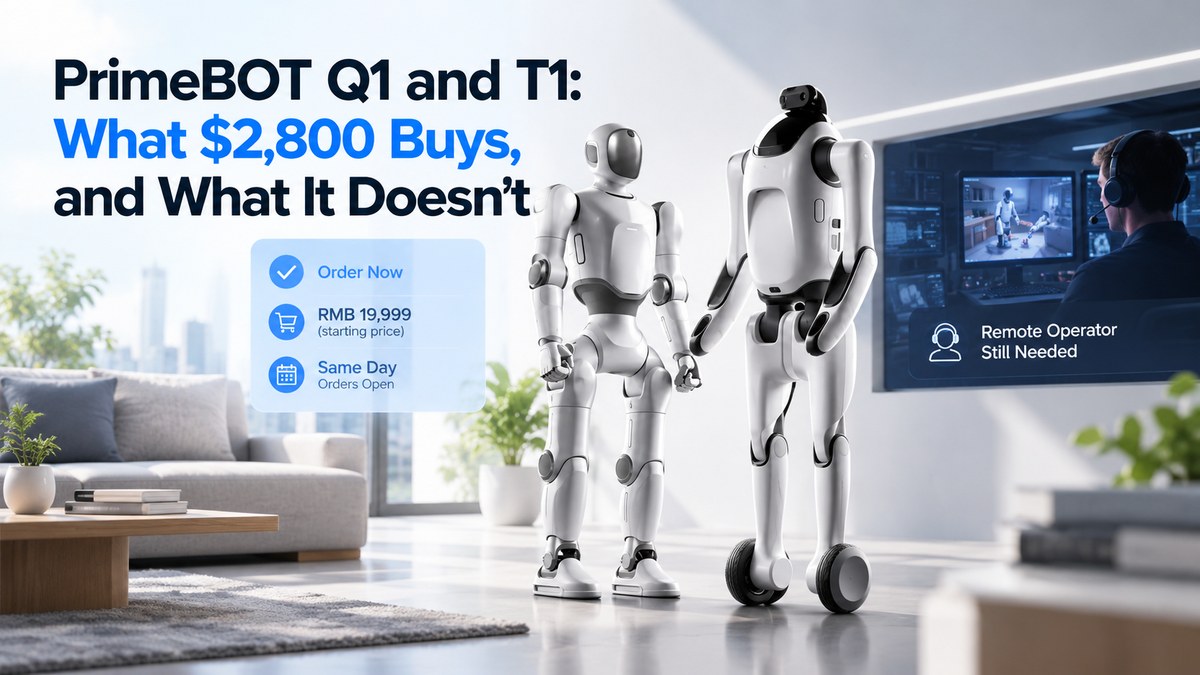
On September 20, a Chinese company put two personal robots on sale in China, starting at RMB 19,999 (about $2,800).
Anyone typing "a robot that does my chores" into a search box now has, for the first time, an option they can actually order.
It does not do chores.
The one that does sits on the other side of the Pacific, costs roughly seven times as much, and still keeps a remote operator on call for the hard tasks.
Article structure
- 1. What People Search For, and What Is Actually on Sale
- 2. What $2,800 Buys
- 3. The Price Tag on Chores
- 4. Why Companionship Comes First
- 5. What to Watch Over the Next Twelve Months
1. What People Search For, and What Is Actually on Sale
Type "humanoid robot home chores" into an English search box and autocomplete hands back a whole family of phrases: "household chores," "best humanoid robot for home chores," "humanoid robot for household chores for sale." The intent is written into the words. People want a machine that will do their housework, and they are already asking where to buy one14Google search autocomplete sampling, run by this publication (October 1, 2026)View the entry below →.
A second set of phrases is more specific, and typed as users type them: "cheapest humanoid robot," "affordable humanoid robot," "buy humanoid robot from china," "can i buy a humanoid robot from china"14Google search autocomplete sampling, run by this publication (October 1, 2026)View the entry below →.
In the second half of 2026, those two families converged on the same product.
On September 20, the Chinese company Qiyuan, which sells under the English brand PrimeBOT, put two personal robots on sale in Shanghai: the Q1 and the T1. Base models are priced at RMB 19,999 each, with the Q1 Explorer at RMB 26,999 and the T1 Pro at RMB 29,9991Qiyuan Personal Robots Officially Go on Sale, Starting at RMB 19,999View the entry below →. Qiyuan is a consumer robotics brand owned by Swancor Advanced Materials, a materials company listed on Shanghai's STAR Market, the exchange's board for technology companies (ticker 688585). Swancor's main business had been corrosion-resistant materials and wind turbine blade materials17About SwancorView the entry below →; the company began moving into consumer embodied intelligence after a change of control in 202511Can RMB 20,000 Qiyuan Robots Justify Swancor's RMB 60 Billion Market Value?View the entry below →.
The launch was billed as "on sale, shipping immediately," but the company's own schedule has deliveries beginning on October 1, in order of purchase. Staff at a Qiyuan store told a reporter that even customers who ordered on site on September 20 should expect to wait until November for their units1Qiyuan Personal Robots Officially Go on Sale, Starting at RMB 19,999View the entry below →3Interview with the CEO of Qiyuan Robotics: We Want to Sell More Than Just Tens of ThousandsView the entry below →. The first authorized experience stores are opening in seven cities: Shanghai, Guangzhou, Shenzhen, Hangzhou, Xiamen, Wuhan and Xi'an1Qiyuan Personal Robots Officially Go on Sale, Starting at RMB 19,999View the entry below →.
For a bipedal humanoid robot with legs, arms and the ability to walk on its own, RMB 19,999 is a price point that established players had not reached. The threshold below RMB 10,000 had already been crossed, though: Noetix Robotics began selling its Bumi in October 2025 at a limited-time pre-order price of RMB 9,998, a 94-centimeter machine weighing around 12 kilograms15Songyan Power Humanoid Robot Bumi Goes on Sale on JD.com with a Price of 9998 YuanView the entry below →. What Qiyuan's capability list does not include is housework.
2. What $2,800 Buys
Start with the price tiers.
Table 1. Qiyuan Q1 and T1: prices and configurations
| Model | Price (RMB) | Form | Key difference |
|---|---|---|---|
| Q1 | 19,999 | Bipedal humanoid, 88 cm tall | Base model |
| Q1 Explorer | 26,999 | Bipedal humanoid, 88 cm tall | Exposes the software development kit and hardware expansion ports to developers |
| T1 | 19,999 | Transformable, about 1 m tall | Switches between a wheeled humanoid form and a quadruped form |
| T1 Pro | 29,999 | Transformable | Adds an onboard compute chip, all-direction obstacle avoidance in both forms, automatic return to charging, voice summoning and load following |
Source: company launch materials and official channels1Qiyuan Personal Robots Officially Go on Sale, Starting at RMB 19,999View the entry below →12Aiming to Be the Apple of Robots? Qiyuan Starts Selling Humanoids from RMB 19,999View the entry below →
The Q1 stands 88 centimeters tall and weighs about 15 kilograms, with 22 degrees of freedom and force-controlled joints. The company says the body folds into a backpack2Sub-RMB 20,000 Qiyuan Robots Enter Mass Production: Where Is the Business Path for Home Robots?View the entry below →13PrimeBOT Q1 Specs & PriceView the entry below →. The T1 is about one meter tall and weighs around 16 kilograms, and can switch between its wheeled-humanoid and quadruped forms on its own5PrimeBOT Launches Personal Robots at 19,999 Yuan, Betting on Apps and CompanionshipView the entry below →6PrimeBOT Starts Selling Q1 and T1 Home Robots at $2,800View the entry below →.
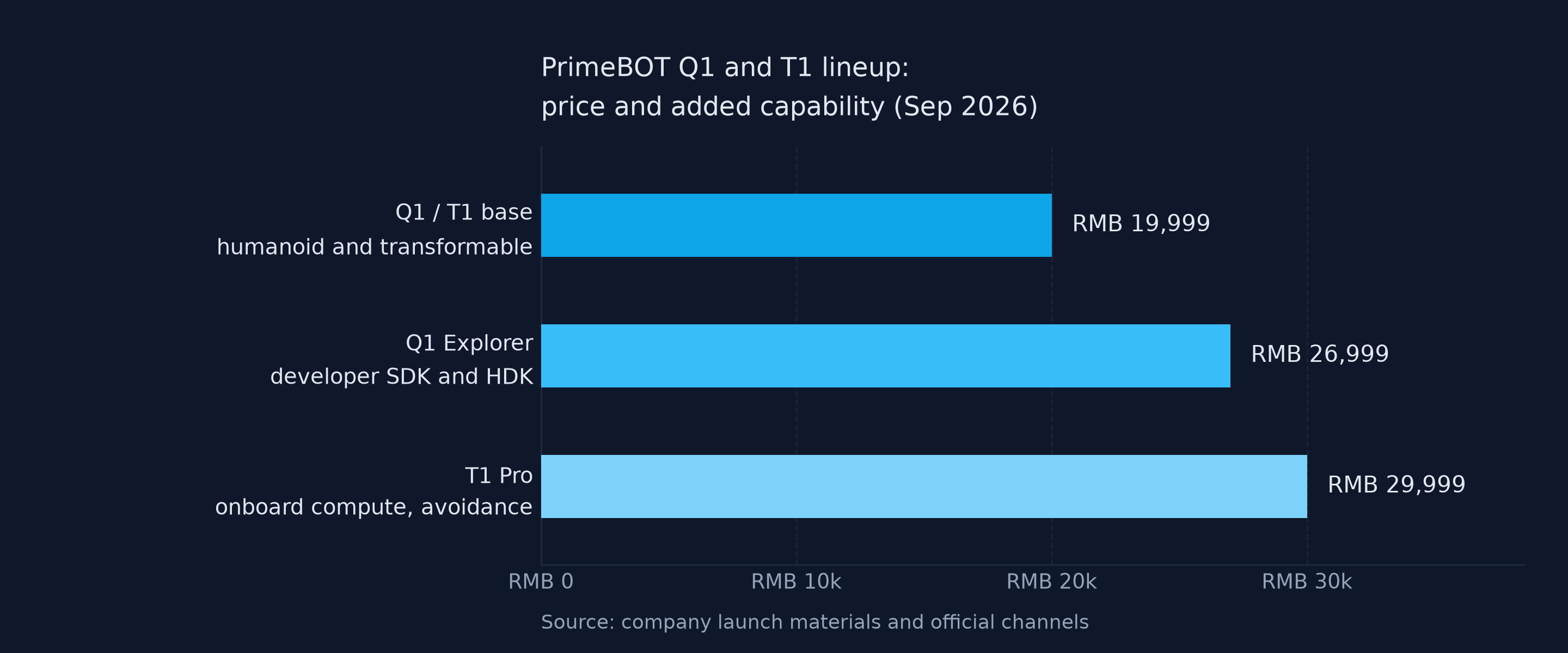
Fig 1 PrimeBOT Q1 and T1 lineup: price and added capability
Source: company launch materials and official channels
That 88-centimeter figure is itself a product decision. Most full-size humanoids stand above 1.6 meters and weigh tens of kilograms, and they are built mainly for factories and show floors. Compressing the height to 88 centimeters and the weight to 15 kilograms means the machine can move around an ordinary apartment, past dining tables and sofas, and can be carried by a single person. "Folds into a backpack" points at the same judgment: fitting into a home matters more than matching a human's build.
Both robots are sold as companions, study and coding machines, follow-me cameras and entertainment devices1Qiyuan Personal Robots Officially Go on Sale, Starting at RMB 19,999View the entry below →2Sub-RMB 20,000 Qiyuan Robots Enter Mass Production: Where Is the Business Path for Home Robots?View the entry below →. The Q1 Explorer exposes its software development kit and hardware expansion ports to third-party developers, while the T1 Pro sets itself apart with onboard compute, obstacle avoidance and self-charging1Qiyuan Personal Robots Officially Go on Sale, Starting at RMB 19,999View the entry below →12Aiming to Be the Apple of Robots? Qiyuan Starts Selling Humanoids from RMB 19,999View the entry below →. The pricing logic looks closer to consumer electronics: the base model pushes the entry price below a psychological line, and the higher tiers separate developers and heavy users through compute and interfaces.
Buying is currently limited to mainland China, through the official WeChat mini-program and the company's stores on the e-commerce and video platforms Tmall, Douyin and Bilibili, as well as the authorized experience stores in seven cities1Qiyuan Personal Robots Officially Go on Sale, Starting at RMB 19,999View the entry below →2Sub-RMB 20,000 Qiyuan Robots Enter Mass Production: Where Is the Business Path for Home Robots?View the entry below →.
The brand has already appeared overseas. Since January 2026, Qiyuan has shown both robots at CES in the United States and at IFA in Berlin, and used those appearances to line up overseas channels4Companionship or Chores First? The Fork in the Road for Home RobotsView the entry below →10Qiyuan Debuts at IFA 2026: Two Awards and the Start of a Global Push for Personal RobotsView the entry below →. As of publication, however, the products are not on sale outside China, and the company has said overseas sales will begin in 20274Companionship or Chores First? The Fork in the Road for Home RobotsView the entry below →.
One distinction matters here. The company's "on sale, shipping immediately" describes a sales status, not completed customer deliveries5PrimeBOT Launches Personal Robots at 19,999 Yuan, Betting on Apps and CompanionshipView the entry below →.
Seen as a product decision, this generation's price-and-configuration mix looks more like a market test: set the lowest possible entry bar to find out whether demand exists, then decide which direction to build capability in.
3. The Price Tag on Chores
If Qiyuan answers "how much does the cheapest home robot cost," another question is still open: how much does it cost to have a robot do your work?
Four products show how price lines up against capability. The table compares the home- and service-oriented humanoids on sale or in delivery as of September 2026.
Table 2. Home and service humanoids: price against household-chore capability (September 2026)
| Product | Origin | Price | Household chores |
|---|---|---|---|
| Qiyuan Q1 / T1 | China | From RMB 19,999 (about $2,800) | Not offered |
| Unitree R1 | China | From $4,900 (secondary development requires the R1 EDU tier) | A motion platform; no housework |
| UBTECH U1 series | China | U1 Lite RMB 119,800 (about $16,900); U1 Pro RMB 169,800 (about $23,900) | Bionic companionship; does not walk or do housework |
| 1X NEO | United States | $20,000, or $499 per month | Takes on household chores |
Source: company official channels and public announcements1Qiyuan Personal Robots Officially Go on Sale, Starting at RMB 19,999View the entry below →7Order NEOView the entry below →8Unitree R1View the entry below →9UBTECH's Bionic Robots Go on Sale: U1 Pro Discounted by RMB 10,000 Late at NightView the entry below →
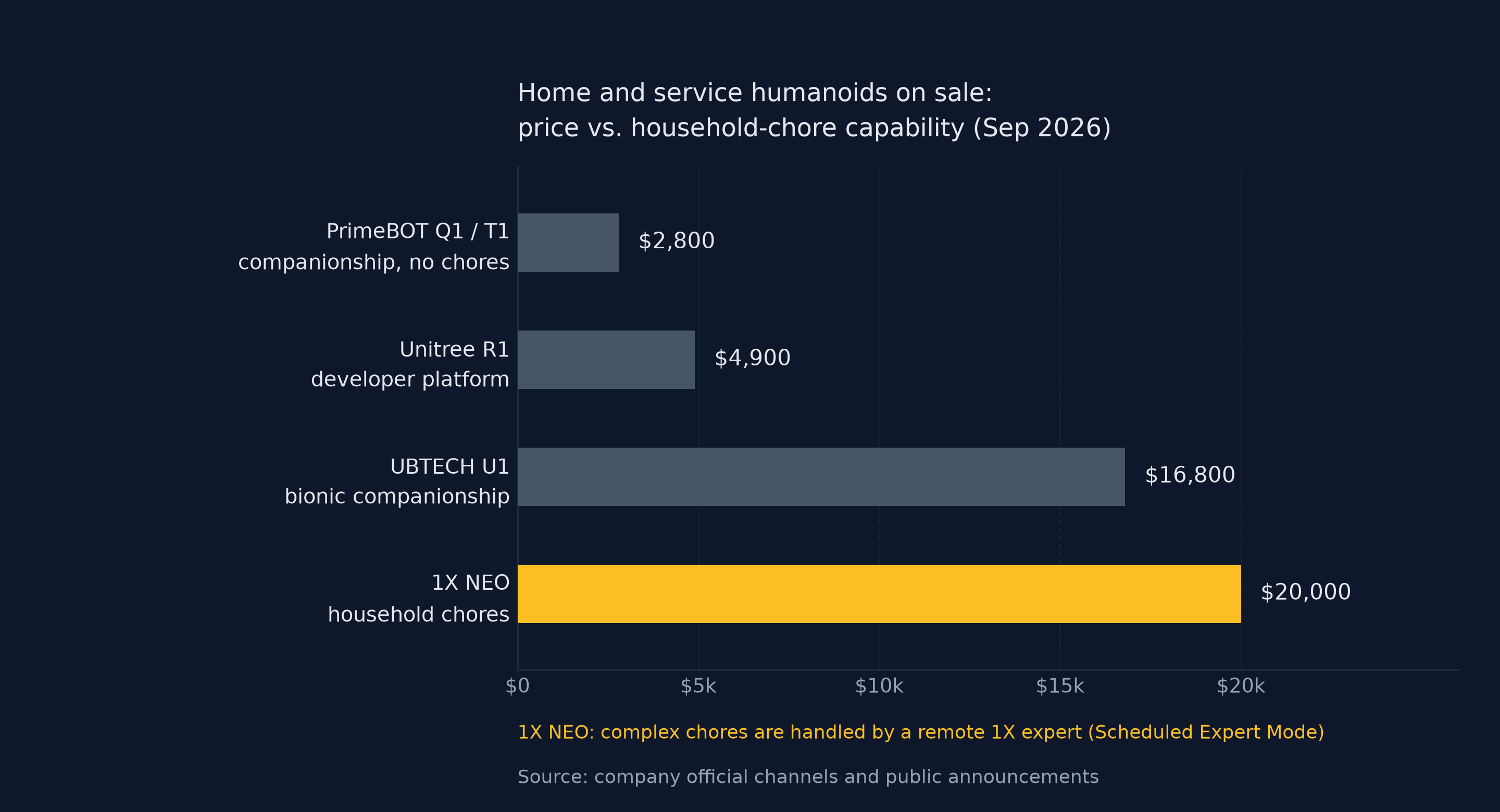
Fig 2 Price against household-chore capability, September 2026
Source: company official channels and public announcements
Only one of the four puts housework in its product positioning.
NEO, the home humanoid from the California company 1X, opened pre-orders in October 2025 and, by the company's own account, will deliver to US customers from 2026 onward. The website offers two ways to buy: $20,000 outright, or a $499 monthly subscription plus a $200 refundable deposit7Order NEOView the entry below →. 1X is headquartered in Palo Alto, and NEO is its first mass-production product aimed at the home.
The limits of what NEO can do are written into the product copy. Its autonomy is described as "basic for early owners" and growing over time; for complex tasks it does not know, 1X offers a Scheduled Expert Mode, in which an expert from the company remotely supervises the robot's actions at agreed times to help it learn and finish the job7Order NEOView the entry below →.
In other words, on today's price list, "does your work" carries a $20,000 price tag. On hard tasks, part of that price is a person.
Those two ways of buying also represent two cost structures. Paying outright concentrates the cost up front; the subscription spreads it over roughly forty months and lets the manufacturer keep the upgrade path. For a robot whose capabilities are still moving, a subscription lowers the user's cost of being wrong, and ties the vendor's revenue to how long the device stays in use.
The cheapest machine, meanwhile, stays away from housework entirely. Qiyuan's management explained at the launch that industrial settings offer structured data and fixed environments, while the home is highly complex and unstructured, and places higher demands on safety and intelligence2Sub-RMB 20,000 Qiyuan Robots Enter Mass Production: Where Is the Business Path for Home Robots?View the entry below →.
Two caveats on the numbers. The dollar figures in the table follow the conversion basis disclosed by each company or reported in the media, while the RMB prices are the official ones; for Qiyuan, the dollar figure is a media conversion at recent exchange rates, and the company has not published overseas pricing1Qiyuan Personal Robots Officially Go on Sale, Starting at RMB 19,999View the entry below →6PrimeBOT Starts Selling Q1 and T1 Home Robots at $2,800View the entry below →.
There is also a difference in reference frames. Qiyuan's management told the media that comparable products mostly sell for around RMB 10,000, which places the company's RMB 19,999 entry model on the higher side3Interview with the CEO of Qiyuan Robotics: We Want to Sell More Than Just Tens of ThousandsView the entry below →. That sits oddly against its image in English-language coverage. Within the set of mass-produced, two-legged, two-armed humanoids aimed at homes, RMB 19,999 is at the bottom of the price tiers1Qiyuan Personal Robots Officially Go on Sale, Starting at RMB 19,999View the entry below →8Unitree R1View the entry below →. Within the wider set of "personal robots," it is not cheap at all.
4. Why Companionship Comes First
Using companionship as the first door into the home is a pattern across several product lines in 2026.
Qiyuan's overseas business lead put it this way to the media: a personal robot does not have to take on every household task from day one, and does not have to start by working for people, but it does have to create value10Qiyuan Debuts at IFA 2026: Two Awards and the Start of a Global Push for Personal RobotsView the entry below →.
Views from elsewhere in the industry point the same way. Wang Hao, chief technology officer of the robotics company X Square, compares data collected in laboratories to "sugar water" that is usable but of limited value, and data from real homes to "milk" that is harder to collect but far more nourishing4Companionship or Chores First? The Fork in the Road for Home RobotsView the entry below →. Zeng Wu, chief executive of Shangyue Intelligent Technology, argues that to serve a household well a robot must first understand that household, and that this does not require a robot able to fold clothes, only one that can accompany people for long stretches, move freely and passively gather information4Companionship or Chores First? The Fork in the Road for Home RobotsView the entry below →.
The real difficulty with housework sits in the definition of done. A person can tell at a glance whether a shirt has been folded or a table cleared; for a machine to judge its own completion, someone has to write a precise set of success conditions. Follow-me filming, voice interaction and content generation are different: at today's levels of perception and control they can be delivered, and the user judges the result on the spot2Sub-RMB 20,000 Qiyuan Robots Enter Mass Production: Where Is the Business Path for Home Robots?View the entry below →13PrimeBOT Q1 Specs & PriceView the entry below →.
There is also a data constraint. Teaching a robot to do housework requires large volumes of data from real homes, and that data can only accumulate if the devices stay in those homes. Selling the device is only the starting point; time spent inside the home is what produces the data. That is why the two routes diverge so early.
The difference shows up in the revenue structure too. Qiyuan splits its future revenue into three parts: hardware sales, content (subscriptions and IP applications) and services (maintenance and repair)2Sub-RMB 20,000 Qiyuan Robots Enter Mass Production: Where Is the Business Path for Home Robots?View the entry below →. That structure only works if the device is used for a long time; a one-off job delivery cannot sustain it.
This is also why companionship has become the common opening move for this generation of products: the test is whether the user is willing to switch it on every day, not whether the machine can first clear a bar of hard-to-verify physical tasks.
5. What to Watch Over the Next Twelve Months
Go back to the two families of search phrases from the opening. Anyone who wanted to buy a home robot that does their work got this answer in September 2026: the first one you can order comes from China, costs about $2,800, and keeps you company rather than working for you; the one that will work for you costs $20,000, and on complex tasks a remote operator is part of the package.
Three things can be called in advance over the next year.
The price tiers will keep splitting. Using Qiyuan's pricing as a reference, the RMB 20,000 to 30,000 tier will fill up with more Chinese manufacturers, while usable housework capability stays in the higher tiers. If a machine appears within a year that costs under $5,000 and can handle everyday chores without human intervention, the current relationship between price and capability will have to be rewritten.
Delivery data will start to matter more than launch data. Prices and specifications from a launch event are public; shipments, repair rates and repeat purchases are not. As the first units reach homes starting in October, the question shifts from "how many were sold" to "how long were they used." Three sets of indicators are worth tracking: foot traffic and conversion at individual stores, delivery lead times and repair rates, and the number of skills available in the app store along with paid conversion16A Week After Launch, Qiyuan Opens Its First Global Store, Entering Shanghai's Huaihai Road Retail DistrictView the entry below →.
The timing of the overseas push will move ahead of the products' capabilities. Qiyuan has already lined up overseas retail partners and won two awards at IFA in Berlin10Qiyuan Debuts at IFA 2026: Two Awards and the Start of a Global Push for Personal RobotsView the entry below →, and management has set out the sequence: finish the overseas groundwork this year, make 2027 the "first year of overseas sales," and aim for roughly 30 percent of the robotics segment's revenue to come from overseas4Companionship or Chores First? The Fork in the Road for Home RobotsView the entry below →10Qiyuan Debuts at IFA 2026: Two Awards and the Start of a Global Push for Personal RobotsView the entry below →. Selling hardware abroad tests a company's channels and after-sales network; making the machine able to do your work tests something else. The two timelines are not the same.
The question in the search box will not have a cheap answer any time soon. What the autocomplete sampling on our own site shows is that the question already has a stable shape14Google search autocomplete sampling, run by this publication (October 1, 2026)View the entry below →.
Sources and Data Notes
Exchange rate approximations: RMB 7.1 per USD, used for rough conversions only.
Note on company names: PrimeBOT (also styled PrimeBot on the brand's official site, primebot.cn), Swancor, Unitree, UBTECH, 1X, X Square Robot and Noetix Robotics are the companies' official English names. "Shangyue Intelligent Technology" is a transliteration pending an official English name.