Live Briefs 2026-10-03 · Full coverage of embodied AI
Boston Dynamics Veterans Launch Dynamic Creatures to Bring Characters to Life
Two Boston Dynamics veterans have founded Dynamic Creatures, a company dedicated to creating robotic characters for entertainment. The startup aims to combine robotics with character design for theme parks, casinos, and hospitality, with first deployments expected in 2027.
AI Can't Outrun Humanoid Hardware Limits
Humanoid robots face a fundamental engineering challenge: the hardware needed for movement competes with space and weight, limiting AI-driven actions. This report explores how power architecture, sensing, and safety systems must evolve to enable practical humanoids.
Boston Dynamics and @dynamicreatures partner on entertainment robots
Boston Dynamics has announced @dynamicreatures as its official partner for entertainment and hospitality robotics. Interim CEO Amanda McMaster said the collaboration combines proven robotic platforms with character design, adaptive behavior, and real-time interaction to create experiences previously unavailable to the market.
JL MAG: Embodied Robots to Drive Demand for NdFeB Magnets and Motor Rotors
JL MAG (300748.SZ) said that embodied robots represent a major future demand growth point for high-performance NdFeB magnets and motor rotors.
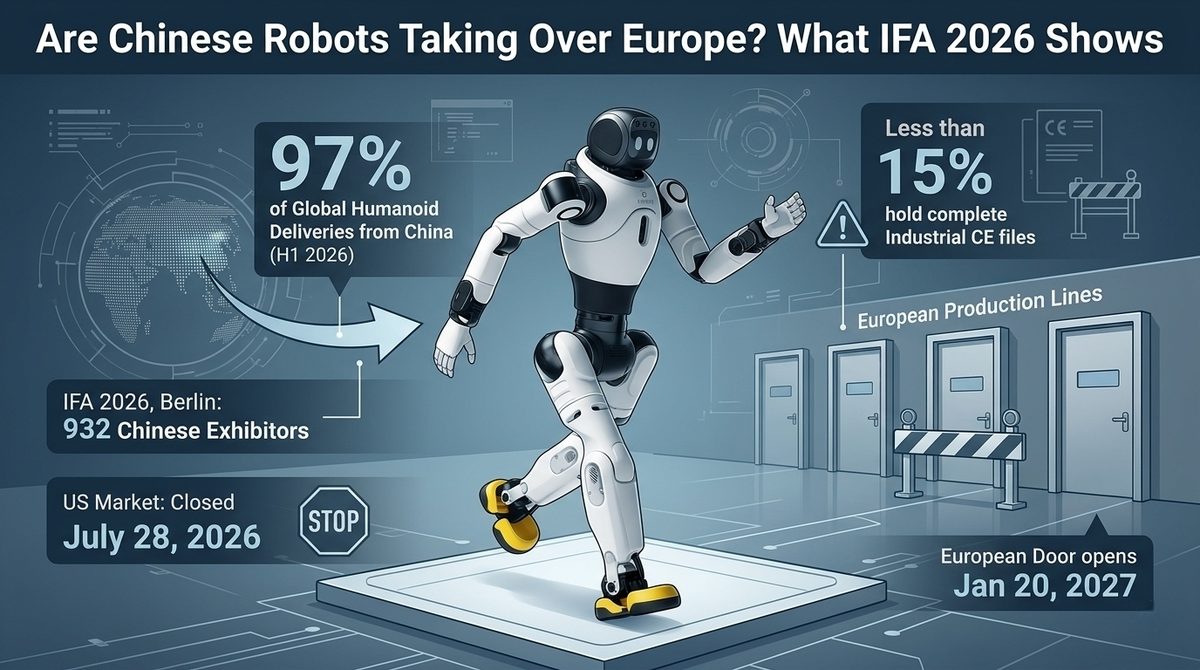
Are Chinese Robots Taking Over Europe? What IFA 2026 Shows
Chinese makers built over 97% of the world's humanoid robots in H1 2026 but exported only 12.4%. What IFA 2026 shows about Europe's barriers.
Zhiwei Intelligence Supplies Embodied AI Controllers for Humanoid Robots
Zhiwei Intelligent (001339.SZ) announced its 'Zhiqing' product line for robotic domain controllers, covering NVIDIA Jetson and Intel platforms, and has delivered solutions to leading domestic humanoid robot clients.
Youdi Robot Soars 106% in Hong Kong Dark Pool Trading
Youdi Robot's Hong Kong IPO shares surged over 106% in dark pool trading, reaching HK$29.86 ahead of its September 9 main board listing.
Udesk Robotics Soars 106% in Hong Kong Dark Pool Trading
Udesk Robotics, a global leader in commercial AI robots, surged over 106% in Hong Kong dark pool trading, reaching HK$29.86 per share.
Ubot Robot Surges 106.64% in Dark Pool Trading, Earning HK$3,082 Per Lot
Ubot Robot (03231.HK) closed 106.64% higher in dark pool trading at HK$29.86 per share, with each lot of 200 shares gaining HK$3,082 before fees. The company has built a comprehensive technology framework spanning vision models, robot planning, multi-sensor fusion, positioning, and cloud-based vision language models.
XPeng Unveils First Humanoid Robot to Walk Off Its Production Line
XPeng officially launched its robot production line on September 8, with the world's first high-end general-purpose humanoid robot completing automated assembly and walking off the line independently.
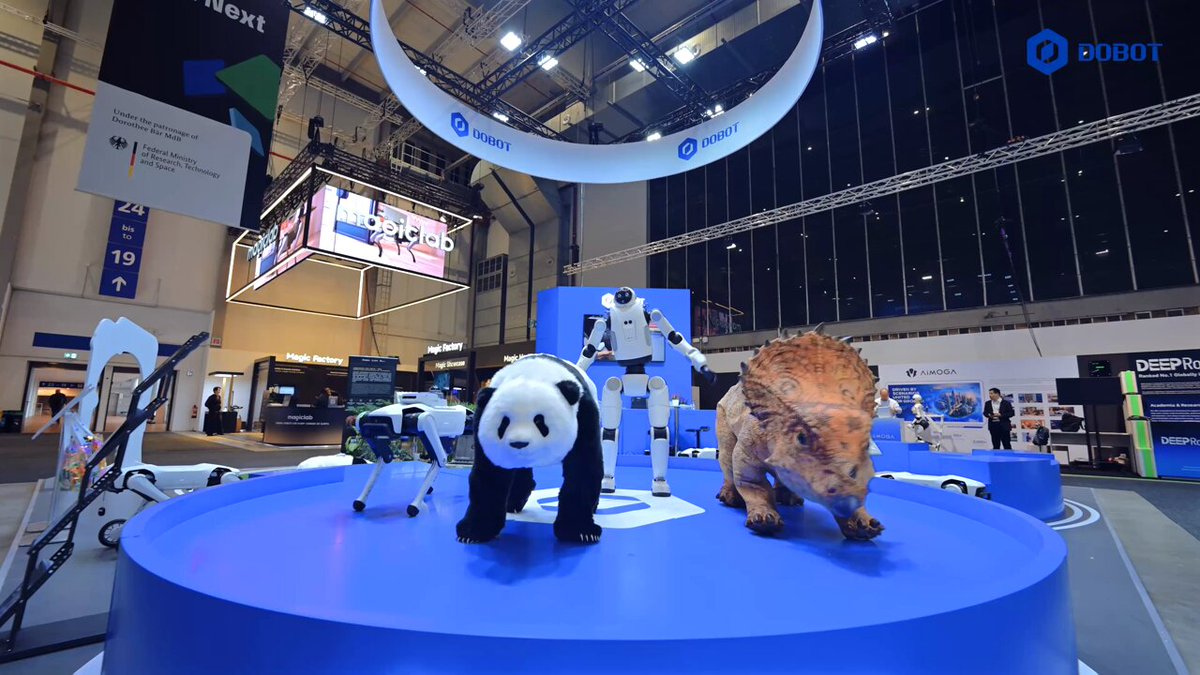
Dobot Robotics Recaps IFA 2026 with LUMO, Pandabo and Rover X1
Dobot Robotics recapped its IFA 2026 showcase, presenting robots including the DOBOT LUMO, Pandabo, Rover X1 Auton Roamer Sinoceratops and Rover X1. The company thanked Berlin for an unforgettable 5 days.
AGIBOT at LEAP 2026: Showcases Robots, Holds Partner Conference
AGIBOT attended LEAP 2026 in Riyadh, exhibiting its full lineup of humanoid robots and embodied intelligence solutions. The company also hosted a partner conference to discuss product portfolios, regional collaboration and localized deployment in the Middle East.

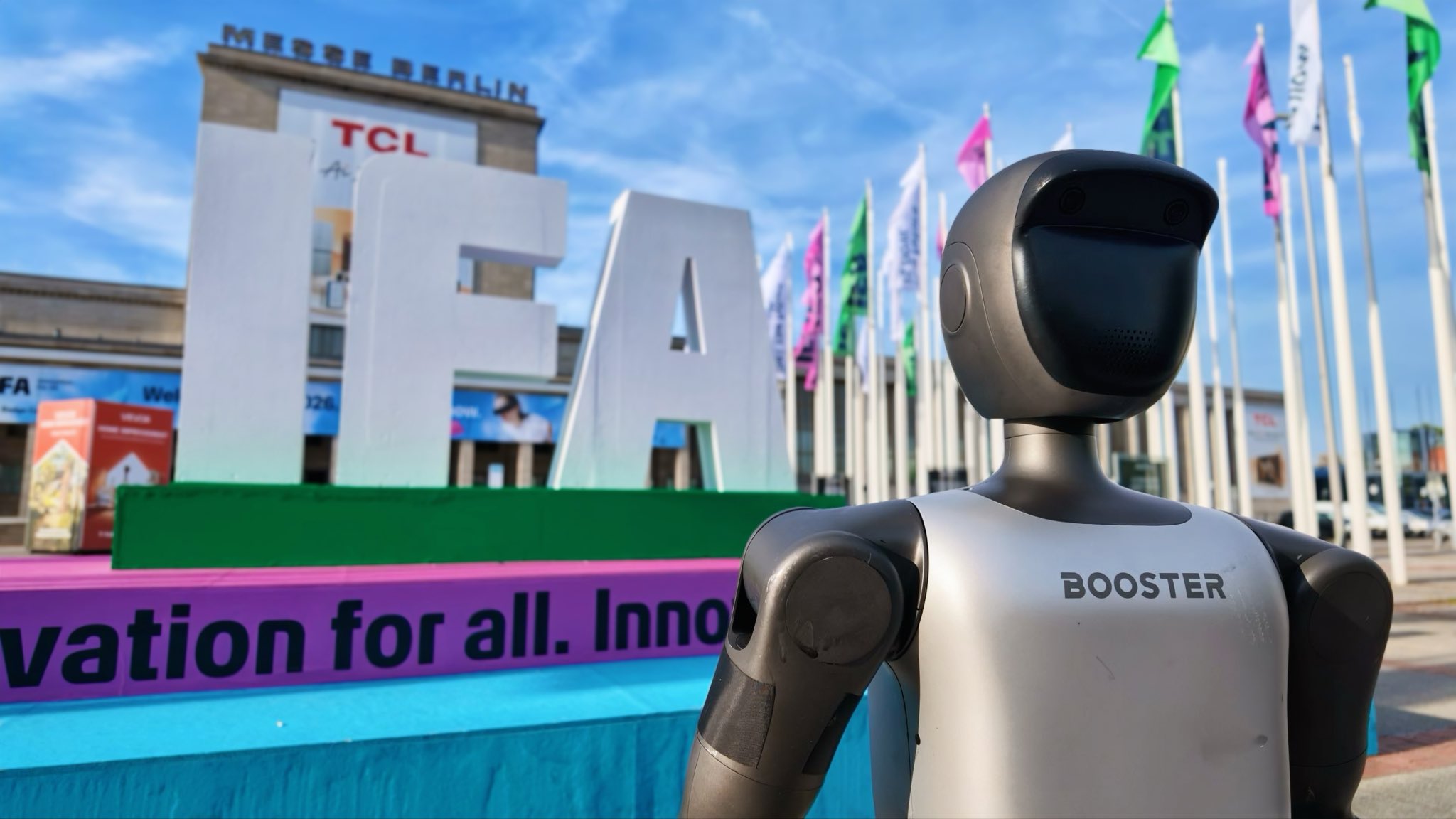
Booster Robotics Showcases Robot Innovation at IFA Berlin
Booster Robotics posted a new update from IFA Berlin, featuring robots, innovation, and moments from the trade fair. The photos capture the tech atmosphere and the presence of robotics at the event.
LimX Dynamics at WRC 2026: Robots May Give Humans More Time
At WRC 2026, LimX Dynamics' Richard Robinson addressed the fear that robots will take something from people, suggesting instead that robots may offer more time for connection, creation, collaboration, and care. The first episode of the company's series explores the next steps for robotics after demos. The full conversation is available.

SSE Official: Long-term Capital Accelerates Allocation into China's Hard Tech
At the HKEX China Opportunities Forum on September 8, Zhang Bin, director of the SSE's International Cooperation Department, said the Chinese market has become a must-choice for international capital, not just an option. He highlighted rapid growth in A-shares across high-tech sectors like humanoid robots and semiconductors.
Combat Robots at IFA: Are We Glorifying Violence?
At IFA 2026, combat robots drew attention, prompting CNET's Katie Collins to question whether they normalize violence. Her concerns highlight safety gaps and the need to stop glorifying robot fights.
MIT Robot Breaks Arctic Ice Barrier to Transmit Data from Underwater
MIT Lincoln Laboratory demonstrated a magnetic-field communication system through 3.6 feet of Arctic ice using an ROV, achieving 1.2 KB/s data transfer. The test, conducted under extreme conditions, marks a step toward a large-scale underwater sensor network for climate and military monitoring.
Turning an AI Robot into a Moving Vase: A Speculative Design on Attention
At IFA 2026 in Berlin, Paris-based design duo Batten & Kamp presented 'Beauty Seeker', a six-legged AI robot transformed into a mobile vase carrying an orchid. By stripping its advanced features, they provoke reflection on cohabitation, threat, and the value of attention in a tech-saturated world.
China's Intelligent Breeding Robot 'Jier' Evolves to 2.0: From Flower to Field
Chinese scientists unveiled Jier 2.0, the world's first humanoid embodied intelligent breeding robot, at the 33rd China Beijing Seed Industry Conference. It autonomously pollinates tomatoes in under 10 seconds, integrating gene editing, AI vision, and dual-arm operation.
iKairos: A Modular AI Necklace and Desktop Robot for Memory Companionship
iKairos, created by Singapore startup Lingverse, is a modular AI device that switches between a pendant and a desktop robot head. It aims to passively record and understand a user's life to offer proactive memory assistance and personalized recommendations.
DEEP Robotics Lynx Wheel-Legged Robot Conquers 55°C Desert Terrain
DEEP Robotics' Lynx wheel-legged robot demonstrates stable locomotion in extreme desert conditions, handling soft sand and steep slopes. The robot has been deployed in vineyards, industrial inspections, and public safety, showcasing its versatility across industries.
Robot Learns Insect Gait in One Hour to Traverse Rough Terrain
Researchers from Tohoku University and VISTEC have developed a robot that learns to walk by observing stick insects, mastering diverse terrains in under an hour. The approach uses adversarial inverse reinforcement learning to capture general principles rather than fixed gaits.
Self-Resetting Soft Ring Robot Achieves Continuous Jumping via Physical Intelligence
Researchers at North Carolina State University developed a soft ring robot that jumps continuously under constant infrared light, using geometric design and photoresponsive materials instead of electronics. This physical intelligence approach enables self-resetting and diverse locomotion modes, offering a new path for miniature soft robots.
Military Humanoid Robots in Engineering Validation: Dual-Use Transfer Underway
Global military research is exploring humanoid robots for combat, but they remain in engineering validation phase. Despite China's supply chain advantages, challenges in reliability, endurance, and cost keep humanoids from deployment, with dual-use conversion driving progress.
LG Electronics Targets Humanoid Robot Core Parts with Actuator Line
LG Electronics announced plans to commercialize its humanoid robot actuators, aiming to become a key supplier in the emerging supply chain. The move highlights the growing importance of core components such as actuators in the humanoid robot industry.
Humanoid Robots Enter Construction to Reshape Housing Production
South Korean company BigWave Robotics will deploy humanoid robots in modular housing factories from 2026, starting with insulation installation. The partnership with Space Factory marks a shift from demonstrations to practical applications, expanding humanoid robots into construction and other non-standard industries.
SuperMap: Spatial Intelligence Base Doesn't Offer Embodied Robot 3D Data Capture
SuperMap Software stated that its spatial intelligence base does not directly support 3D data acquisition for embodied robots, clarifying its role in the robotics ecosystem.
SuperMap's Spatial Agent Empowers Robotics and Unmanned Equipment Industry
SuperMap Software announced that its spatial agent, SuperMap AgentX, provides core spatial intelligence capabilities for robotics and unmanned equipment, enabling spatial perception, analysis, task planning, and multi-machine collaboration.
What We Need Isn't Robots, but the Labor They Provide
The narrative that robotaxis and humanoid robots will soon dominate households faces three challenges. Both industries are evolving from hardware ownership to service-based models, where the real value lies in the embodied AI infrastructure.
Tong'an Deploys 'Scenario Lists' to Attract Robotics Firms at Investment Fair
At the 26th CIFIT, Tong'an District unveiled a 'scenario list' to attract robotics and hard-tech companies by offering real application scenes instead of land. The approach has already brought one major embodied intelligence firm and is backed by a comprehensive funding system.
Chinese Robot Craze at IFA: Buzz in Berlin, but How Close to European Market?
At IFA 2026, hundreds of Chinese robotics firms showcased humanoid robots performing kung fu and calligraphy, drawing large crowds. However, exhibitors admit they lack clear channel strategies, as European buyers focus on practical applications and total cost of ownership.
Restaurant Robots Move from Booths to Kitchens: Efficiency and Cost Still Key
Food service robots are increasingly entering real restaurants, taking on tasks like greeting, cooking, and serving. However, challenges in efficiency, cost, and reliability still hinder their widespread adoption.
XPeng's Humanoid Robot Line Goes Live, First Unit Rolls Off Automatically
XPeng's humanoid robot production line officially launched on September 8, with the world's first high-end general-purpose humanoid robot completing automated assembly and walking off the line independently.
AI-Assisted Cardiac Surgery: Robots Enter Intelligent Navigation Era
A Chinese medical team has performed the world's first AI-ultrasound-robot-guided intervention for congenital heart disease, marking a new phase where AI assists in core surgical decisions. This signals a shift in medical robotics from mechanical precision to intelligent, real-time navigation, with potential to improve accuracy and the dissemination of expert care.
SmoothRL: Online Reinforcement Learning Enables Real-Time Robot Adaptation
Astribot's SmoothRL framework enables robots to learn and improve during real-world execution. Tests show success rates soaring from 39% to 94% in dynamic tasks, marking a shift toward continuous post-deployment improvement.
XPeng's Humanoid Robot Production Line Officially Launched
XPeng Motors announced the official launch of its robot production line, where the world's first advanced general-purpose humanoid robot completed automated assembly and walked off the line autonomously.
AI Agent Autonomously Completes Portal in 24 Hours; iRobot Rebounds with Dual-Robot Design
OpenAI's GPT-6 Astra autonomously completed Valve's puzzle game Portal over 24 hours using 3,336 tool calls, marking a milestone in long-horizon AI decision-making in 3D environments. Separately, bankrupted iRobot returned with a novel dual-robot cleaning system, betting on a niche to compete against dominant Chinese rivals.