Live Briefs 2026-11-22 · Full coverage of embodied AI
Agility Robotics SPAC merger approved by CCXI shareholders
Shareholders of Churchill Capital Corp XI (Nasdaq: CCXI) approved the business combination with Agility Robotics. The closing is expected on Nov. 4, with trading on Nasdaq under the ticker AGLT expected to begin Nov. 5. Agility Robotics thanked CCXI shareholders and its investors for the approval.

Humanoid AI Learns Sequential Tasks From Separate Locomotion and Manipulation Data
A humanoid AI system has been developed to learn from locomotion and object-manipulation data collected separately. It can execute multiple task stages in sequence without being shown demonstrations of complete task sequences.
Top 10 Robotics Developments of October 2026: Humanoids, AI, and Major Contracts
October 2026 brought major humanoid robot deployments, a new Atlas hand, and leadership changes at Boston Dynamics. The month's most-read stories also included AWS's open-source Physical AI Toolchain and Gecko Robotics' $300 million U.S. Navy contract expansion.
Huayang Group Says Robot Joint and Head Parts Reach Mass Production
Huayang Group (002906.SZ) said its robot components include precision structural parts such as joints and heads, with some projects already in mass production.
$80 LiDAR and RDK X5 build a real-time robotics system
D-Robotics demonstrates an $80 LiDAR paired with its RDK X5 board running a full real-time robotics stack: tracking people and objects, predicting movement and potential collisions, finding safe paths around obstacles, generating steering commands and rendering the environment in 3D. LiDAR processing, path planning and GPIO-based hardware control all run directly on the RDK X5.
Apple's J595 Home Robot Project Hits Internal Divisions and Software Delays
Apple's secretive J595 home robot project is reportedly grappling with internal disagreements and slow software development, with the product priced around $1,000 and its launch potentially pushed to 2028.
DEEP Robotics LYNX robot dog runs 24/7 inspection at wastewater plant
DEEP Robotics said its LYNX quadruped robot is now carrying out round-the-clock autonomous inspections at a wastewater treatment plant. The robot dog takes on high-risk areas while supporting real-time monitoring and early warnings, the company said, targeting smarter inspections and safer operations.

AGIBOT A3 Ultra demos cross-floor navigation, autonomous tidying
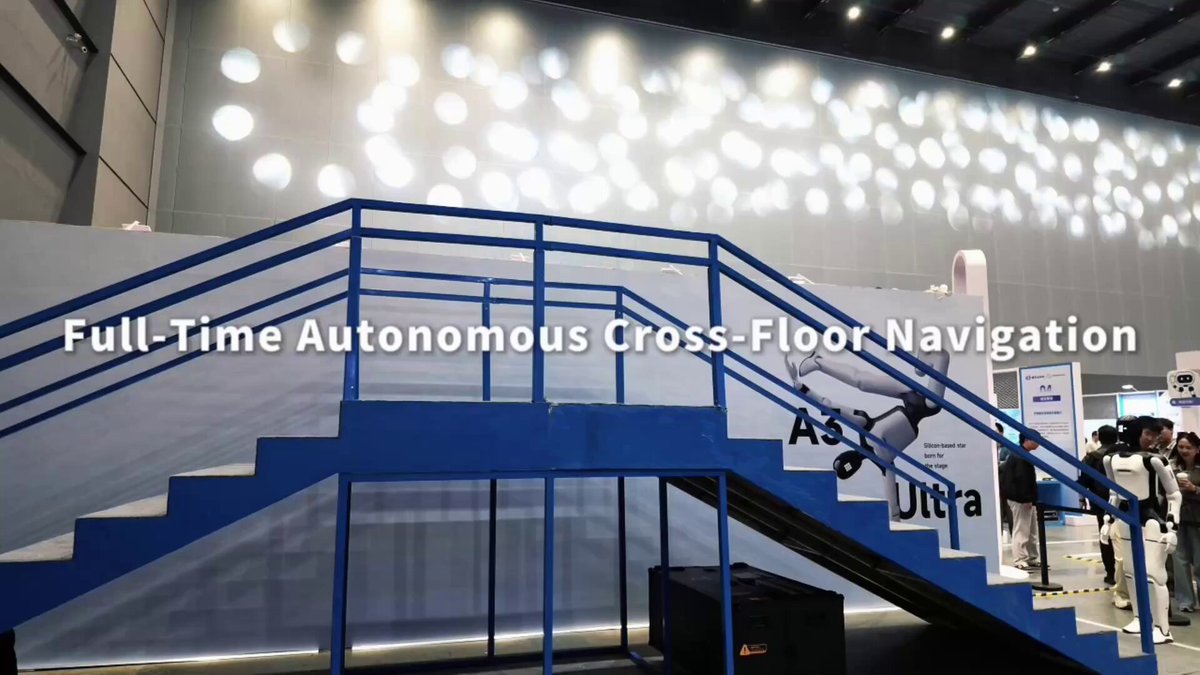
At AGIBOT Innovation Day 2026, AGIBOT said its A3 Ultra humanoid demonstrated autonomous cross-floor navigation and extended autonomous room tidying. The company presented the demos as evidence of navigation, scene recognition, decision-making and long-duration task execution in complex indoor environments with minimal human intervention.
Ziguang Guowei Plans Buyback; Shenyang Machine Tool Denies Embodied AI Robot Business
Ziguang Guowei proposed a RMB 500–700 million share buyback, while Shenyang Machine Tool said it does not design, produce, or manufacture embodied AI robots or related parts and has no such revenue. Huayang International said AI tools are used only in select design stages.
Huayang Group Says Robot Brain Domain Controller, Dexterous Hand Products Under Development
Huayang Group said its robot brain/cerebellum domain controller and dexterous hand products are in development, disclosed via an investor interaction platform.
Sinocera Explores Ceramic Bearing Balls for Robotics, But No Sales Yet
Sinocera Functional Material says its ceramic bearing balls could suit robot joints and drive systems because of their lightweight, high-precision and long-life properties, but the company has not yet recorded robotics sales.
Wanliyang Begins Mass Production of Robot Joint Modules
Wanliyang (002434.SZ) says its robot joint module products have entered mass production, marking a step into volume supply for robotics components.
Wanxiang Qianchao: Robot Parts in R&D or Sample Testing, No Mass Production
Wanxiang Qianchao said robot-related components are a strategic focus, but the industry remains at an early stage. Some products are still in R&D or sample testing, while others have received designated orders and have not yet entered mass production.
Huayang Group Says Robot Components Including Joints and Heads Enter Mass Production
Huayang Group (002906.SZ) announced that its robot components, including precision structural parts like joints and heads, have achieved mass production for some projects, signaling progress in the robotics supply chain.
Junzheng Memory Chips Used in Industrial, Hotel Robots, Not Humanoids Yet
Junzheng Co., Ltd. (300223.SZ) disclosed on an investor interaction platform that its memory chips are already used in industrial robots and hotel service robots. The company said the chips have not yet been applied in humanoid robots.
Huigu New Materials Says It Has No Current Humanoid Robot Business
Huigu New Materials (301683.SZ) stated on an investor interaction platform that it is not currently involved in humanoid robot-related business.
Unitree Wins One Gold, Two Silvers at First CMG Robot Mount Tai Climb
The first CMG World Robot Mount Tai Climbing Competition concluded in Tai'an, Shandong, with Unitree Technology taking one gold and two silver medals.
Shenyang Machine Tool Clarifies It Has No Embodied AI Robot Business
Shenyang Machine Tool (000410.SZ) issued a statement clarifying that it does not engage in the design, production, or manufacturing of embodied intelligent robots and supporting components, and has no related revenue.
Moja Robotics GM: Robot-making is a marathon, premature hype hurts brand
At Chery’s 2026 Global Innovation Conference, Chairman Yin Tongyue described the automaker as a high-tech AI company in disguise. A day later, Chery’s Moja Robotics launched the Mobao, with GM Zhang Guibing saying robot development is a marathon and premature marketing can damage a brand.
China Releases First National Standard for Humanoid Robots After Three-Year Wait
China has officially released its first national standard for humanoid robots, concluding a three-year development process. The standard aims to guide the industry's healthy development and accelerate commercialization.
Keda Intelligent Pursues A+H Dual Listing as Power and Robotics Businesses Converge
Keda Intelligent is seeking an A+H dual listing, with operations spanning power equipment and energy storage as well as industrial and inspection robots. The company's revenue first declined and then rebounded.
DEEP Robotics police robot deployed at Hangzhou Marathon
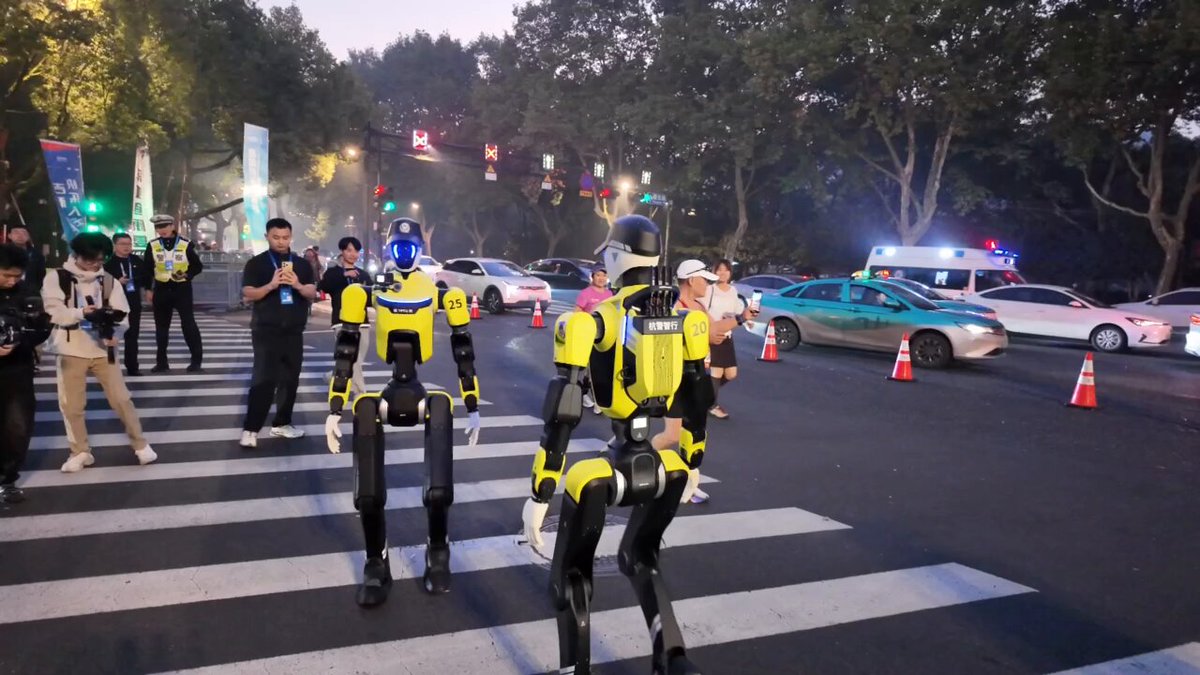
DEEP Robotics said its traffic police robot went on duty early on race day at the Hangzhou Marathon, supporting on-site operations before the city reached full stride. The robot was shown in early-morning conditions as runners and crowds gathered.
Quectel Develops Wheel-Arm Embodied Robot Platform for High-End Scenarios
Quectel has launched Q-Robotbox, a multimodal robot development platform for industry use, and self-developed a wheel-arm embodied robot platform for high-end scenarios. The systems rely on its proprietary "large-and-small brain" control architecture and multi-sensor fusion.
AGIBOT's 110 humanoid robots set Guinness World Record
AGIBOT reports that 110 of its A3 humanoid robots danced in unison, setting a GUINNESS WORLD RECORDS title for the most humanoid robots dancing simultaneously. The company says the performance went beyond a light show, demonstrating the coordination behind large-scale robot deployments: UWB centimeter-level positioning and the LinkBots multi-robot control system kept all 110 units in precise synchronization.

Sharpa dexterous hand featured in NVIDIA Omniverse episode
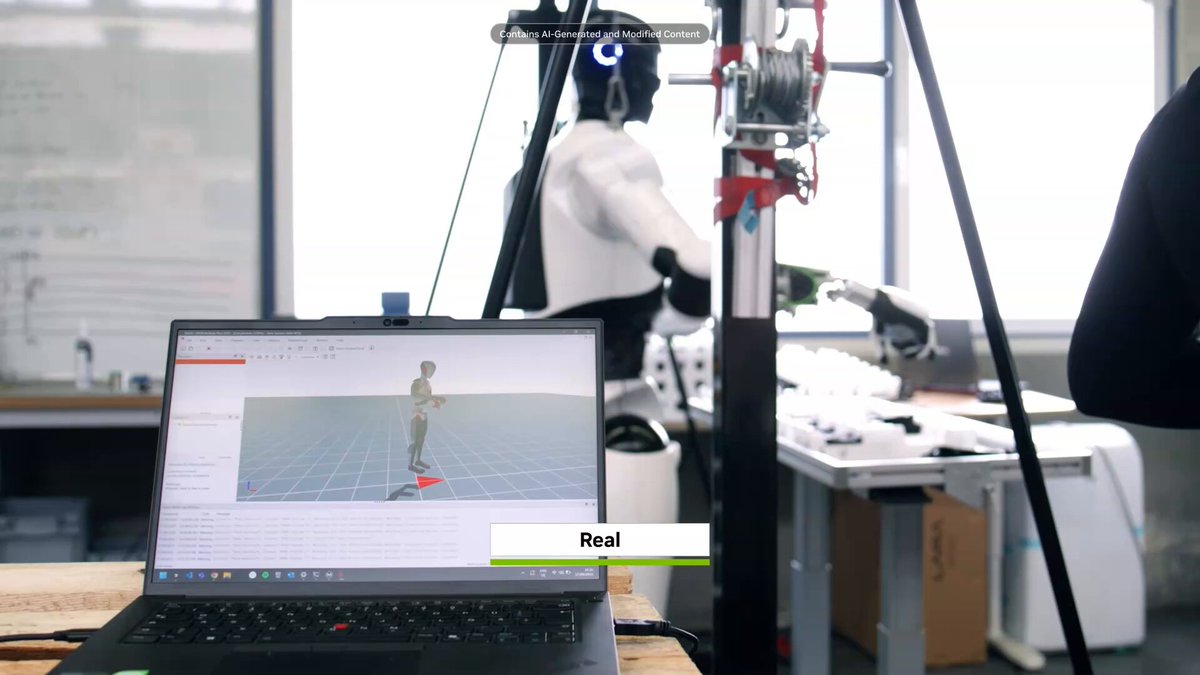
Sharpa's dexterous hand appears in the latest episode of NVIDIA's Into the Omniverse series, which examines how AI agents and simulation are speeding up the development of physical AI. The company says the feature reflects its progress from virtual training environments toward real-world dexterous manipulation.
Jiangnan Chemical Clarifies Main Business Does Not Involve Robotics
Jiangnan Chemical (002226.SZ) said its core operations do not include robot-related businesses, and pointed to Beijing Light Year Infinite Technology's official disclosures for information about that company.
Orient Securities Keeps Buy on Xinquan as Robotics Layout Advances
Orient Securities maintained its “Buy” rating on Xinquan, saying the auto-parts supplier posted resilient profit and gross-margin growth while continuing to advance its robotics layout.
Hang Seng Tech Rises 3% as Horizon Robotics Surges 8%, Xiaomi Gains 7%
Hong Kong's Hang Seng Tech Index extended its afternoon gain to 3%, led by robotics and consumer electronics shares. Horizon Robotics rose more than 8% and Xiaomi gained over 7%.
First Robot National and Procurement Standards Released; Horizon Robotics, Dobot Rise Over 4%
On Nov 2, Hong Kong-listed robot concept stocks strengthened after China released draft standards for domestic products in government procurement; Horizon Robotics-W and Dobot both gained more than 4%.
Unitree Robotics A-share Stock Swings from 12% Drop to 5% Gain Intraday
Unitree Robotics' A-share stock experienced a volatile session, plunging over 12% before rebounding to gain more than 5% intraday.
GenRobot AI Raises $100 Million Series A+ for Robot Training Data
GenRobot AI, a Beijing-based robot data infrastructure company, has completed a $100 million Series A+ round. The financing, disclosed on November 2, drew strategic investors including SAIC Motor, Baidu, and Malaysia’s Eastworlds, plus several financial backers.
Guangdong Robotics Accelerates Global Expansion, Backed by Manufacturing Base
Guangdong's robotics industry is rapidly expanding overseas, leveraging the region's manufacturing strength. Industry leader He Xiaopeng predicts a surge of innovative robot companies in the next few years.
Meta Partners with China's Fourier to Develop Humanoid Robot Prototype
Meta has reportedly partnered with Chinese robotics firm Fourier to build a humanoid robot prototype named Max in about three months, and the two are already working on a second version. Fourier's CEO declined to comment on the collaboration.
Seventh LeadeRobot Robotics Industry Awards Program Opens With 22 Categories, Six Lists
The seventh LeadeRobot Robotics Industry Selection has opened applications, featuring 22 award categories and six major lists, according to organizer Leaderobot.
MIT Researcher Explores Zippers as Building Blocks for Robots
A researcher at MIT is exploring zippers as structural and connective elements for robots, according to Leaderobot. The approach highlights low-cost, flexible assembly possibilities for robotic prototyping.
AGIBOT G2 robots take on 24-hour convenience store shift
AGIBOT ran six G2 robots through a 24-hour shift as convenience store trainees, covering rush-hour crowds, late-night solo duty and the morning breakfast sprint. Under the tagline "robots never clock out," the test asked whether the robots could handle nonstop customers and unexpected requests across an uninterrupted day of retail work.
New Surgical Robot Supports Cardiac Procedures, Expanding Clinical Boundaries
A new surgical robot has assisted in cardiac procedures, pushing the precision and controllability of surgery to new limits and broadening its clinical applications.
Hand-Cranked Recycling Robot Debuts to Crush Aluminum Cans and Boost Circularity
A hand-cranked recycling robot has been introduced, offering a compact, low-barrier way to crush aluminum cans and support everyday resource circulation.
Chinese Manufacturers Accelerate AI-Powered Industrial Robots as Global Race Heats Up
Chinese manufacturers are speeding up the integration of AI into industrial robots, intensifying a global automation race and shifting the center of smart manufacturing.
Humanoid Robot Traffic Officer Debuts at Hangzhou Marathon
A humanoid robot traffic officer appeared at the Hangzhou Marathon, handling guidance and interaction duties during the event.
Smart Mobile Robot Solution Provider YIWEI Technology Kicks Off Hong Kong IPO
YIWEI Technology, a smart mobile robot solution provider, has launched its Hong Kong IPO, offering 71.687 million H shares with subscription open from October 31 to November 9, 2026.
Pudong Embodied AI Firms Advance Multiple Tracks, Deploy Robots in Real-World Scenarios
Embodied AI companies in Shanghai’s Pudong New Area are advancing across multiple robotics tracks and moving robots from labs into factories, commercial venues and public spaces. Leaderobot says the resulting deployments form a diverse industrial landscape.
Chinese Robotics Firm and Chip Giant Launch Out-of-the-Box Humanoid for Research
A Chinese robotics company and a chip giant have jointly launched an out-of-the-box humanoid robot platform for research, aiming to lower the barrier for academic and teaching use.
Overseas Logistics Humanoid Robot Firm Nears IPO, First Financial Report Revealed
An overseas humanoid robot company focused on logistics is moving toward an IPO, and its first public financial report offers a rare look at its revenue and spending.
Overseas Firm Raises $125M to Expand Microsurgical Robotics Therapies
An overseas medical robotics company has raised $125 million to expand its microsurgical robotic platform and explore new therapies. These precision instruments are advancing surgery toward finer, more controllable procedures.
Europe Launches China Semiconductor and Robotics Thematic ETF, Adding Capital Channel
A new exchange-traded fund listed in Europe tracks Chinese semiconductor and robotics themes, giving overseas investors another route to allocate to China's hard-tech assets.
New Embodied AI Hardware Platform Scales Multiple Products to Mass Production
A new robotics company is positioning itself as an embodied AI hardware R&D and manufacturing platform, with several products already in mass production. It aims to support scalable embodied applications through core hardware such as robot bodies, joints and controllers.
Humanoid Robots and Autonomous Vehicles Share Spotlight at Korean Industry Expo
At a South Korean industry exhibition, humanoid robots and autonomous vehicles shared the same stage and drew major attention. The pairing is being read as a signal that embodied AI is shifting from standalone devices toward coordinated systems.
Embodied AI Race Shifts to Real-World Data Flywheels
The next phase of embodied AI competition is shifting from model parameters to real-world data flywheels. Companies that can continuously collect, clean, and feed real-world data back into policies are more likely to achieve scale.
Google and Space Agency Develop AI Medical Robot for Mars Missions
Google is collaborating with a space agency to build an AI medical robot for future deep-space and Mars missions, aiming to give astronauts basic diagnostic and treatment support when Earth-based help is far away.
Two Firms Build Smart Assembly Line for Hengyang Embodied AI
Two companies in Hengyang are jointly building an intelligent complete-machine assembly line that combines R&D, pilot testing, and shared manufacturing, offering a model for inland cities entering embodied AI.
Robot Concept Stocks Slump in A-Shares; Unitree Falls Over 10%, Several Hit Limit Down
Robot-themed A-share stocks retreated in a volatile session, with Unitree Technology down over 10%, Daye Co., Zhengyu Industrial and Tianqi Co. at limit down, and Shandong Mining Machinery and Aishida off more than 7%.
Yiwei Technology Opens IPO, Betting on Full-Stack Robot Chips as Value Shifts Upstream
Yiwei Technology (2065.HK) has opened its IPO subscription, positioning itself as a full-stack robot chip platform that integrates computing, perception and execution.