Live Briefs 2026-10-03 · Full coverage of embodied AI
AI Insider Reviews Agility Robotics' Digit 5 Redesign
AI Insider analyzes the redesign of Agility Robotics' Digit 5 humanoid and the requirements for putting a humanoid to work at scale, covering higher payload, faster charging and a new safety system.
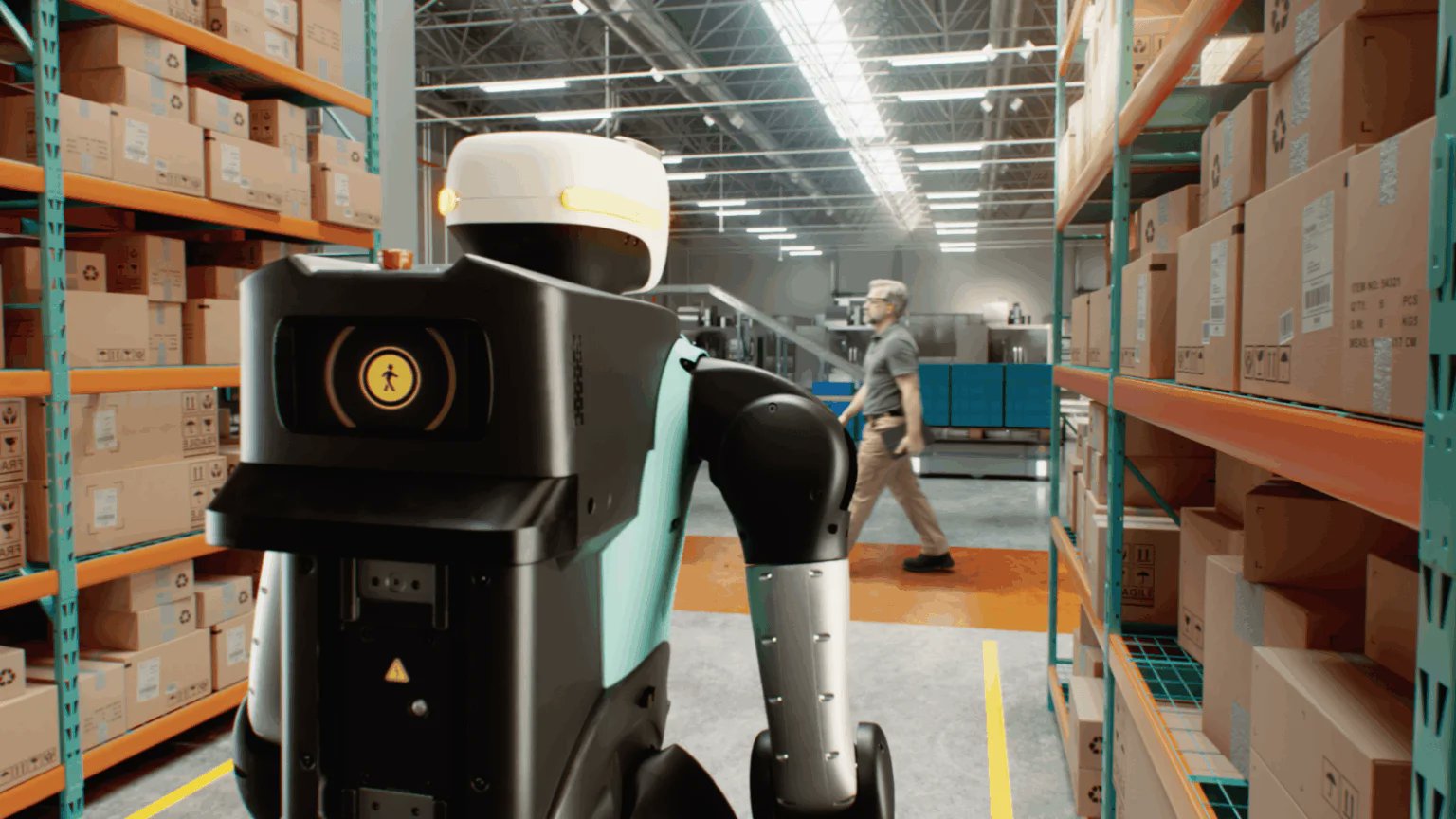
The Evolution of Digit: How Agility Robotics Went from Cassie to Digit 5
Agility Robotics has spent over a decade developing five versions of its Digit humanoid, evolving from the record-setting biped Cassie to the workplace-ready Digit 5. The latest model introduces human-like legs, longer battery life, and the ability to safely operate near human workers.
Rethinking Robot Safety as Physical AI Faces Layered Cyber Threats
Physical AI introduces new robot safety risks beyond component failure, because attackers can manipulate perception, decisions, and actions. Research across model backdoors, system exploits, and runtime manipulation shows cybersecurity must join functional safety throughout the robot lifecycle.
Jidong Equipment Says Cement Silo-Clearing Robot Still Under Optimization, No Mass Production Plan
Jidong Equipment (000856.SZ) said its cement silo-clearing robot remains under optimization and has not been finalized for production, with no mass production plan currently. The update came in response to investor questions on robot progress and related businesses.
Agility says Digit 5 balances power, safety and endurance
Agility says the hardest part of building a working humanoid is that power, safety and endurance conflict with one another, and claims its Digit 5 robot holds all three. The company also thanked @BotJunkie and @IEEESpectrum for their review of the machine.
QingTianZu sets three-year goal of RMB 10B revenue, 20+ robot maker links
Robot rental platform QingTianZu says its dispatchable fleet has topped 4,000 units and cumulative GMV neared RMB 3.5 billion, as it unveils a three-year goal of RMB 10 billion in platform revenue.
Ruiyu Mold Says Humanoid Robot Business Not Yet in Formal R&D Pipeline
Ruiyu Mold (002997.SZ) said during investor relations that it has not formally included humanoid robot business in its R&D project approval sequence. The company reiterated no cooperation with Chery or Tesla in humanoid robots and noted structural components share commonalities with auto parts.
Zeno Robotics Secures Hundreds of Millions in Seed Funding, Backed by Sunny Optical and MetaX
Hangzhou Zeno Future Technology Co., Ltd. (Zeno Robotics) has raised hundreds of millions of RMB in seed funding from investors including Sunny Optical and MetaX. The company has an 82.37% predicted probability of securing follow-on funding within two years.
Laifeng Robotics Secures Tens of Millions in Angel Funding Led by Yuda Investment
Hangzhou Laifeng Robotics has completed an angel funding round worth tens of millions of yuan, led by Yuda Investment. The proceeds will be used to build overseas sales and service teams and advance R&D for high-difficulty products such as greens mowers and rough mowers.
Nvidia's Les Karpas on Why Robots Still Await Their ChatGPT Moment
Robotics has not yet reached a mainstream breakthrough, and Nvidia's Les Karpas will explain why at TechCrunch Disrupt 2026. The event offers discounted passes for registrations completed before September 25, with savings of up to $200.
Zijin Mining Subsidiary to Invest 1B Yuan in AI, Embodied Intelligence Fund
Zijin Mining's wholly owned unit Zijin Xiamen Equity plans to contribute 1 billion yuan as a limited partner to the Xiamen Times Shenyuan Venture Capital Fund, taking a 20.4081% subscribed share. The 4.9 billion yuan fund targets artificial intelligence, embodied intelligence, technology applications and frontier technologies.
Tongda Power Clarifies No Direct Cooperation with Unitree Robotics
Tongda Power (002576.SZ) stated on an investor interactive platform that as of September 16, it has not established direct cooperation with Unitree Robotics.
Huayang Group (002906.SZ) Says Robot-Related Revenue Share Still Low
Huayang Group said robot-related business currently accounts for a relatively low share of revenue, while its automotive electronics and precision die-casting units are pursuing robot component projects.
Weiguang Sells Frameless Torque Motors, Joint Modules for Embodied AI Robots
Weiguang Co. (002801.SZ) announced on its interactive platform that its frameless torque motors, joint modules, and other core components for embodied AI robots have been sold externally. The business is still in its cultivation stage and accounts for a small share of overall revenue.
Shangluo Electronics: Robotics, Low-Altitude Economy Are Key Expansion Directions
Shangluo Electronics (300975.SZ) said on an interactive platform that robotics and low-altitude economy are key expansion areas, but current business volume is small and commercialization timing remains uncertain.
Three Robot Body Makers Release Five Models in Eight Days to Add AI Brains
In September, the embodied AI sector saw a wave of model launches, with three robot body makers releasing five models in eight days. Songyan Dynamics launched its Scalabot sub-brand and two HERON architecture models, as hardware firms seek to add stronger AI "brains."
Henggong Precision to Raise Up to 810 Million Yuan via Convertible Bonds for Embodied AI
Henggong Precision plans to issue convertible corporate bonds to unspecified investors, raising no more than 810 million yuan, with proceeds aimed mainly at embodied AI robot manufacturing and R&D.
Lumos Robotics to Stage Robot Theater Live Show in Shenzhen Sept 19
Lumos Robotics says its robot theater is ready for a live show in Shenzhen on September 19. The performance will feature robots handling dance, martial arts, music, comedy and more on stage.

Ninth China Robot Summit Unveils Full Agenda for September 2026 in Hangzhou
The ninth China Robot Summit will take place from September 16 to 18, 2026 at the Future Sci-Tech City Academic Exchange Center in Hangzhou, themed "Smart-Connected New Ecosystem, Empowering All Scenarios." Organizers have released the full agenda, exhibitor list, transport and hotel guidance, and free registration details.
Zhejiang University-affiliated Tuorui Intelligence Completes Tens of Millions Yuan First Round
Hangzhou Tuorui Intelligent Equipment has closed a first-round financing of tens of millions of RMB, backed by industrial investors including Power Future Technology and Tongli Technology. The company will use the funds to build an embodied intelligence pilot base, scale production lines, and expand its talent pool as it advances full-stack ODM and real-machine data services.
Robot Tug-of-War, Obstacle Course, Jumping: 2026 Embodied AI Challenge at Digital Trade Expo
The 2026 Embodied AI Robot Challenge will debut at the 5th Global Digital Trade Expo from September 23-27 in Hangzhou. The event features 14 competitive events, interactive experiences, and corporate showcases, allowing visitors to race and compete alongside robots.
CPIC P&C Issues China's First Embodied AI Component Insurance for Dexterous Hands
China Pacific Property Insurance's Beijing Branch and Beijing Daqi Yuequan Bionic Technology signed and submitted China's first insurance policy for embodied-AI key components, covering dexterous hands. The product insures equipment loss from accidents, natural disasters, defects and operator error, plus third-party injury and property damage.
DEEP Robotics shows off robot barista in embodied AI push
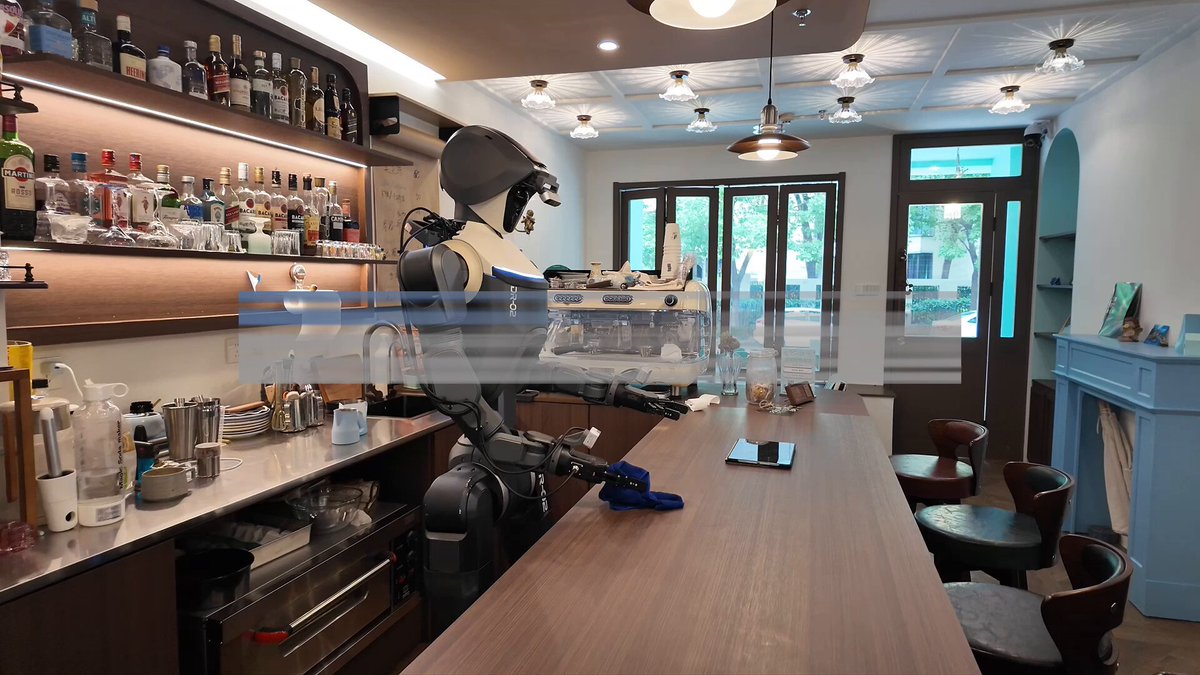
DEEP Robotics has released footage of its robot barista, showing a humanoid handling a real-world service task. The company says it is exploring how humanoid robots can bring embodied AI into more practical scenarios, from everyday chores to emerging applications.
Shangpin Home Collection Open-Sources WorldSimReady-Home Dataset for Robot Training
Shangpin Home Collection and Tangyuan Technology have released WorldSimReady-Home, an open-source simulation dataset covering 100,000 square meters of high-fidelity home scenes and 10,000 interactive assets. It aims to bridge the Sim2Real gap by letting humanoid, quadruped, and wheeled robots train on standardized home tasks before deployment.
RealMan Builds 150-Robot Data Training Ground in Changzhou to Tackle Embodied AI Data Challenges
RealMan Intelligent Technology has built a data training ground in Changzhou with 150 robots to address key pain points in embodied AI data collection. The facility generates 2GB of raw data per robot per minute, highlighting challenges in storage, time synchronization, and cost reduction.
ZhiXing Robot Takes On Lacquer Fan Craft at Hong Kong Mid-Autumn Lantern Fair
ZhiXing Robot has been invited to Hong Kong's first International Mid-Autumn Lantern Festival, where its wheeled humanoid robot Hanyue will perform the traditional craft of lacquer fan making using precision force control, 3D vision and adaptive grasping. The event runs September 17-27 at Victoria Park, placing frontier robotics alongside Qinhuai lanterns and local Hong Kong lantern craftsmanship.
Israel's Physical AI Push Needs to Account for the Invisible Electromagnetic World
Israel's national AI plan designates physical AI as a strategic priority and proposes controlled testbeds, but it does not explicitly include the electromagnetic environment. Experts argue that radio propagation, jamming, spectrum congestion and digital twins must be part of validating autonomous systems, alongside roads, weather and walls.
Unitree Unveils H2 Humanoid: 180cm, 70kg, Ballet and Kung Fu Capable
Unitree has launched the H2, a 180cm, 70kg humanoid robot that can perform ballet and kung fu. The new model features 31 joints and a human-like face, expanding applications from industrial inspection to companion services.
Robot Era: Half Overseas, Nine of Top 10 Tech Firms as Clients
At CES 2026, Robot Era showcased four products and disclosed that overseas business accounts for 50%, with nine of the top ten global tech companies as customers. Its L7 humanoid, XHAND 1 dexterous hand, and ERA-42 VLA model have secured cumulative orders exceeding 500 million yuan, including a nearly 50 million yuan logistics order.
Live Science Poll: 42% Would Let Humanoid Robots Handle Chores, 36% Distrust
A Live Science reader poll found that 42% would let a humanoid robot take over household chores, while 36% said they do not trust robots with their plates or data. Readers' comments focused less on privacy than on whether robotic hands are dexterous enough for tasks like dusting, dish loading, and floor cleaning.
40+ AI Firms Demo Real Work at Bund; UDI Robot Jumps 150% in HK Debut
The Bund Conference showcased over 40 embodied AI firms moving from booths to pharmacies and factories, demonstrating real-world tasks. UDI Robot surged over 150% on its Hong Kong debut, boosting sentiment for the robotics sector and lifting related ETFs and supply chain stocks.
How Much Water Is in Robotics' Celebrated Order Announcements?
Mekamind founder Shao Tianlan's public criticism has exposed how related-party deals and publicity-driven announcements inflate order figures in China's embodied-AI sector. Interviews and tender data show most humanoid robot orders come from education, government and pilot projects, while stretched payment cycles turn headline contracts into cash-flow illusions as IPO scrutiny shifts toward sustainable revenue.
China's 70+ Robot Training Schools Struggle to Sustain Without Data Sales
Over 70 embodied AI training grounds have been built in China, with more than 40 planned. But most rely on selling data, which is insufficient to cover costs, forcing a shift to training-as-a-service and sustainable business models.
Humanoid Robot IPO Reviews Tighten as Unprofitable Firms Face Profitability Test
Investment bankers say IPO reviews for humanoid robot companies are not being tightened specifically, but regulators are applying stricter substantive judgment to unprofitable firms' profit prospects. Financials from Yunshenchu, Dobot, and Leju, plus Unitree's post-IPO share decline, are shaping expectations for similar applicants.
China's Brain-Computer Interface Firms Top 200, but Researcher Says It's Not Yet a Rigid Need
On Sept. 15 in Haikou, CAS researcher Zuo Nianming outlined four barriers—inconvenient, unstable, unintelligent and not rigid demand—even as China's BCI enterprise count exceeds 200 and market forecasts rise. Industry speakers distinguished research from product logic, while regulators said standards remain at an early conceptual stage; Zuo proposed medical health, natural interaction and brain-computer agents as future directions.
Agility's Digit 5 Steps Back from Humans, a Key Step for Humanoids in Factories
Agility Robotics' Digit 5 is programmed to avoid obstructing humans, a first for humanoids. With a graded safety motion system, 65,000 operational hours, and OSHA recognition, it targets the trust needed for factory deployment.
Shenzhen's Xingcan Smart Brings Autonomous Driving to Elder-Care Wheelchair at APEC
Shenzhen startup Xingcan Smart showcased an elderly-care robot at APEC's First Senior Officials' Meeting in February, applying autonomous-driving technology to a wheelchair. The company is pursuing a differentiated path as domestic peers focus on humanoid robots with limited mass production.
15-Year-Old Builds Bionic Turtle Robot That Swims Without Propellers
Evan Budz, a 15-year-old student, built BURT, a bionic underwater robot that copies a snapping turtle's flipper propulsion to avoid disturbing the water it studies. It won top awards, but its 96% coral-bleaching detection result comes from controlled pool tests, not real reefs.
Humanoid Robot OEMs Struggle as Dexterous Hand Profits Shift Upstream
Humanoid robot OEMs face thin hardware margins around 10% even as Unitree reports high gross margin, with most still unprofitable amid price wars. Dexterous hands are seeing faster price declines and higher upstream component margins, raising the question of whether OEMs will bring production in-house.
Hong Kong Chief Executive John Lee Positions AI as Key Industry in First Five-Year Plan
Hong Kong Chief Executive John Lee announced the territory's first five-year plan for 2026-2030, designating artificial intelligence as a key future industry. The plan includes measures to build AI infrastructure, foster cross-sector integration, and support SMEs and public AI literacy.
Hefei Team Builds Forestry Inspection Robot for All-Weather Fire Detection
A Hefei team has developed a forestry inspection robot that fuses lidar and thermal imaging to enable all-weather fire monitoring. The system reports a 27 percent coverage gain and completed multiple field tests, with the team now pushing toward industrialization.
Hong Kong Stocks Open Higher; Robot Concept Stocks Surge, Lithium Battery Leader Falls
Hong Kong's three major indices opened higher, with robot concept stocks showing collective strength led by Ledong Robot's 12.8% gain, while the leading lithium battery stock continued to decline.
Agility Digit V5 Drops Signature Bird Legs for Industrial Pragmatism
Agility Robotics has unveiled Digit V5, replacing its iconic backward-bending bird legs with humanoid legs optimized for lifting. The redesign emphasizes strength, efficiency and safety, with 50 lb payloads, a 10:1 runtime-to-charge ratio and a Physical AI architecture aimed at factory deployment.