Live Briefs 2026-11-22 · Full coverage of embodied AI
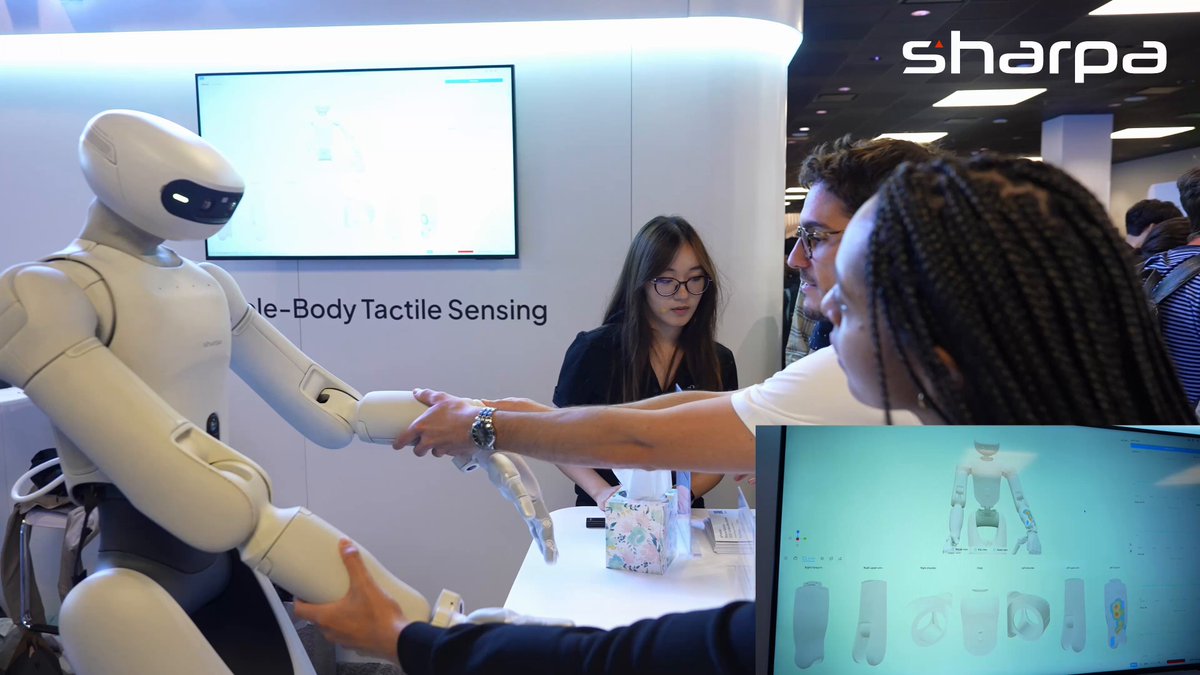
Sharpa D01 electronic skin adds whole-body touch sensing
Sharpa says its D01 humanoid responds to a light touch because a whole-body electronic skin detects physical contact, letting the robot react to interactions that cameras alone cannot capture. The tactile system samples at 100 Hz, with 0.2 N force resolution and 10 mm spatial resolution. The company says touch gives robots another way to understand and interact with the physical world.
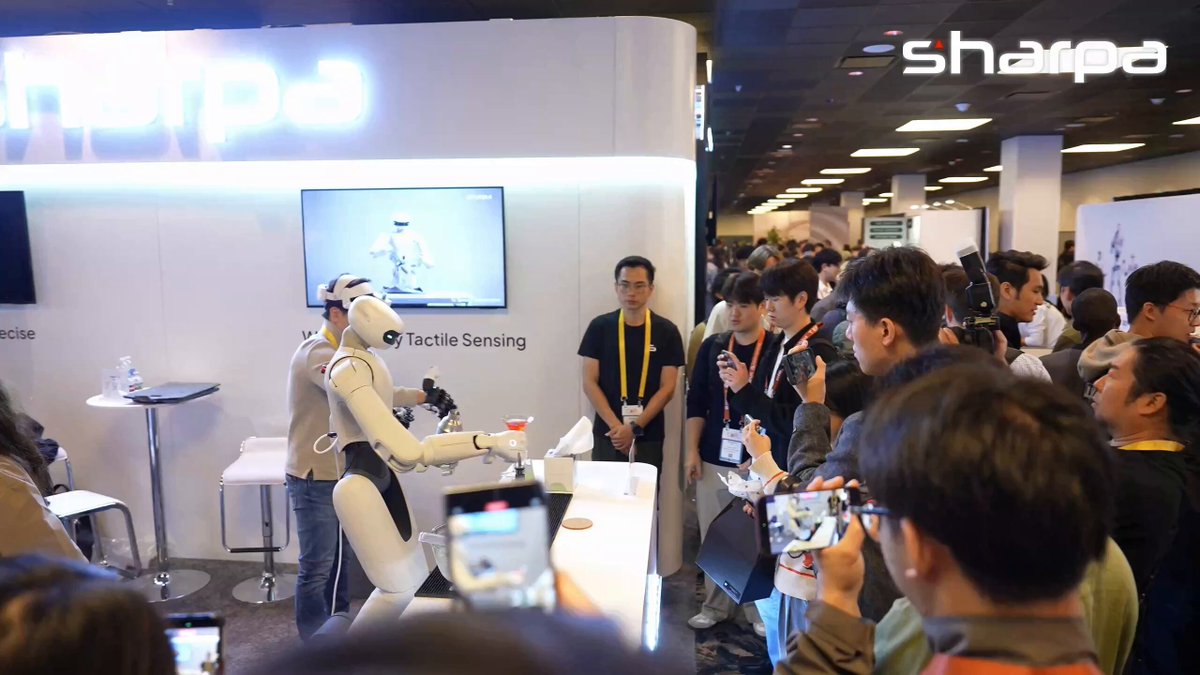
Sharpa shows AE01 teleoperation pouring drinks with 22-DoF hand
Sharpa demonstrated a teleoperated robot bartender: operator hand movements captured by AE01 are mapped onto the Sharpa D01 hand, which picks up a container, pours, and sets it back down with controlled precision. The setup relies on Sharpa's 22-DoF hand-glove twin design, translating human motion into real-world robotic manipulation.
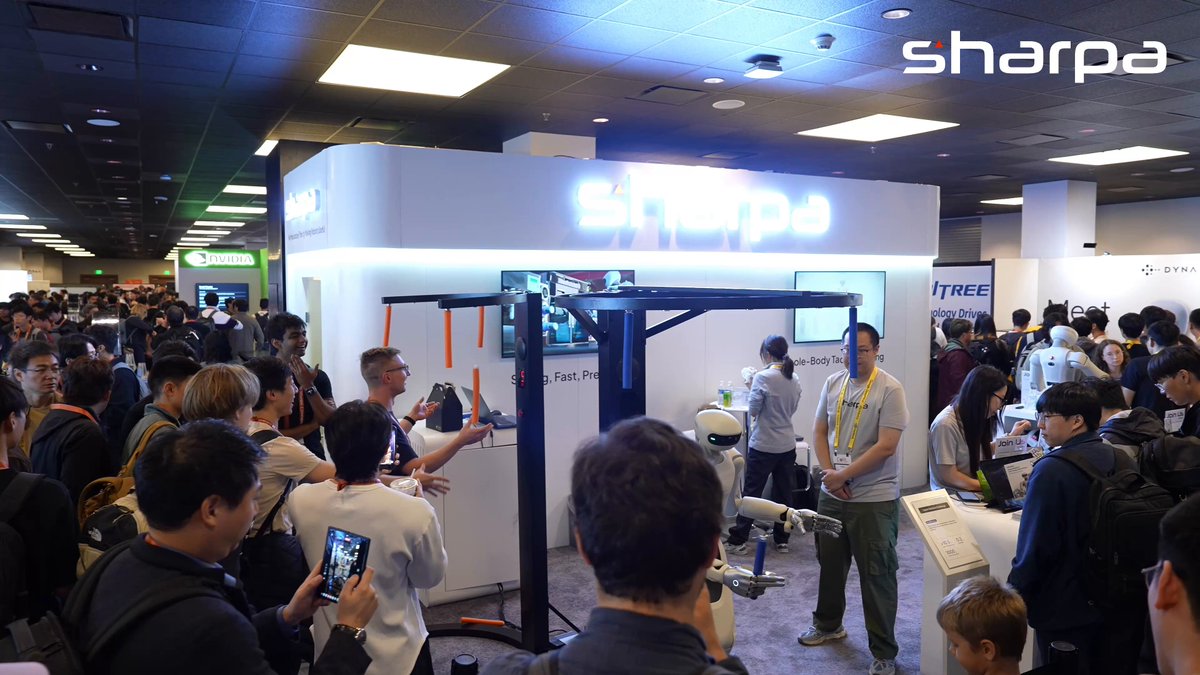
Sharpa D01 hits 10.5 m/s in stick-catching reflex demo
Sharpa Robotics put its D01 robotic arm through a Catch the Stick Challenge, in which a stick is dropped at random and the machine races a human to grab it. The robot tracked the falling stick, moved into position and closed its grasp in one rapid, coordinated motion. Sharpa cites a maximum end-effector speed of over 10.5 m/s and 0.2 mm repeatability, positioning the D01 for tasks that demand both speed and precision.
Top Bipedal Robot Maker Adds Wheels to Its Legged Platform
A leading bipedal robotics company has equipped its two-legged robot with wheels, creating a hybrid platform that aims to combine legged agility with wheeled speed and efficiency.
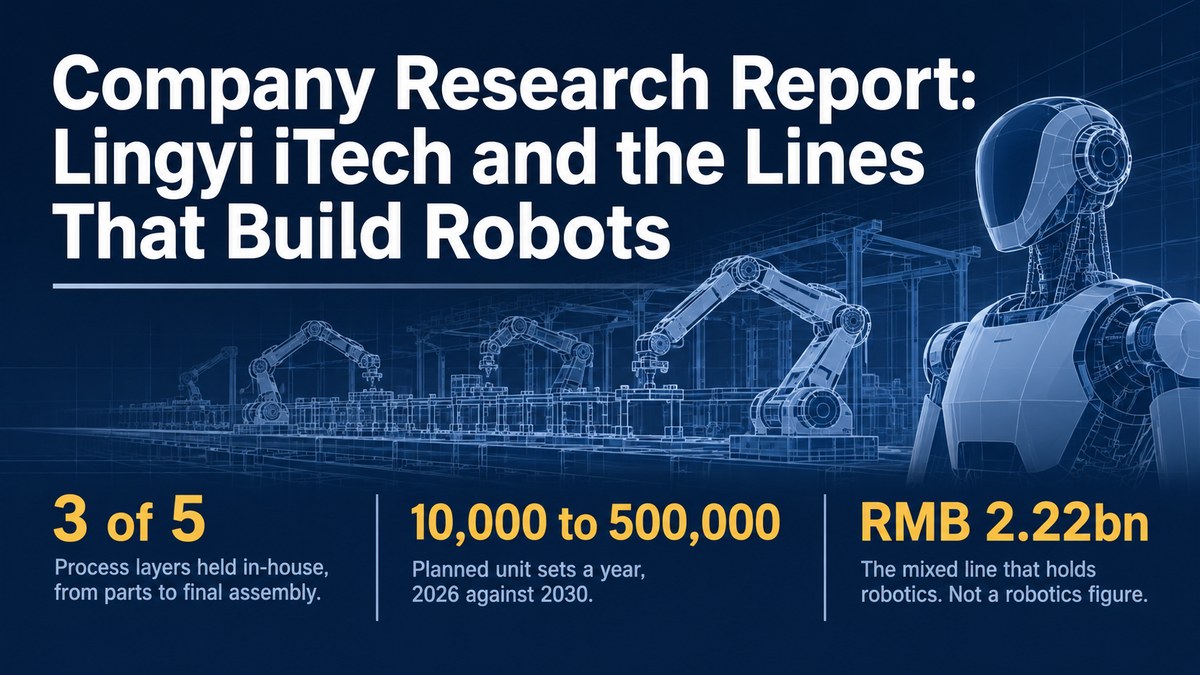
Company Research Report: Lingyi iTech and the Lines That Build Robots
Lingyi iTech holds three of five process layers behind humanoid brands, from parts to eight-stage assembly. What its filings do and do not show.
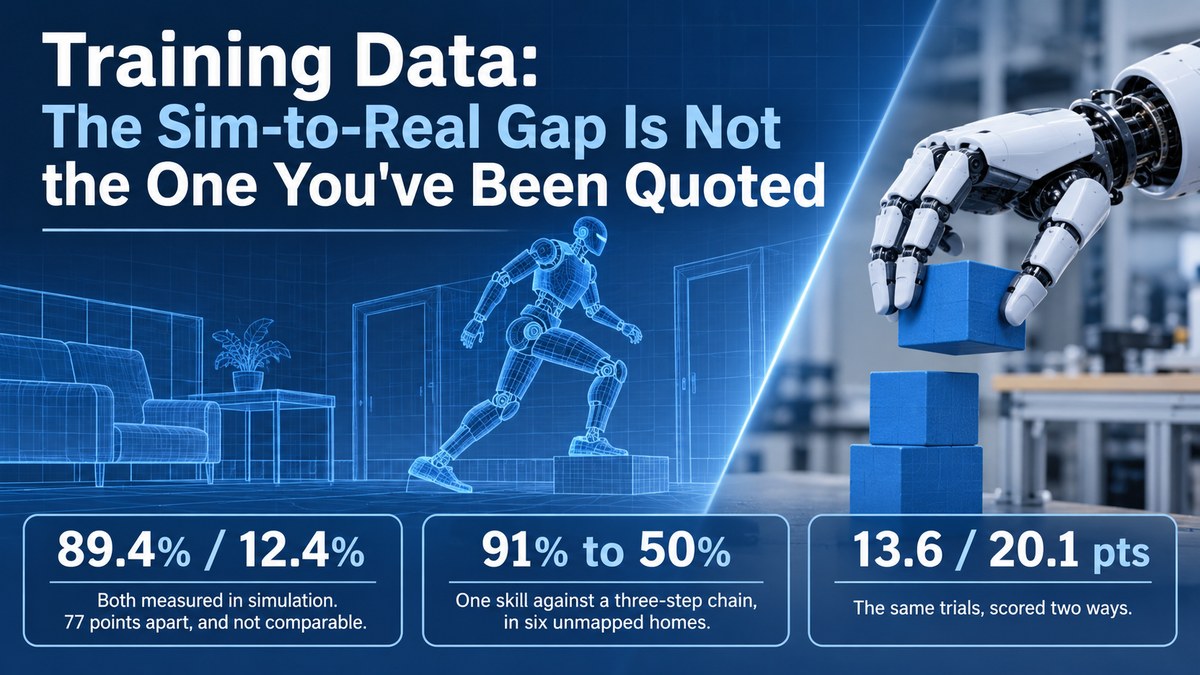
Training Data: The Sim-to-Real Gap Is Not the One You've Been Quoted
Both figures behind the most quoted sim-to-real gap came from simulators. Where the real gap sits, and why the two cannot be subtracted.
Musk Links Brain-Computer Interface to a Robot Vacuum
Elon Musk has connected a brain-computer interface to a robot vacuum, according to a report from Leaderobot. The brief demonstration points to broader efforts to link neural signals with everyday home devices.
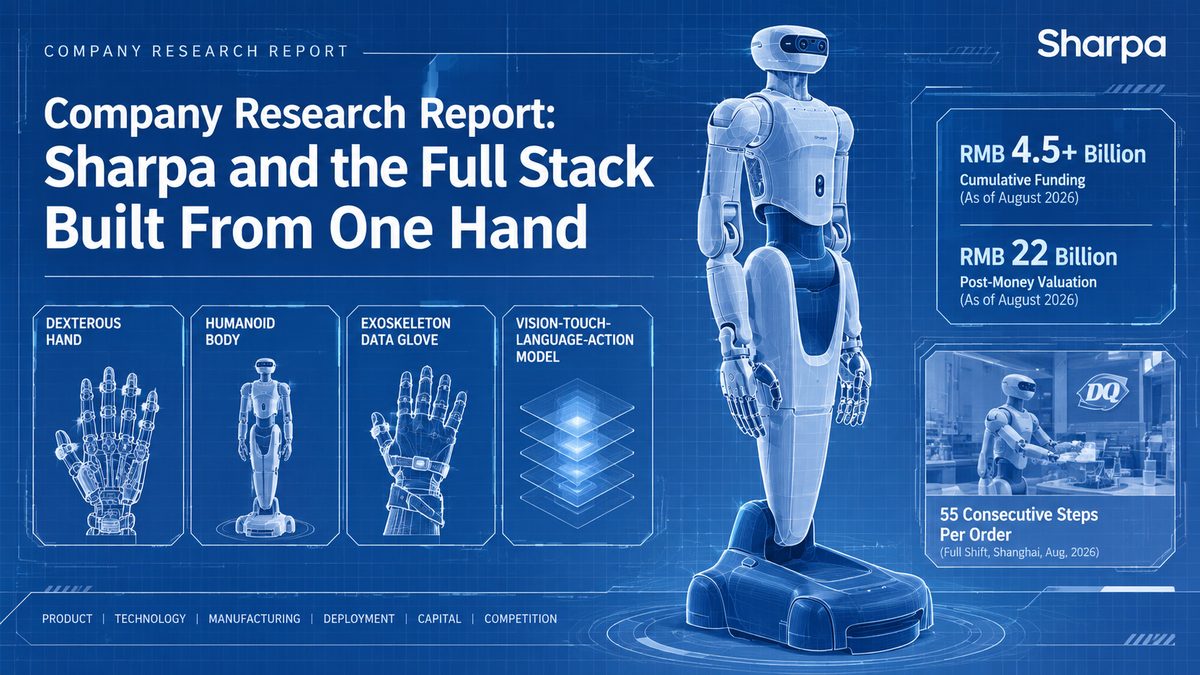
Company Research Report: Sharpa and the Full Stack Built From One Hand
Sharpa began with a tactile hand and extended into humanoids, an exoskeleton data glove and a layered model. This report separates the four segments, the supply bill and the funding.
Chinese Academy of Sciences Team Reveals Efficient Neural Encoding for Brain-Computer Interfaces
Researchers at the Chinese Academy of Sciences' Institute of Automation have found that the brain can decode three-dimensional hand movement trajectories using only a small number of neurons. The primate study, published in the Journal of Neuroscience, provides a neural basis for developing more efficient brain-computer interfaces.
Agility's Kevin Reese explains what 'cooperatively safe' robots mean
Agility Robotics posted an explainer in which its Senior Director of Robotic Safety, Kevin Reese, unpacks the term 'cooperatively safe' and outlines what the humanoid robot developer is building toward. The company frames cooperative safety as a core design goal for robots meant to work alongside people.

Robot Talk Episode 170: Daniela Shchegelskaya on Reliable Robots in Safety-Critical Work
In Robot Talk Episode 170, Daniela Shchegelskaya discusses how autonomous robots can operate reliably in safety-critical environments. Her work at Elimpus includes integrating Boston Dynamics’ Spot for inspections in live power substations, with attention to navigation, connectivity, remote diagnostics, data collection, and system-level reliability.
Dawn Polymer: Conductive TPE Enables Direct Circuit Printing on Robot Bodies
Dawn Polymer said it has developed an ultra-soft artificial skin, SiTPV, while advancing a polymer alloy platform for robot flexible bionic materials and green lightweight composites. The company says conductive TPE's low resistivity could allow circuits to be printed directly on robot bodies, simplifying wiring harness design.
Ankai Micro Says Chips Used in Desktop Robots, Other Terminals
Ankai Micro (688620.SH) said on an investor interaction platform that its chips are currently used in desktop robots and other terminal devices, signaling its presence in robotics-related applications.
Yutai Micro Develops Ethernet Products for Robot Motion Control, Including Humanoid Robots
Yutai Micro said it has developed Ethernet communication products that can be adapted for robot motion control, including humanoid robots, in response to an investor question about embodied robots.
Astribot releases CoMind technical report and uncut videos
Astribot released a technical report and uncut demonstration videos for CoMind, its cross-robot shared-vision system for household task collaboration. The post itself carries no further technical details or performance figures; the materials are published on Astribot's own site.
D-Robotics Details CLIP Quantization on RDK X5
D-Robotics recapped its latest Office Hour session, in which engineer Shockley walked through quantizing CLIP on the RDK X5: ONNX export, calibration data, quantization, model compilation, and on-device inference with BPU acceleration. The session also covered updates from the RDK Challenge Winter edition. The company frames the walkthrough as a practical guide for developers who want to bring their own trained or fine-tuned models onto the RDK platform.
HeymanDex Pushes Dexterous Hands Into Underwater Work
HeymanDex is targeting underwater environments as an entry point for dexterous robotic hands, emphasizing sealing and reliability over lab-only performance. Its WA100 hand has moved from prototype testing toward commercial use, while the company plans to extend its core technology into industrial and overseas markets.
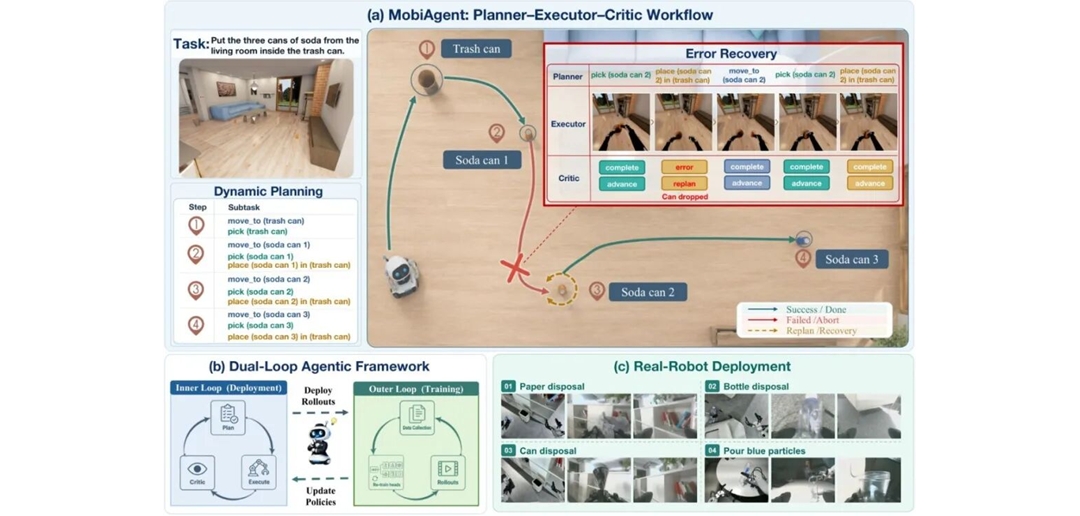
Astribot has three papers accepted at CoRL 2026
Astribot said three of its research works were accepted at CoRL 2026. MobiAgent performs recursive self-improvement from deployment data without human annotation; PLaW-VLA predicts how a scene will evolve before acting; and ARMS is described as always on, able to watch, recall and act.
Beijing Humanoid's 8 Papers Accepted to CoRL 2026 Main Conference
Beijing Humanoid's eight papers have been accepted to the CoRL 2026 main conference, highlighting a full-stack algorithm system that underpins its Huisi Kaiwu embodied intelligence platform.