Live Briefs 2026-11-22 · Full coverage of embodied AI
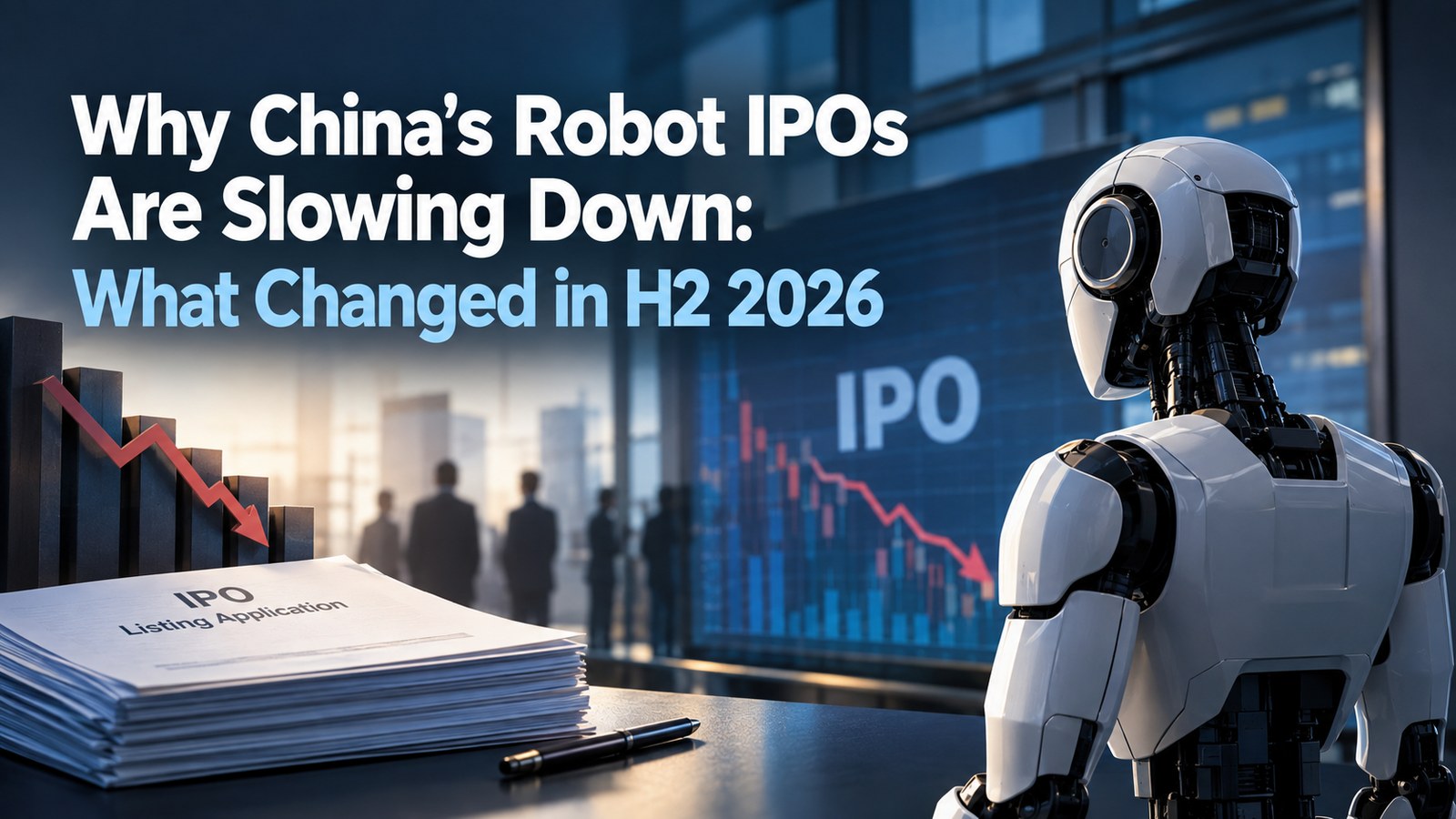
Why China's Robot IPOs Are Slowing Down: What Changed in H2 2026
China's robot IPO window narrowed in H2 2026: 14 companies listed, a STAR Market applicant withdrew, and the test became who pays the revenue.
How Much Does a Robot Hand Cost? Cheaper Isn't the Same as Proven.
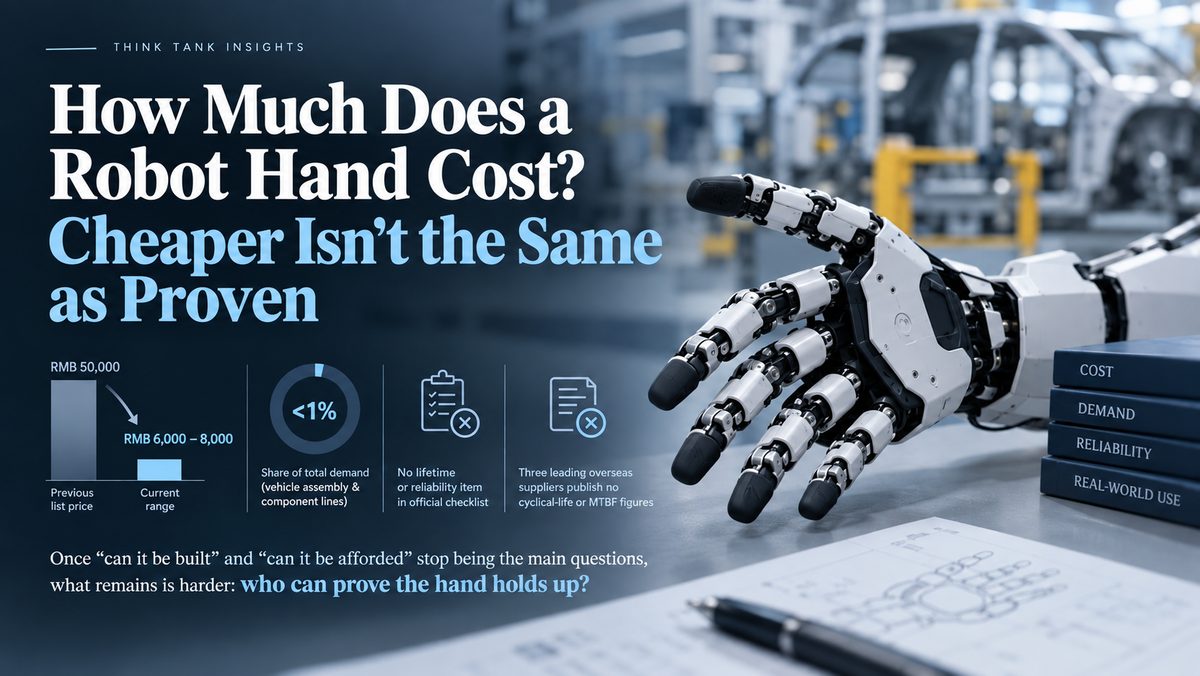
Chinese robot hands now cost a fraction of their 2025 prices, yet fewer than 1% of them work on automotive lines. The industry has three separate ways of judging a hand, and the one that measures lifespan has no common scale.
Tesla's Optimus Suppliers: Why the Mass-Production Audits Started in Ningbo
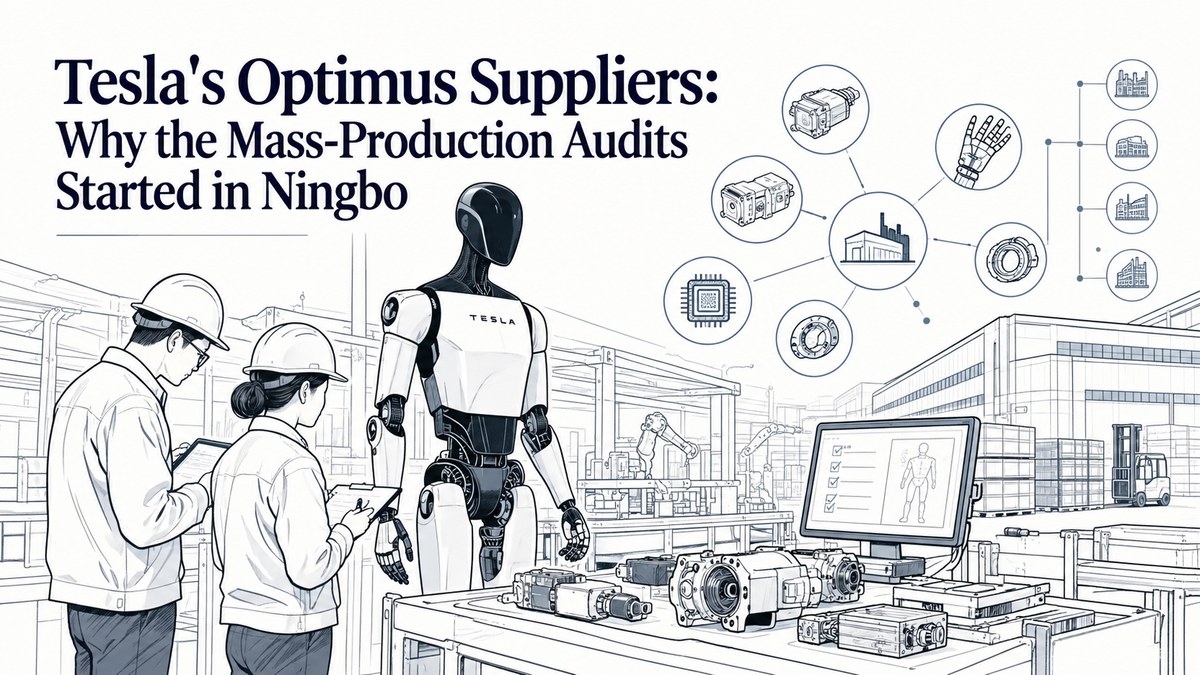
On Sept 16, 2026, a Tesla team arrived in Ningbo, a port city in Zhejiang province, and began a mass-production audit of its robot suppliers the next day. The names reported from that round, Tuopu Group, Sanhua, Joyson Electronics, Zhejiang Rongtai and Xinquan, are almost all long-standing suppliers to Tesla's car business. Why would a robot have to clear the production lines of auto parts makers first? Because what an audit measures is cycle time, yield and cost, and those three sit with companies the car industry has spent decades hardening. Tesla's own description of the task is that "almost every part is new, with no ready supply chain." The list is therefore more than a purchase order. It is Tesla looking for a manufacturing path it can repeat. Article structure: - 1. The audit: four departments on site, three answers - 2. The list: why it is almost all auto parts makers - 3. The threshold: how far an audit is from mass production