Live Briefs 2026-10-03 · Full coverage of embodied AI
Agility CEO on Bloomberg: Digit deployed at 9 sites, 65k+ hours
Agility CEO Peggy Johnson discussed physical AI demand on Bloomberg, highlighting Digit's deployment across nine customer sites with more than 65,000 hours of real-world operation.
Sanctuary AI to Exhibit at Nissan Manufacturing Innovation Summit
Sanctuary AI will exhibit at the Nissan Manufacturing Innovation Summit on September 30-October 1 in Smyrna, Tennessee. The event brings together a community focused on manufacturing innovation. Attendees can meet the team.
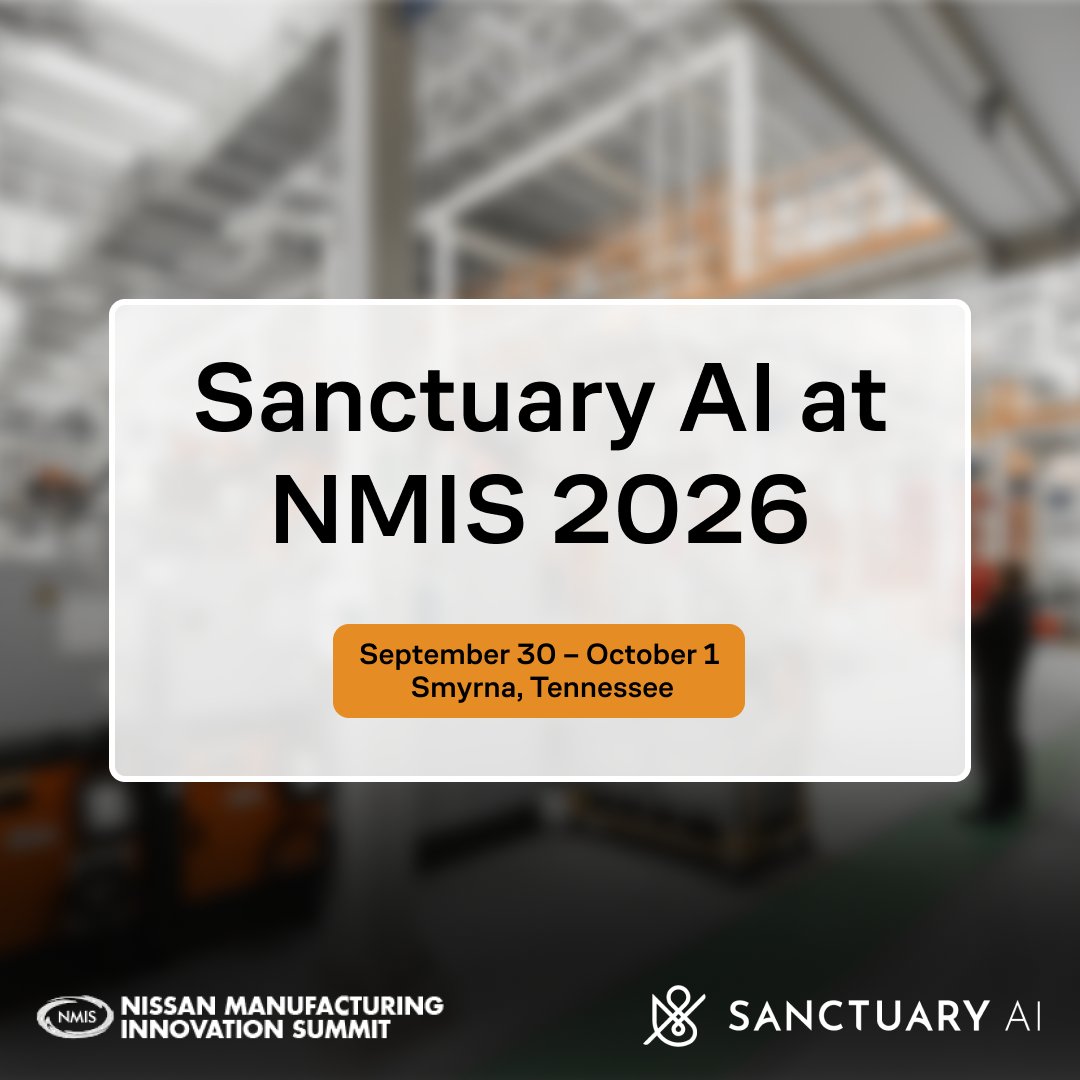
Figure commits over $1B to data and compute, sees RaaS path
Figure said it is on a path to 100x and committed to spending over $1B on data and compute in the next 12 months. The company also said Index lays the groundwork for ordering robots as a service, progressing from human helpers today to robots doing everything in the future.

Figure publishes detailed write-up of Index robot dataset
Figure introduced Index as the largest useful robot training dataset in the world and published a detailed write-up. The write-up explains how Index addresses the data problem for training general-purpose robots.
Figure Collects Real-World Data in 108 Countries
Figure has accumulated real-world data from 108 countries, as shown on a live global map on its website. The data supports its efforts to scale general-purpose robots.

Figure Comes Out of Stealth to Reveal Exclusive Data Pipeline
Figure has taken its real-world data collection pipeline out of stealth. Over the past four months, the company built a Figure-exclusive system to collect data at higher throughputs, addressing a gap in scaling general-purpose robots.

Figure AI Launches Index and Robot Training Dataset with $1B Investment
Figure AI unveiled an index and robot training dataset, committing over $1 billion over the next 12 months. The platform boasts 44,000 weekly active users contributing to the data.
Figure launches Index, largest robot dataset with 16M videos
Figure came out of stealth with Index, the largest and most diverse robot dataset to scale general purpose robots. The company reported 264,000 app downloads and 16 million uploaded videos to date.
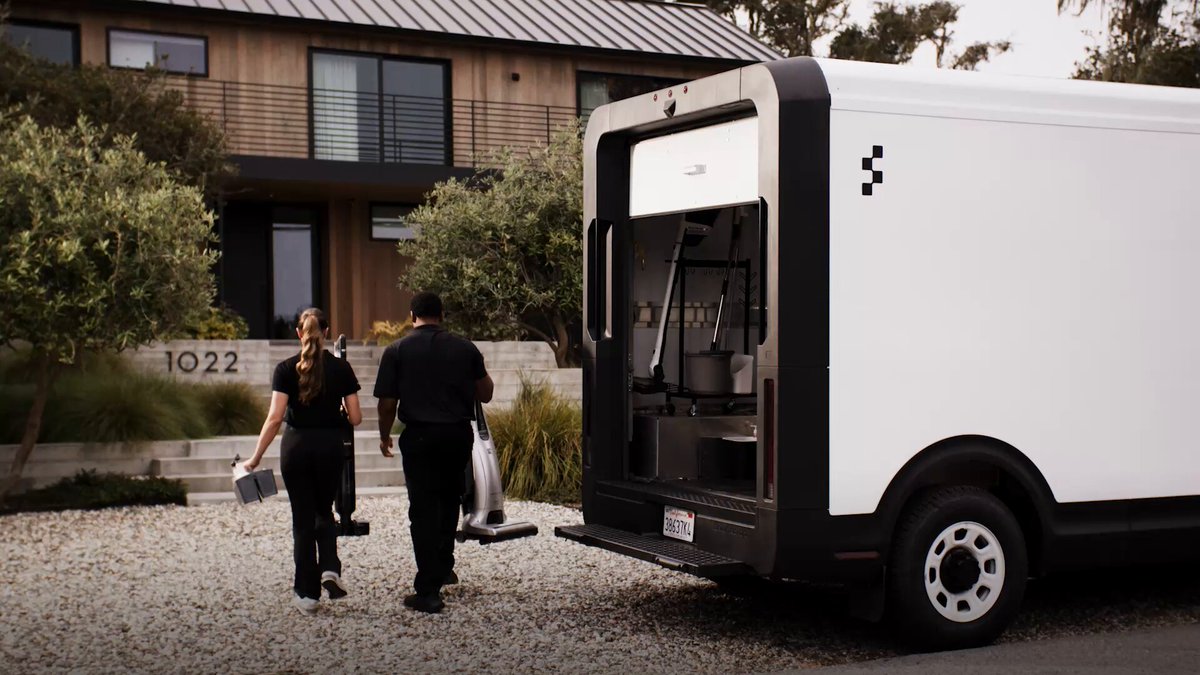
Skild AI Deploys S1 Foundation Model with Industrial Partners
Skild AI announced today it is deploying its S1 foundation model with a limited group of industrial partners, with plans to roll out to more customers in the coming months. The company describes S1 as the first light on a new path toward general intelligence grounded in the physical world.
Skild AI Unveils S1, a Foundation Model That Learns from One Example
Skild AI introduced S1, a new foundation model that learns from a single example. The model can be taught unfamiliar tasks lasting up to 10 minutes, using just one video prompt, with no fine-tuning required. The company shared a real-time demonstration of S1 operating via in-context learning.
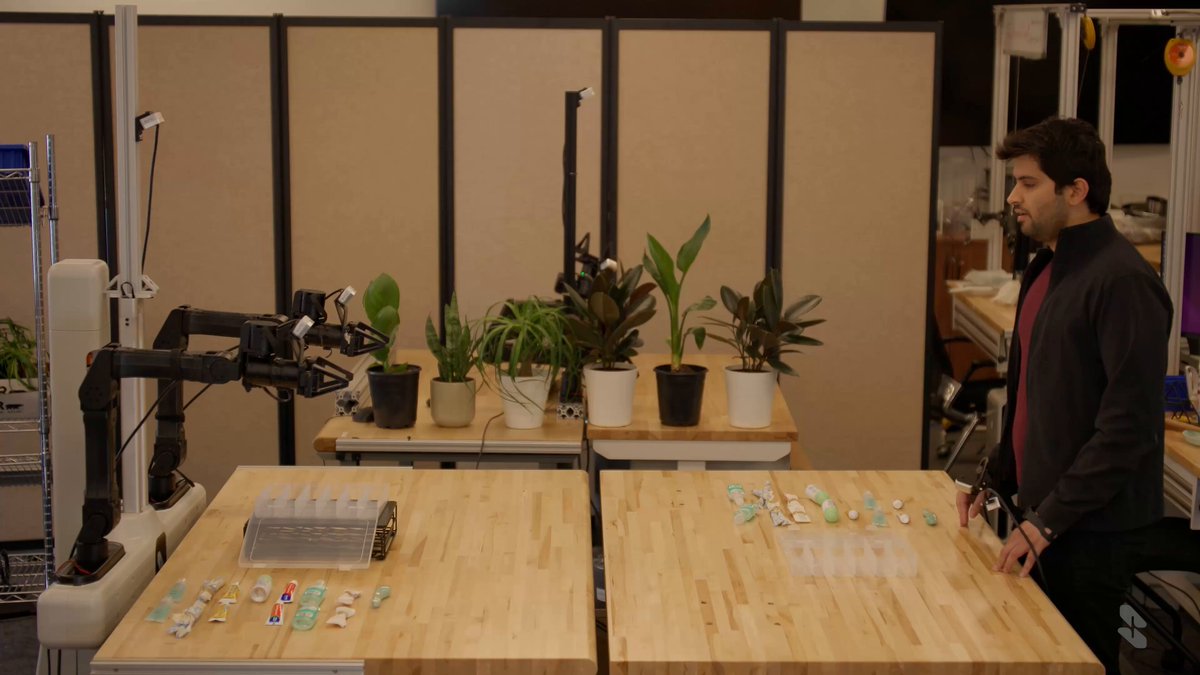
Skild AI: one-prompt S1 beats 50-100h VLA fine-tuning
Skild AI found that current VLA models must be post-trained with 50-100 hours of data collection and fine-tuning to match the accuracy of S1, which achieves the same with just one example of prompting.
S1 goes beyond video prompts: withstands, improvises, more precise
Skild AI highlights S1's behavior: it does not simply replay video demonstrations, but uses common-sense understanding to withstand perturbations, improvise after mistakes, and sometimes execute tasks with more precision than the human demonstrator.
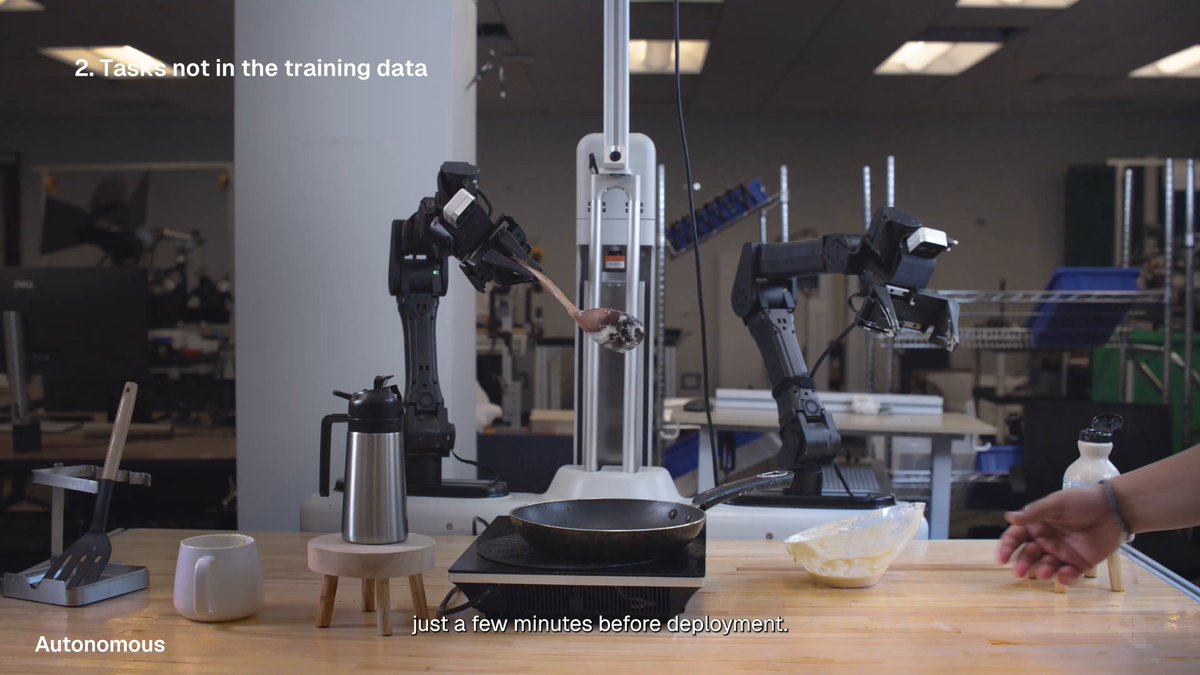
Skild AI: S1 step-change over VLAs, exponential on novel tasks
Skild AI says S1 is a step-change improvement over conventional VLAs: it matches language-prompted VLA performance on known tasks, and exponentially outperforms them on novel tasks as pre-training scales. The company sees this as a path toward scaling laws for robotics.

Skild AI: S1 learns new tasks like a language model from one video
Skild AI explains that S1 learns new tasks in a manner similar to a language model: given a video demonstration as a prompt, it generates robot actions to accomplish the task in any environment and embodiment.

S1 flipped a pancake from one video prompt; not in pre-training data
Skild AI recounts the first time S1 flipped a pancake. The team initially assumed the skill was in pre-training data, but a full search found no examples. S1 inferred the out-of-distribution task from a single video prompt.
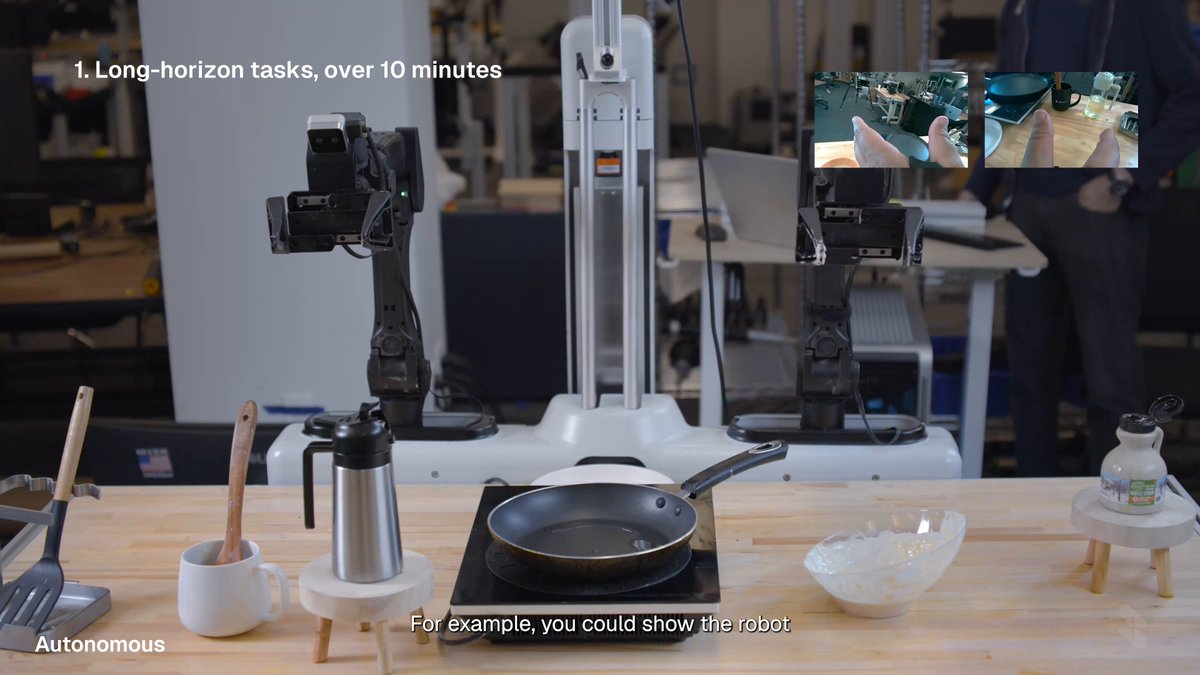
Skild AI robot learns 10-minute tasks by composing pretrained skills.
Skild AI says its AI system can be taught extremely long-horizon tasks over 10 minutes long. By composing skills learned in pretraining or creating new ones, it makes coffee, pots a plant, fries pancakes, and more, covering tasks never seen during pretraining.
Chinese Humanoid Robot Sets 100m Sprint Record of 8.86 Seconds
A Chinese humanoid robot sprinted 100 meters in 8.86 seconds in Beijing, setting a new robot record and beating the fastest human time. The achievement highlights rapid progress in robot motion control and hardware.
AGIBOT Wins 7 Golds in Dexterous Hand at Humanoid Robot Games
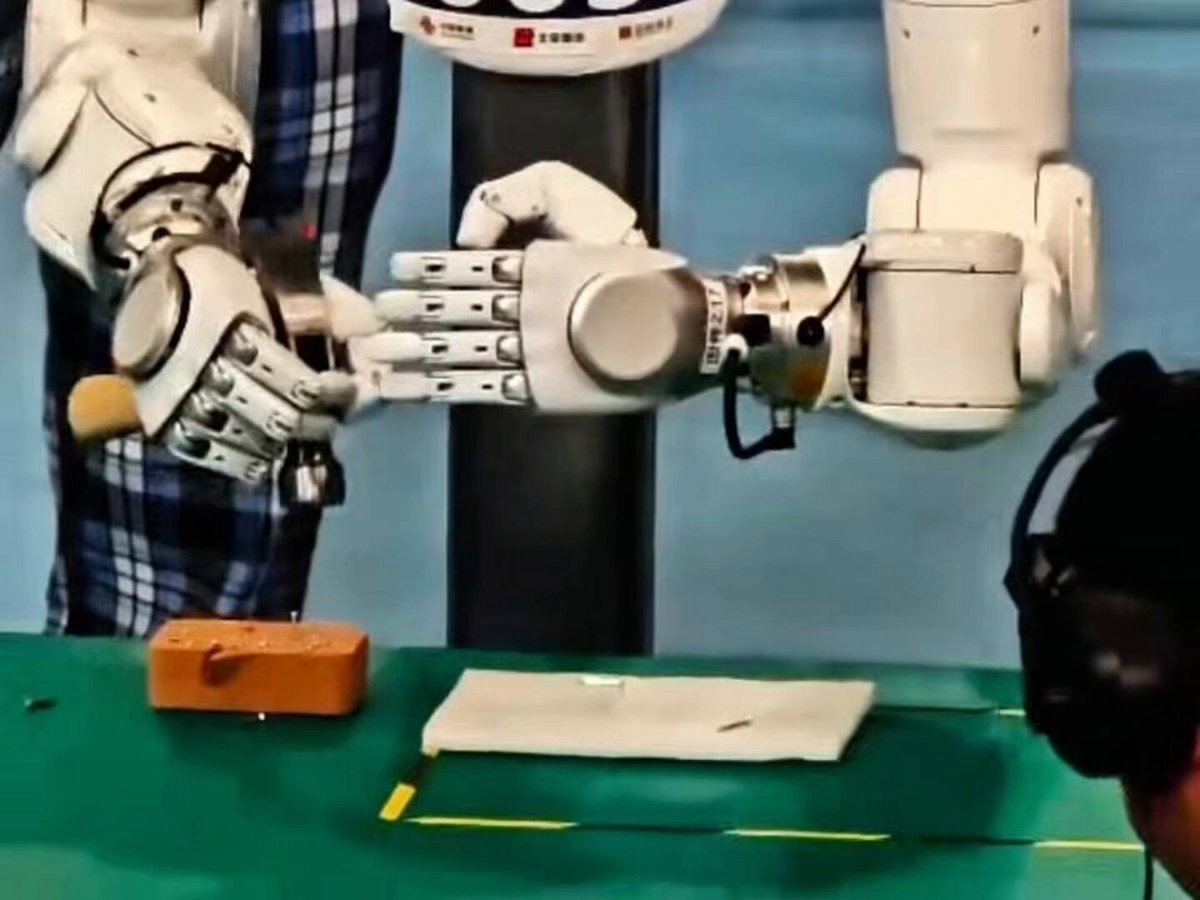
AGIBOT, a Chinese humanoid robot company, won 7 golds, 4 silvers, and 3 bronzes at the 2nd World Humanoid Robot Games' Dexterous Hand Challenges. The team reached the finals in all eight events, including block building, powder weighing, and picking up beans with tweezers.
NVIDIA Launches Jetson Orin Nano 2 for Entry-Level Edge AI Robotics
NVIDIA introduces the Jetson Orin Nano 2, an entry-level edge AI computer that doubles inference performance and cuts power consumption by 40%, enabling developers to build robots, drones, and vision systems.
NVIDIA's Jetson Orin Nano 2 doubles edge AI inference for robotics
NVIDIA introduced the Jetson Orin Nano 2, an entry-level edge AI computer that doubles inference performance for robotics applications. The module delivers 78 TOPS, 8GB memory, and 40% lower power consumption, with availability expected in the first half of 2027.
JD.com Unveils Robot Strategy at WRC 2026 with 10 Billion Yuan Investment
At the 2026 World Robot Conference, JD.com announced its robot strategy with 10 billion yuan in supply chain investment by 2028. The plan covers supply chain, service, and technology, aiming to deploy robots across millions of scenarios and households globally.
Booster Robotics Showcases 80-Robot Synchronized Formation
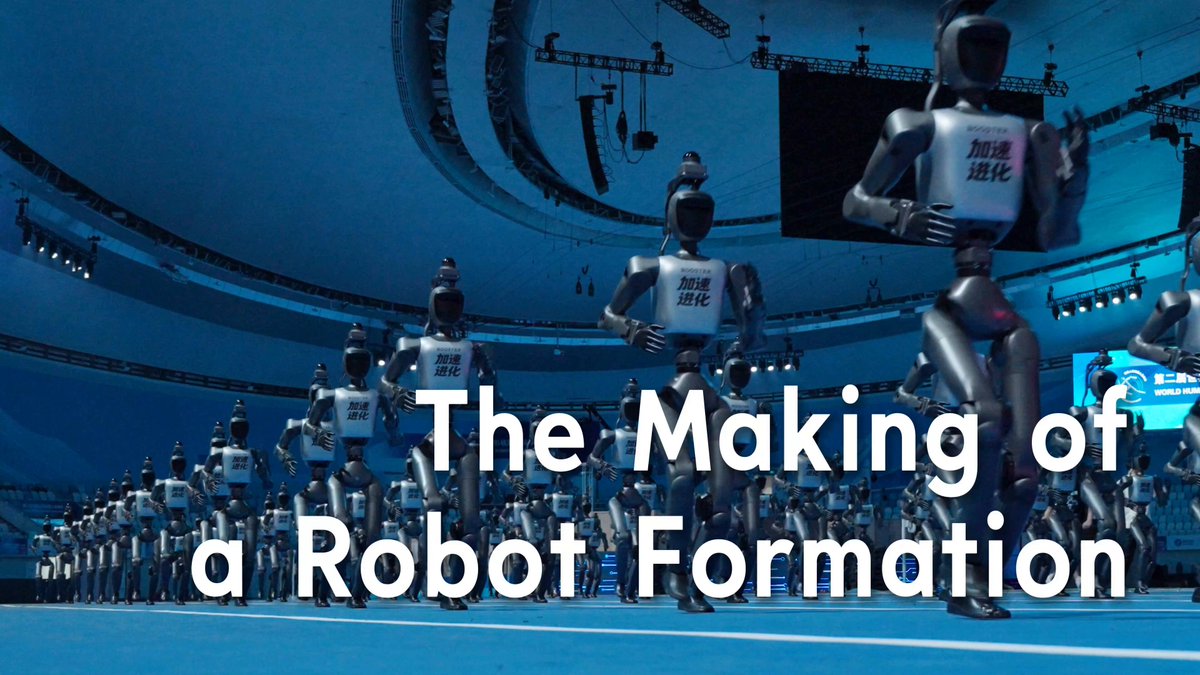
Booster Robotics released behind-the-scenes footage showing 80 robots transitioning from individual movements to a synchronized formation, highlighting multi-robot coordination technology.
MirrorMe Showcases Full-Stack Robotics Tech at WRC 2026
At WRC 2026, MirrorMe Technology unveiled its full range of self-developed robots, including the world's first dual-mode robot and a dexterous hand that played Beethoven. The company also demonstrated modular quadruped robots and industrial platforms, highlighting its leadership in embodied AI.
Ubtech and Singtel Sign MOU to Accelerate Enterprise Robotics Deployment
Ubtech Technology and Singtel have signed an MOU at the 2026 World Robot Conference to integrate embodied AI with communication services, aiming to accelerate the scalable deployment of robot solutions in enterprise operations.
AGIBOT Tops Medal Table at World Humanoid Robot Games
As of Aug. 24, AGIBOT has won 8 gold, 5 silver, and 6 bronze medals at the 2nd World Humanoid Robot Games, ranking first in the medal table across track and field, Wushu, dexterous hand challenges, and real-world scenario events.

Noetix Robotics Brings Fun Moments to World Humanoid Robot Games
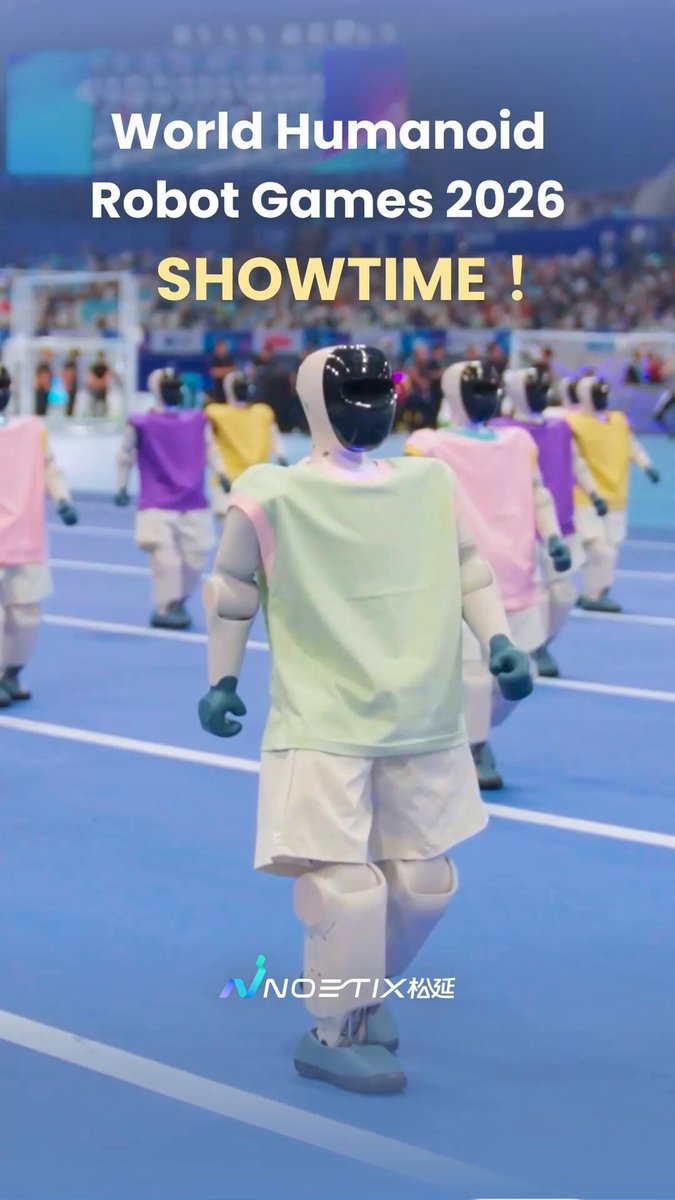
Noetix Robotics shared a video of cute moments from the World Humanoid Robot Games, highlighting the fun and energy on site.
Galaxea's Kengo Robot Seals Gold with Floor Routine
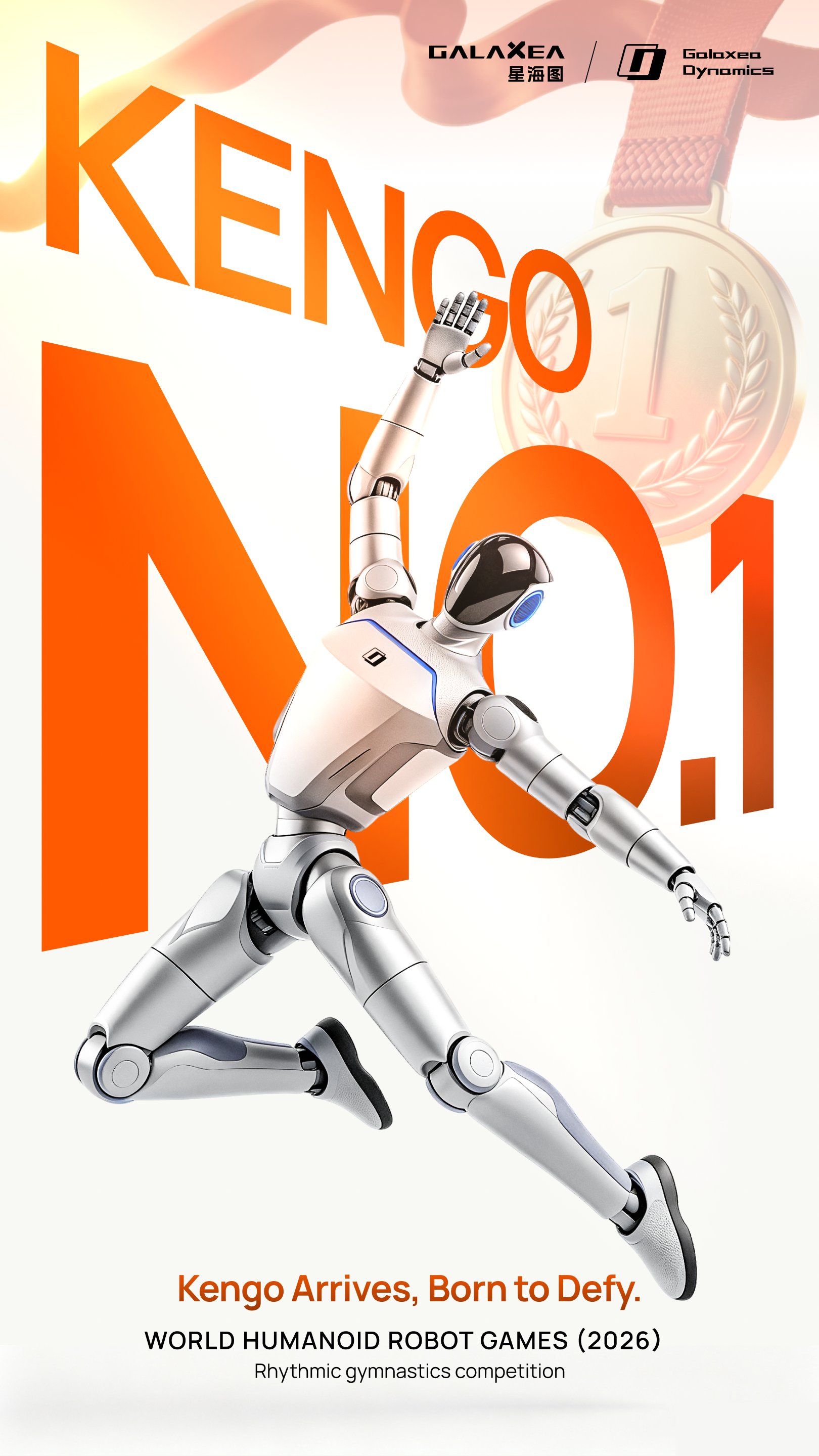
Galaxea Dynamics showcases its robot Kengo executing a flawless floor exercise routine, claiming a sealed gold medal.
XPENG Robot Raises $900M in First Round, Valued at $6.3B
Chinese EV makers XPENG, Leapmotor, and NIO announced major robot initiatives on August 24, with XPENG's humanoid robot securing over $900 million in first-round funding.
NEURA Robotics Highlights NEURA Gym for Real-World Robot Training
NEURA Robotics details the requirements for deploying robots in real-world settings, including physical environments that mirror real operations, capturing experienced workers' methods, and a pipeline to validated models. The company highlights the NEURA Gym as an in-house facility where all these elements are in place, enabling robots to be trained for specific use cases.

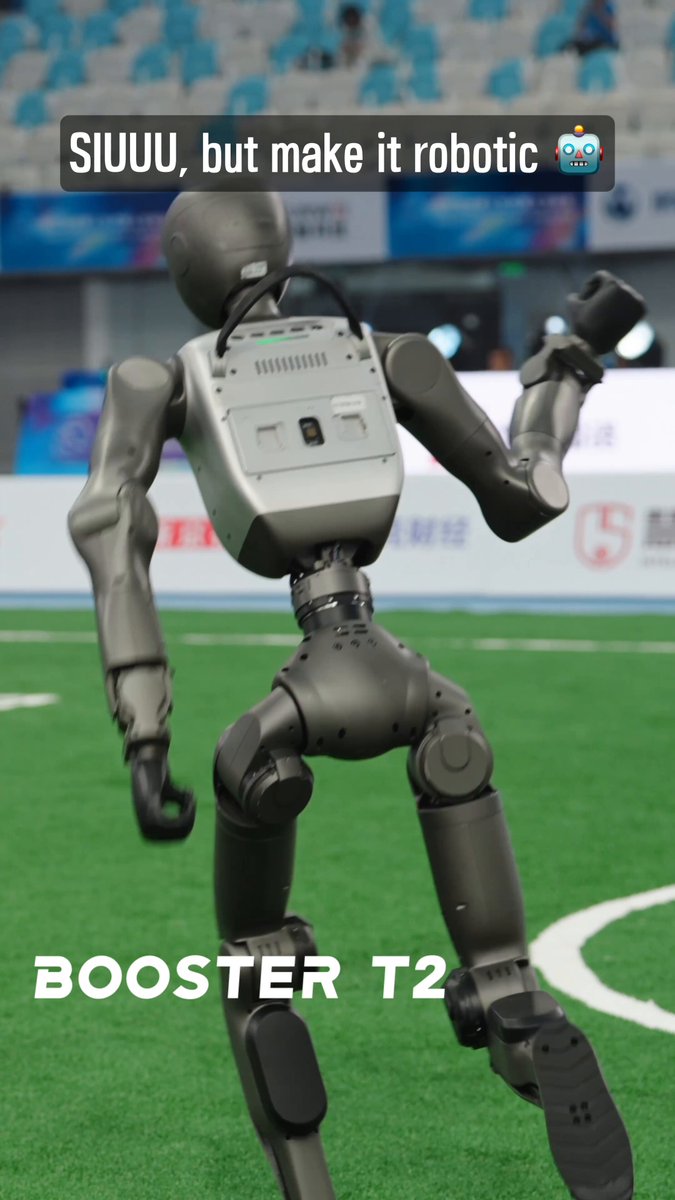
Booster Robotics' T2 Robot Scores Goal with SIUUU Celebration
Booster Robotics shared a clip of its T2 robot scoring a goal and performing the SIUUU celebration. The post highlights the robot's agility and precise motion control.
XPeng's Q2 Report: Car Sales Rise but Profits Fall, Robot Valuation Hits $6.1B
XPeng's Q2 revenue grew 8% to 19.74 billion yuan, but net loss widened to 1.24 billion yuan, missing market expectations. Meanwhile, its robotics arm's valuation surged to 43 billion yuan, highlighting a strategic shift.
Foreign Ministry: Open Cooperation Key to China's New Quality Productive Forces
China's foreign ministry spokesperson Lin Jian addressed concerns over the commercialization of robotics and foreign restrictions, emphasizing that the country's new quality productive forces are built on open cooperation and mutual benefit.
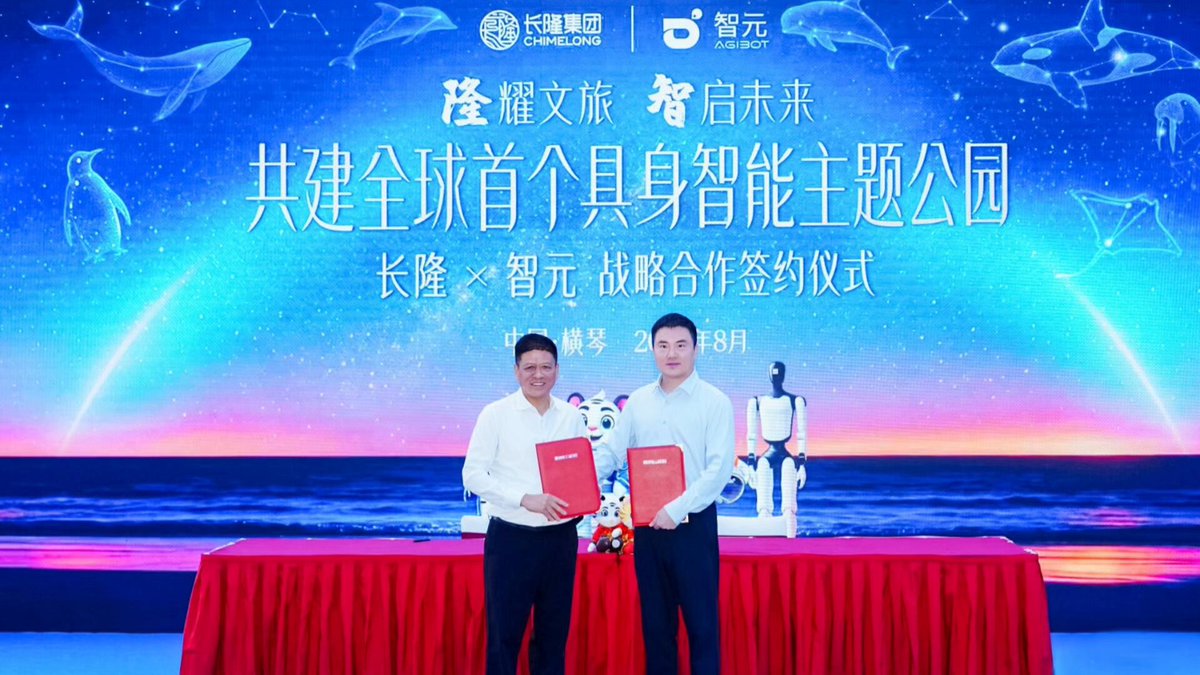
AGIBOT and Chimelong Partner to Build World's First Embodied AI Theme Park
AGIBOT and Chimelong Group partner to create the world's first embodied intelligence theme park, expanding robots into entertainment, hospitality, and immersive experiences.
XPeng Robotics Raises $900M+ in First Round, Boosting Robot Stocks
Robot concept stocks surged on August 25 as XPeng Robotics secured over $900 million in first-round funding. The MIIT also released a new humanoid robot industry standard, boosting market sentiment.
XPeng Humanoid Robot Business Raises $900M in First Funding Round
XPeng's humanoid robot business secured over $900 million in its first funding round, valuing it at $6.3 billion and setting a record for China's embodied AI sector.
Chinese Robot Team Wins First Humanoid Weightlifting Title with 16kg Lift
A robot from the Beijing Humanoid–HUST team claimed the first humanoid robot weightlifting title at the second World Humanoid Robot Games by lifting 16 kilograms. The event features 51 competitions with over 2,000 robots from 16 countries.
Alte Unveils Six-Legged Special Robot Concept at NVIDIA Partner Day
Alte released a concept video for a six-legged special robot at NVIDIA Physical AI & Robotics Partner Day, designed for hazardous environments like high-altitude, underground, and tunnels for inspection and maintenance.
XPeng Robot Funding Fuels Embodied AI Race, Auto Parts Sector Sees Gains
XPeng's robot funding round highlights automakers' push into embodied AI, boosting auto parts stocks. The auto parts index rose 1.14% despite broader market decline, with net inflows of 1.658 billion yuan over three days.
Dreame Tech Clarifies Business Adjustments, Focuses on Four Core Areas
Dreame Technology addressed market concerns by confirming adjustments to some exploratory businesses while reaffirming stability in core operations and the continued rollout of its four main business directions.
EV Startups Race into Humanoid Robots as Xpeng Raises $900M
On August 24, three Chinese EV startups—Xpeng, Leapmotor, and NIO—announced moves into embodied AI robotics. Xpeng's robot unit secured over $900 million in first-round funding, valuing it at $6.3 billion.
XPeng Robot Raises Over $900M in First Funding Round
XPeng's humanoid robot business secured over $900 million in its first funding round, with agreements signed on August 24. The investment will accelerate development and commercialization.
Where Are World Models on the Road to Generalization?
Shengshu Tech's founder Zhu Jun proposes a five-level roadmap for general world models, with the company covering the first three levels. His team's Motubrain model scores 96.1 on the RoboTwin 2.0 benchmark and adapts to new robot platforms with just 50-100 human demonstrations.
2026 World Robot Conference Concludes in Beijing, Showcasing Industry Progress
The 2026 World Robot Conference wrapped up in Beijing on August 23, attracting 557,000 attendees and showcasing 311 new products. The event highlighted China's dominance in humanoid robots, which accounted for 97% of global shipments in the first half of the year.
Zhejiang Humanoid Robot Center Shows Multi-Scenario Embodied AI at WRC
Zhejiang Humanoid Robot Innovation Center showcased its NAVIAI robot matrix and multi-scenario generalization achievements at WRC 2026, spanning industrial, commercial, household, and data collection applications. The company demonstrated cluster operation, retail automation, and teleoperation data collection, highlighting the integration of world models and embodied models in its SPIRE system.
Jiuding Investment Reports H1 Loss, Questions Over Robot Business
Jiuding Investment posted a net loss of 88.15 million yuan in H1 2026, widening 85.39% year-on-year amid pressure on its private equity and real estate businesses. The company's robot segment faces scrutiny as investors question its performance.
XPeng CEO: Humanoid Robot Margins Could Far Exceed Autos
At XPeng's earnings call, CEO He Xiaopeng said humanoid robots are far more challenging than smart cars and, given scarce quality supply, could command much higher average prices and gross margins.
Swiss Bank Says Unitree's Post-IPO Pullback Shows Market Rationality, Sector Still Early
Bank J. Safra Sarasin stated that China's humanoid robot industry remains at a very early stage, and the high valuation of Unitree Technology at its IPO may be unjustified. The subsequent stock price pullback indicates the market is returning to rationality, while the industry still lacks application scenarios and faces technical challenges.
LimX Dynamics Shares WRC 2026 Film on Robotics Industry's Future
LimX Dynamics hosted conversations with founders, investors, professors, engineers, and partners at WRC 2026, discussing topics from post-demo value creation to global commercialization and open platforms. The company released a short film capturing the industry's shift from excitement to execution.