Live Briefs 2026-11-22 · Full coverage of embodied AI
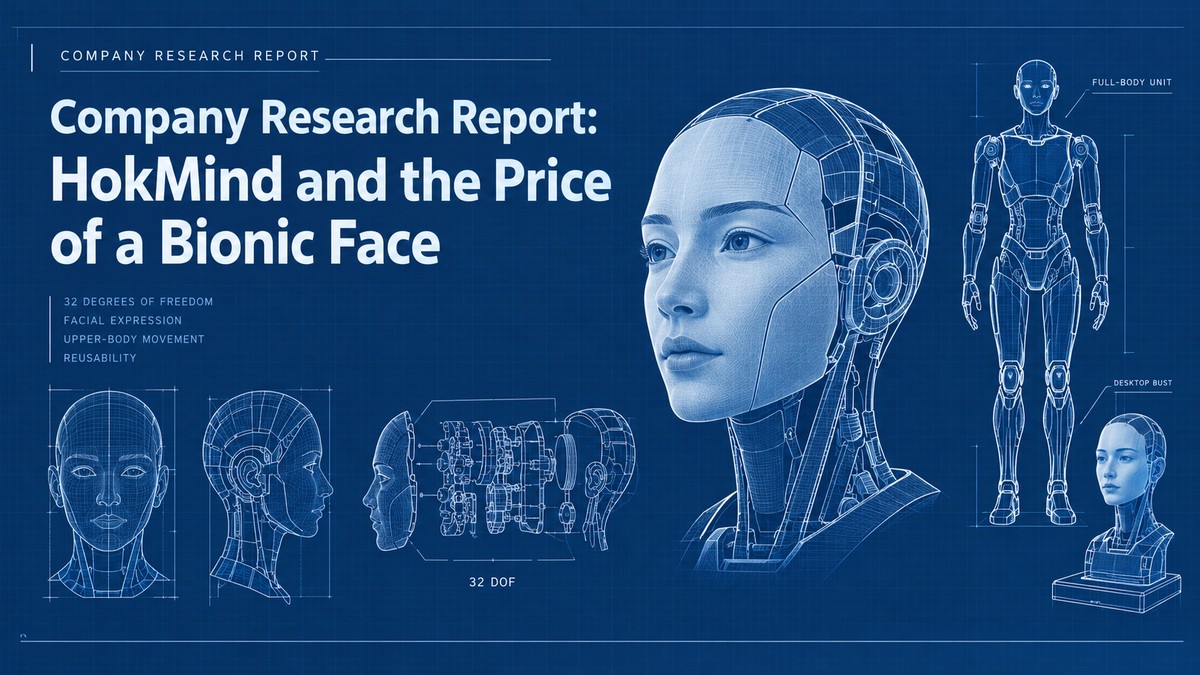
Company Research Report: HokMind and the Price of a Bionic Face
HokMind, a Beijing startup from March 2026, sells a bionic face with 32 degrees of freedom. This report sizes the market and separates three layers of evidence.
Robot Exhibits Draw Long Queues at 140th Canton Fair
At the 140th Canton Fair, robot exhibits drew long queues and strong buyer interest, reflecting Chinese robot makers' growing export momentum across multiple sub-sectors.
Report Calls HIT the Robotics Community's Largest 'Underground Organization'
A Leaderobot article highlights Harbin Institute of Technology as a central informal network for China's robotics community, described as the field's largest 'underground organization.'
Zhongke Fifth Era Debuts at CIIF, Showing Embodied AI's Real Productivity
At its first appearance at the China International Industry Fair, Zhongke Fifth Era presented embodied AI applications aimed at practical productivity rather than laboratory demonstrations.
At 2026 CIIF, Robots Stop Dancing and Start Taking Workstations
The 2026 China International Industry Fair’s robotics pavilion shifted from dance performances to practical workstation deployments, highlighting embodied AI’s move into real production roles.
Canton Fair Robots Draw Crowds as Buyers Seek Deployment, Overseas Warehouses
At the 140th Canton Fair, service robots drew long queues and intense buyer interest, with purchasers prioritizing real-world deployment and overseas warehouse support over showroom performances.
Company File: Agile Robots and the Integration Business
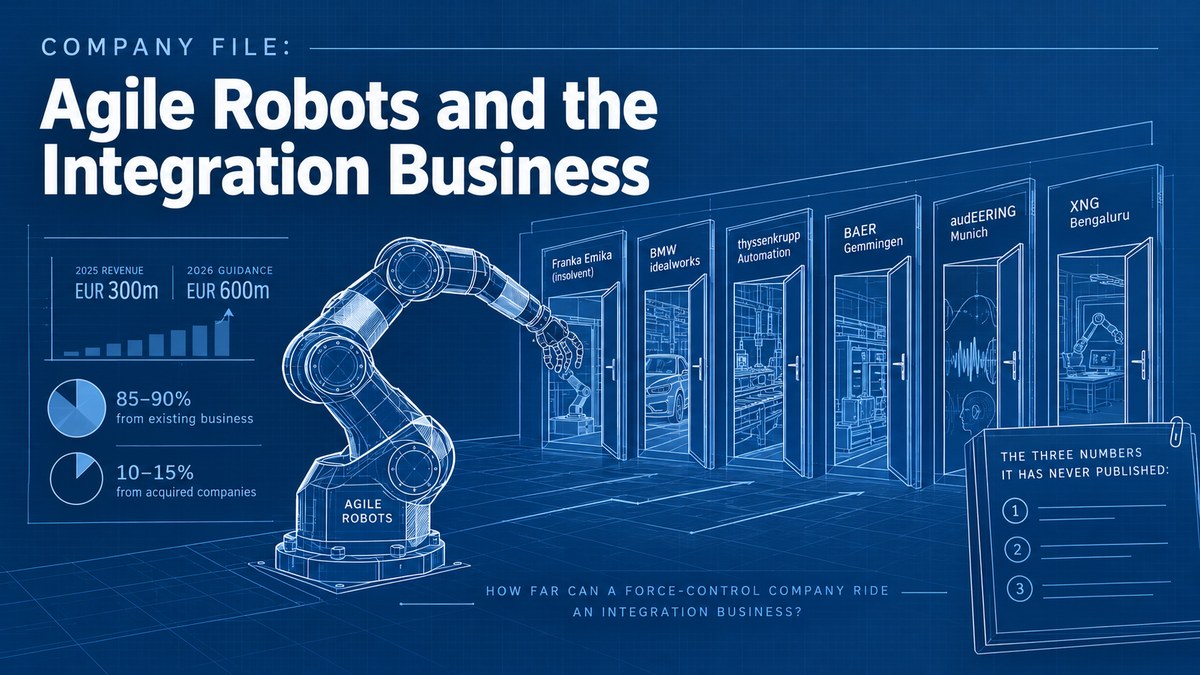
Agile Robots booked EUR 300m of revenue in 2025 and guided to EUR 600m for 2026, yet 85 to 90 percent of that growth comes from business the company already had, because the firms it bought supply only 10 to 15 percent of this year's new orders. Those deals bought doors rather than turnover: an insolvent Franka Emika, BMW's idealworks, thyssenkrupp's automation unit, BAER in Gemmingen, audEERING in Munich, and XNG in Bengaluru. This file opens each door, asks how far a force-control company can ride an integration business, and lists the three disclosures it has never made. Article structure: 1. The verdict 2. Why this market exists 3. The company 4. Products 5. Customers 6. Supply chain 7. Competition 8. Money 9. The moat 10. Risk register 11. What to watch
Humanoid robot rental in China is still finding the price
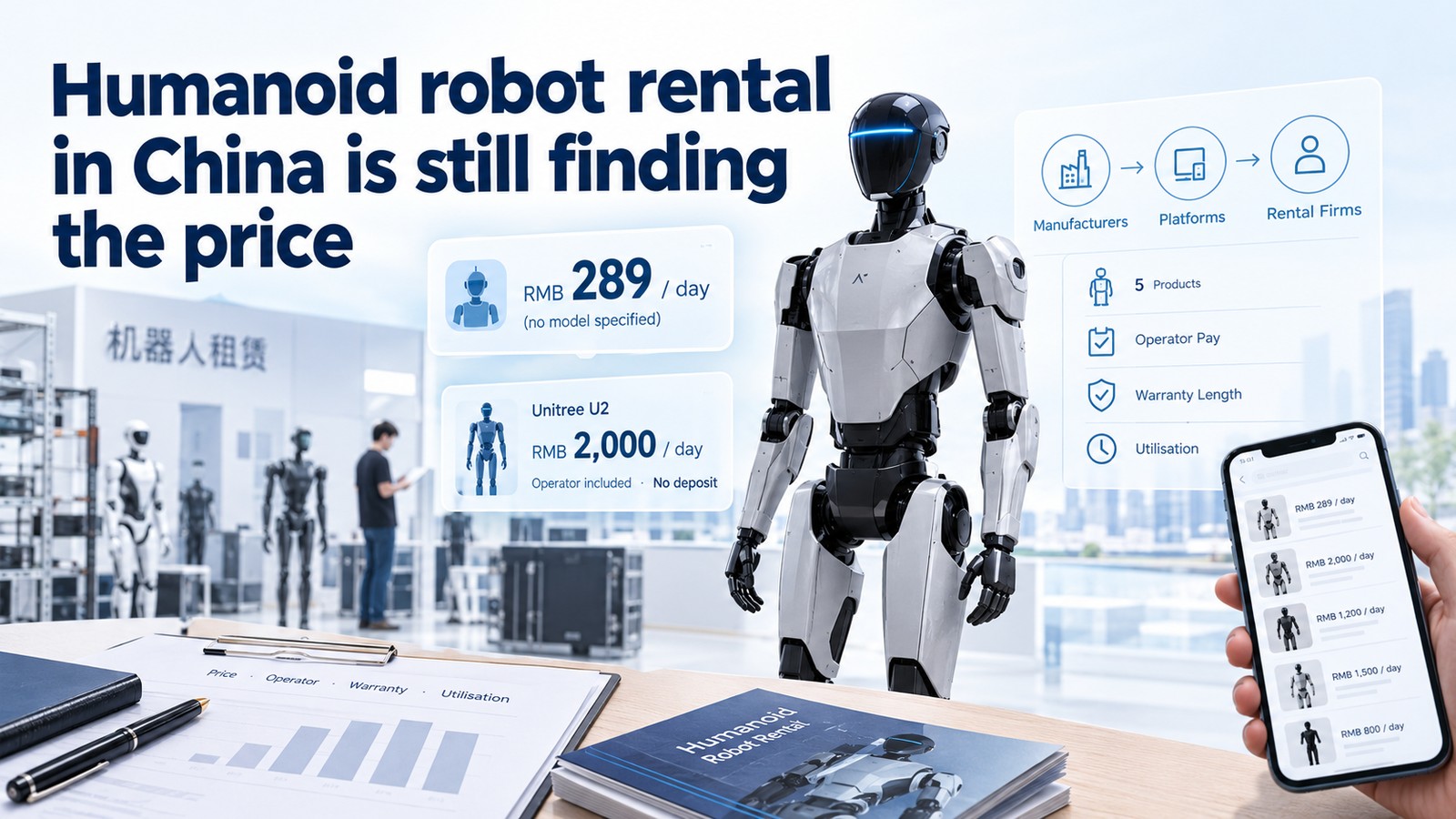
RMB 289 a day on one page, RMB 2,000 on the same app: five products, four cost lines, and one price that is not settled yet.
RoboParty RP1 Enters Humanoid Race With Fully Open-Source Stack
RoboParty has unveiled RP1, a Shanghai-built humanoid robot that promises a fully open-source development stack spanning CAD, firmware, motor control, simulation, and its PartyOS system. The research-grade platform targets laboratories and universities with 24- or 30-DoF versions, hot-swappable batteries, and low-level control access.
Neura Robotics Unveils Neuron AI: A Multimodal Robotic Brain With Hearing, Touch, and Memory
Neura Robotics has launched Neuron AI, a perception-language-action model that integrates 3D vision, touch, force sensing, audio, and physical state into a unified robotic brain. Backed by $1.4 billion in funding and support from Amazon, NVIDIA, and Qualcomm, the company aims to supply a general-purpose AI layer across multiple robot forms via its Neuraverse platform.