Live Briefs 2026-11-22 · Full coverage of embodied AI
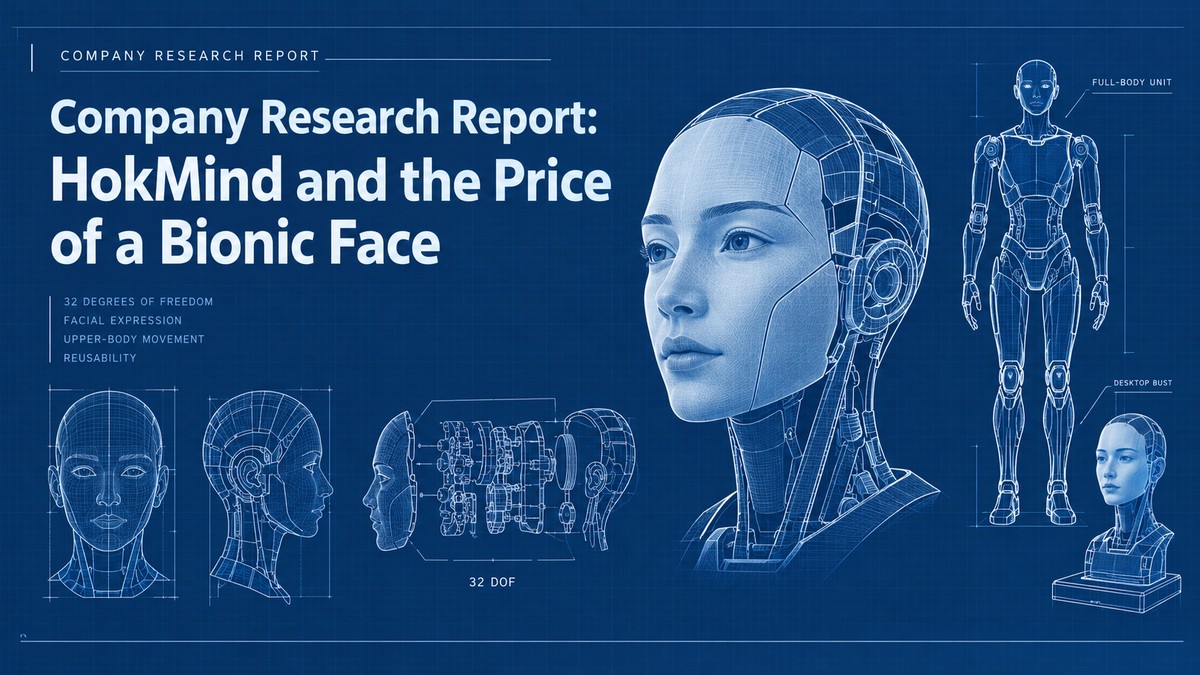
Company Research Report: HokMind and the Price of a Bionic Face
HokMind, a Beijing startup from March 2026, sells a bionic face with 32 degrees of freedom. This report sizes the market and separates three layers of evidence.
Rope-Linked Wheel-Legged Robots Combine When Tightened, Cooperate When Apart
A new dual wheel-legged robot system uses a rope to connect two units: tightening the rope merges them into one entity, while loosening it allows separate cooperative operation.
RAI Institute's Five-Motor Bicycle Robot Runs Zero-Shot at 8 m/s
RAI Institute's five-motor bicycle robot can run directly on real hardware in a zero-shot setting, reaching 8 m/s, completing a half-second flip, and clearing a 1-meter jump.
Jilin University Team Unveils Internal Bionic Structure of High-DOF Dexterous Hand
A Jilin University team has revealed the internal precision biomimetic structure of a dexterous hand it describes as having the world's highest degrees of freedom. The disclosure offers a rare view of the mechanical layout behind the hand's articulation.
SharpaDex v1.0: 300 hours of tactile dexterous-hand data
Sharpa has released SharpaDex v1.0, a real-robot dexterous-hand manipulation dataset with fingertip tactile sensing on all 10 fingers in every frame. It contains 300 hours, 28,993 demonstrations and 59 tasks, covering tool use, assembly and deformable-object handling. According to Sharpa, as of October 2026 it is the largest publicly available dataset of its kind, measured by publicly released demonstration hours containing tactile data.
Musk: AI and Robots Are Only Way to Solve US Debt Crisis
Elon Musk said his DOGE reform experiment failed, proving the fiscal deficit cannot be fixed from inside government. He argued that AI and robotics are the only way to address the US national debt, not austerity.
HKUST Unveils EmArm Robotic Arm With Whole-Arm Tactile Sensing
Researchers at HKUST have developed EmArm, an embodied robotic arm with a soft optical tactile skin embedded across its upper and lower arms. The system uses real-time tactile feedback to classify touch interactions, adapt manipulation, and avoid obstacles.
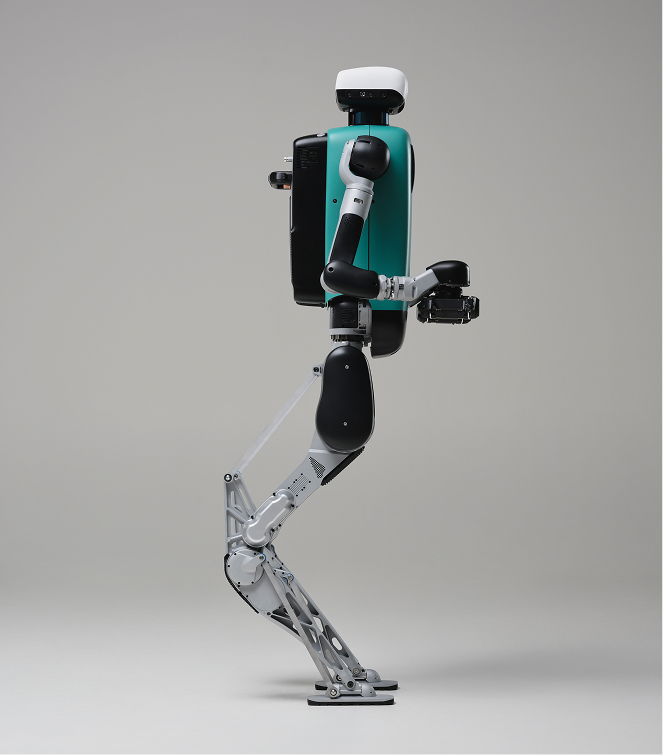
Agility: Humanoid robots must move like humans, not just look alike
Agility co-founder Jonathan Hurst argues in Science Robotics that building a robot that looks human is easy, while building one that moves like a human is hard. The company links physical AI to mechanical hardware, saying hardware design is what enables embodied intelligence.
IEEE Spectrum Video Friday: Robot Duos, Singing Microducks, and Mars Rover Record
IEEE Spectrum's weekly video roundup features robot duos merging, Microducks singing in harmony, and a new off-world driving record by NASA's Perseverance rover. Other highlights include Google DeepMind's video-to-sim-to-real pipeline and Boston Dynamics' Atlas manufacturing process.
Ex-Nvidia insider turned VC says robotics remains in 'Lego era'
Amulya Vishwanath, a former Nvidia robotics product marketing leader now in venture capital, says robotics is in a “Lego era” because core building blocks remain immature. She argues this counters optimism that foundation models will soon give robotics its ChatGPT moment.
Robot Talk Episode 166: Rika Antonova on Evolving Robot Bodies and Brains
Robot Talk episode 166 features host Claire in conversation with University of Cambridge associate professor Rika Antonova about using AI to co-design robot hardware and algorithms. The discussion covers co-design, automated algorithm discovery, data-efficient reinforcement learning, exploration, active learning, and Antonova's academic and industry background.
NEURA details Neuron AI sense-fusion model for robots
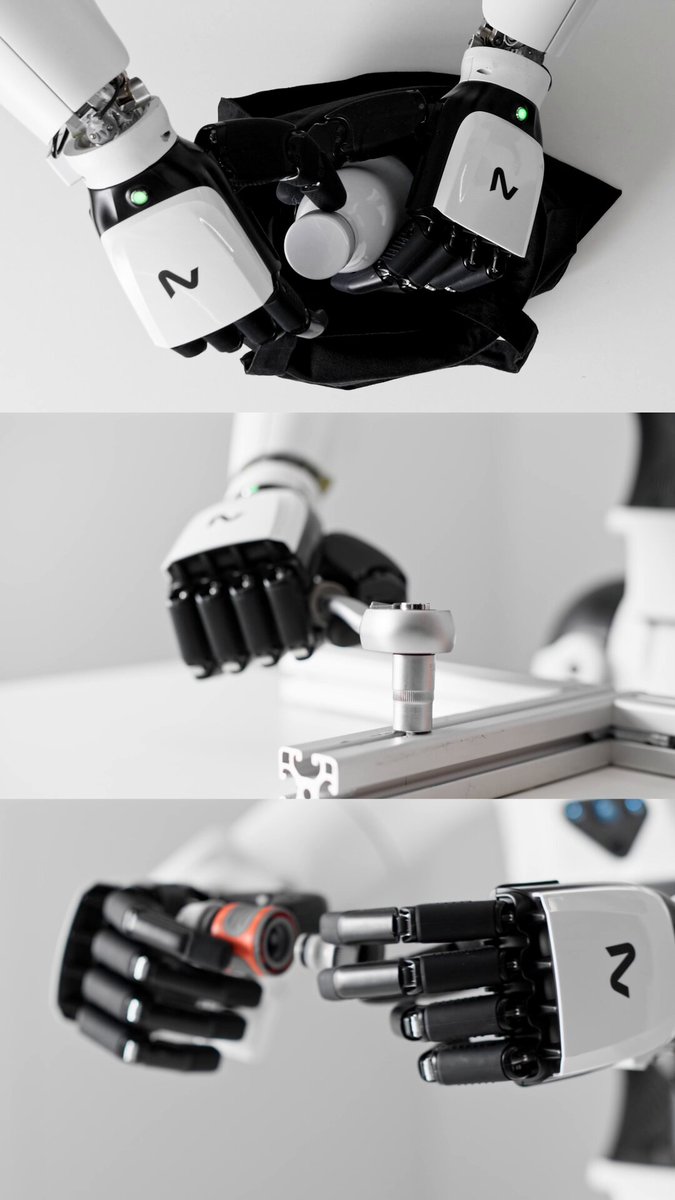
NEURA Robotics explained how its Neuron AI model, a Perception-Language-Action (PLA) system, lets a robot combine several senses at once: 3D images, tactile and force signals, audio, its own position and movement, plus language, all flowing into one shared, continuously updated picture of the situation that drives its next decision. The company said the second building block is memory, noting that humans develop object permanence in their first two years of life.