Live Briefs 2026-11-22 · Full coverage of embodied AI
Wheeled, Flying and Six-Legged Robots Gain Stability With New Learning Method
Researchers at the University of Illinois Urbana-Champaign's Grainger College combined reinforcement learning with control theory to guarantee stability for wheeled, flying and six-legged robots. The method improved tracking performance by up to 15% over existing approaches while keeping robots within reasonable operating bounds.
Nvidia Expands Open Model Family Across Robotics, Biomedicine and Quantum Computing
Nvidia has expanded its open model portfolio across vision, language, robotics, biomedicine and quantum computing, aiming to help European enterprises and researchers build and deploy custom applications with local data.
Chipsea Says EC Chips Can Extend to Humanoid Robots, but Revenue Is Still Early
Chipsea Technology says its EC chips can be extended to external interfaces and sensor control in humanoid robots, though the application is still in early commercialization and has not generated scaled revenue.
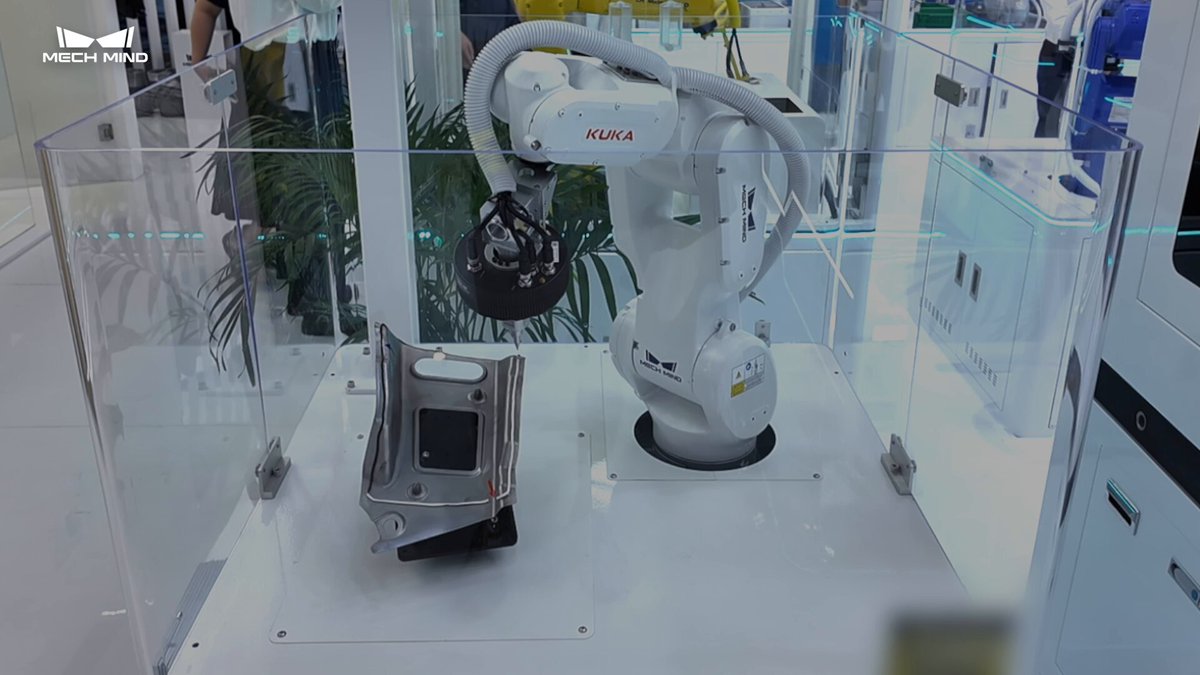
Mech-Mind embodied AI enables inline glue inspection at 1,500 mm/s
Mech-Mind Robotics is applying its embodied AI "Eye-Brain-Hand" system to inline glue bead inspection in automotive sheet metal production. Glue bead defects can compromise body sealing and structural integrity, while traditional offline sampling delays detection and fixed-view cameras struggle with corners and curved surfaces. The system inspects in real time, synchronized with the dispensing process, at speeds of up to 1,500 mm/s, catching defects that sampling and fixed cameras may miss.
ACE Robotics, Founded by SenseTime Co-Founder, Releases Spatial Perception Model
ACE Robotics, founded by SenseTime co-founder Xiaogang Wang, has released ACE-Brain-0.6, an embodied AI model built by supervised fine-tuning Qwen3.5-9B for object identification, image localization and robot interaction-point prediction. The company says the model, trained on roughly 1 million spatial-grounding samples, beat GPT-6 Astra on six of eight grounding benchmarks and scored 74.53 and 94.13 on two evaluation sets.
Samsung Tests 24/7 Humanoid Robot, May Debut at CES 2027
Samsung Electronics is developing a humanoid robot capable of 24/7 operation and is testing it at its Seoul R&D center, with a possible debut at CES 2027 as the company aims to catch up in the robotics market.
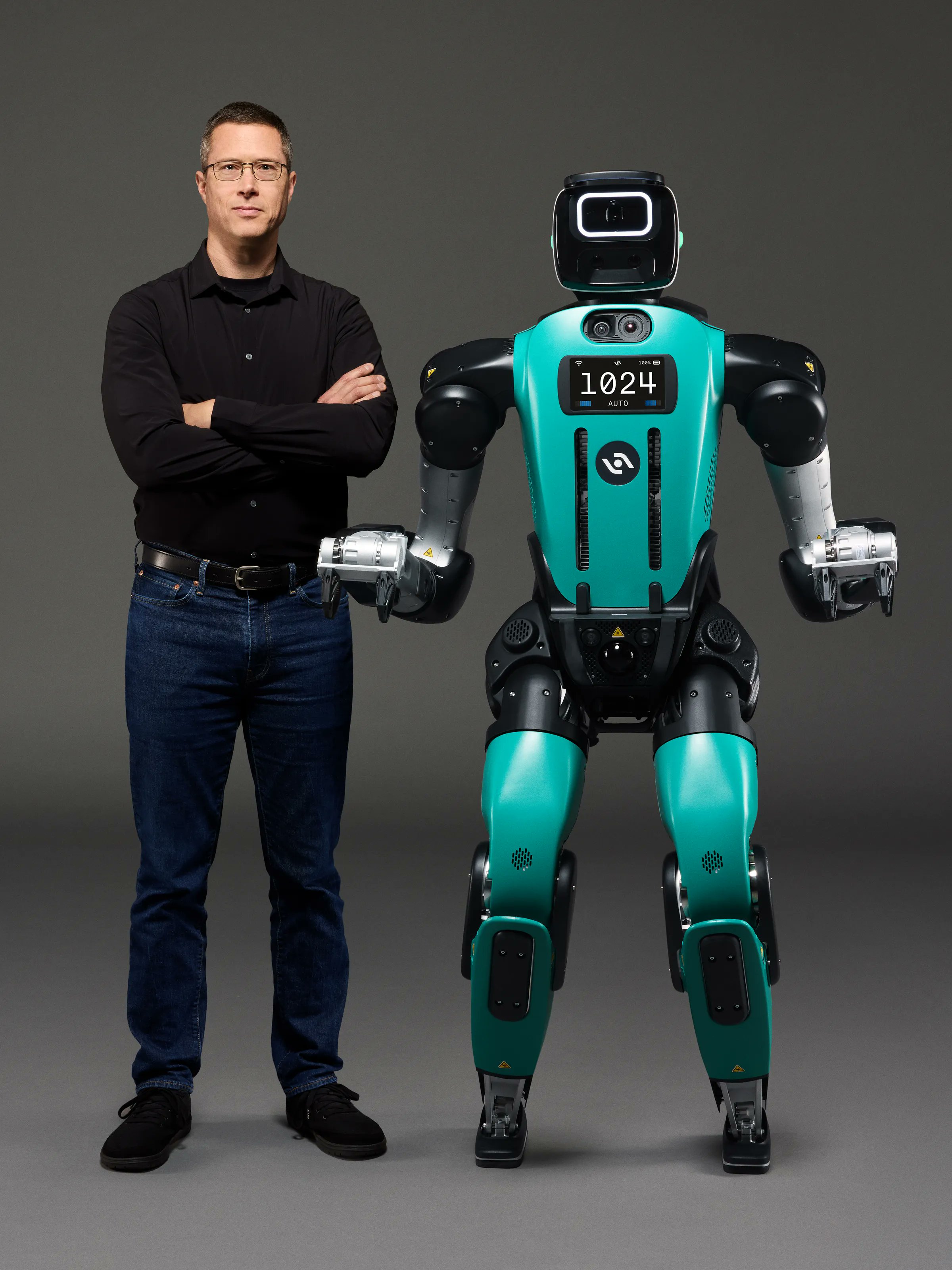
Agility co-founder explains why Digit 5 can't run
Agility co-founder Jonathan Hurst explains in IEEE Spectrum why the company's latest humanoid, Digit 5, is designed without running capability, even though his earlier robots could run. The article walks through the redesign decisions behind Digit 5, framing the trade-offs the team made between dynamic locomotion and the practical requirements of a commercial humanoid robot.
Daimon Robotics Builds Infrastructure Layer for Tactile Intelligence in Robots
Daimon Robotics is building a pipeline that connects tactile sensing, data collection, simulation and AI models to provide infrastructure for tactile intelligence. The company aims to turn physical interactions into training data for more reliable manipulation, targeting assembly, packaging and other contact-rich tasks while collaborating with downstream developers.
WorldOracle Debuts First Real-Execution Benchmark for Action-Driven World Models
Researchers from AgiBot, NVIDIA, Princeton, UT Austin, and the University of Toronto have released WorldOracle, an action-driven benchmark that evaluates world models by comparing predicted videos with real robot execution. The platform is open for submissions and includes 335 real operation trajectories, about 40% of which contain failures or suboptimal actions.
Daxiao Robotics' 9B ACE-Brain-0.6 Beats GPT-6 Astra on Spatial Grounding
Daxiao Robotics has released ACE-Brain-0.6, a 9B embodied foundation model trained on about one million verifiable spatial-anchoring samples. It beat OpenAI's GPT-6 Astra on six of eight grounding evaluations and averaged 74.53 on seven public benchmarks versus 73.68.
Daxiao Robotics Unveils ACE-Brain-0.6 Embodied Model, Claims Edge Over GPT-6 Astra
Daxiao Robotics has released ACE-Brain-0.6, an embodied base model built on Qwen3.5-9B and trained with about one million spatial-anchoring samples. The company says it outperforms OpenAI's GPT-6 Astra on six of eight grounding benchmarks.
Daxiao Robotics Unveils ACE-Brain-0.6 Embodied Model, Beats GPT-6 Astra on Six Spatial Tests
Daxiao Robotics has released ACE-Brain-0.6, an embodied foundation model fine-tuned from Qwen3.5-9B with about one million spatial-anchoring samples. The company says it outperforms OpenAI's GPT-6 Astra on six of eight grounding benchmarks.
D-Robotics posts talk on data-driven robot simulation, world models
D-Robotics has published the full recording of the first session of D-Robotics Frontier, which drew attendees interested in its Uranus platform. The talk explores the company's approach to interactive, data-driven robot simulation and the challenges of building world models for robotics. The recording is available on YouTube.