Live Briefs 2026-10-03 · Full coverage of embodied AI
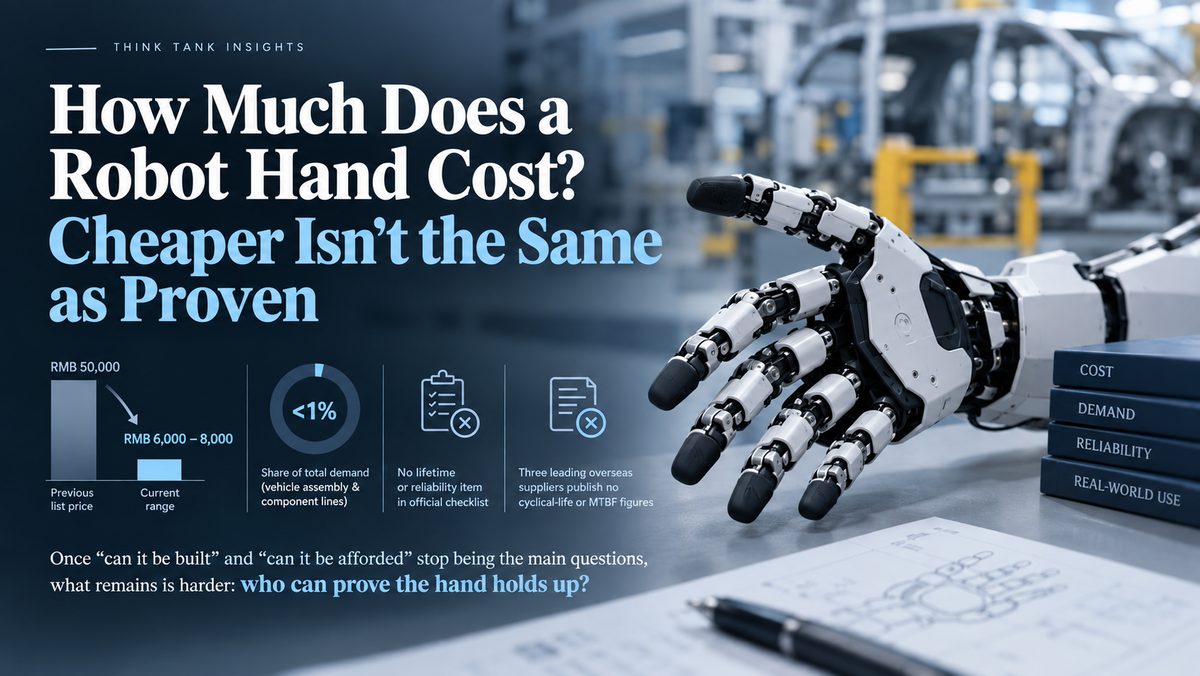
How Much Does a Robot Hand Cost? Cheaper Isn't the Same as Proven.
Chinese robot hands now cost a fraction of their 2025 prices, yet fewer than 1% of them work on automotive lines. The industry has three separate ways of judging a hand, and the one that measures lifespan has no common scale.
Shanghai Electric and CITIC Group Sign Strategic Pact, FANUC and CITIC Heavy Industries Partner
Shanghai Electric Group and China CITIC Group signed a strategic cooperation agreement on September 18 to deepen collaboration in high-end equipment, green energy, advanced materials, smart infrastructure, international operations, and diversified finance. Shanghai FANUC Robotics and CITIC Heavy Industries also signed a separate pact focused on intelligent manufacturing, special robots, and smart production line upgrades.
Agility Robotics marks 10 years and 5 generations of Digit
Agility Robotics looks back on ten years and five generations of its humanoid Digit. The line began with Cassie, bird-inspired legs built to run at Oregon State University that set a world record. Digit 5 changes direction: its legs are designed for lifting rather than running, a shift the company says reflects work that demands strength over speed.
Robo Inc. CEO Explains Picks-and-Shovels Strategy Behind Robotics Boom
The Robot Report Podcast episode 262 features Robo Inc. CEO Teddy Haggerty, who discusses building an ecosystem that connects robotics, manufacturing, and education. The conversation covers Robostore's evolution from distribution to a localized robotics education and deployment platform.
Tesla's Optimus Suppliers: Why the Mass-Production Audits Started in Ningbo
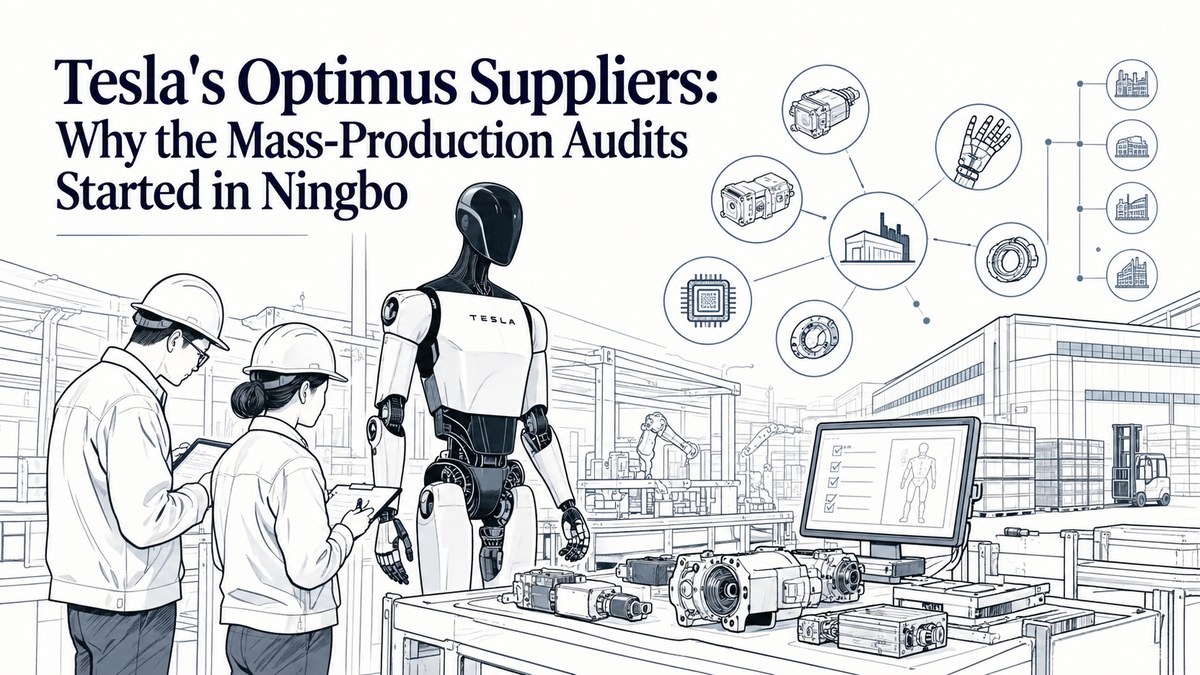
On Sept 16, 2026, a Tesla team arrived in Ningbo, a port city in Zhejiang province, and began a mass-production audit of its robot suppliers the next day. The names reported from that round, Tuopu Group, Sanhua, Joyson Electronics, Zhejiang Rongtai and Xinquan, are almost all long-standing suppliers to Tesla's car business. Why would a robot have to clear the production lines of auto parts makers first? Because what an audit measures is cycle time, yield and cost, and those three sit with companies the car industry has spent decades hardening. Tesla's own description of the task is that "almost every part is new, with no ready supply chain." The list is therefore more than a purchase order. It is Tesla looking for a manufacturing path it can repeat. Article structure: - 1. The audit: four departments on site, three answers - 2. The list: why it is almost all auto parts makers - 3. The threshold: how far an audit is from mass production
Agility touts MarketWatch piece on factory robot safety
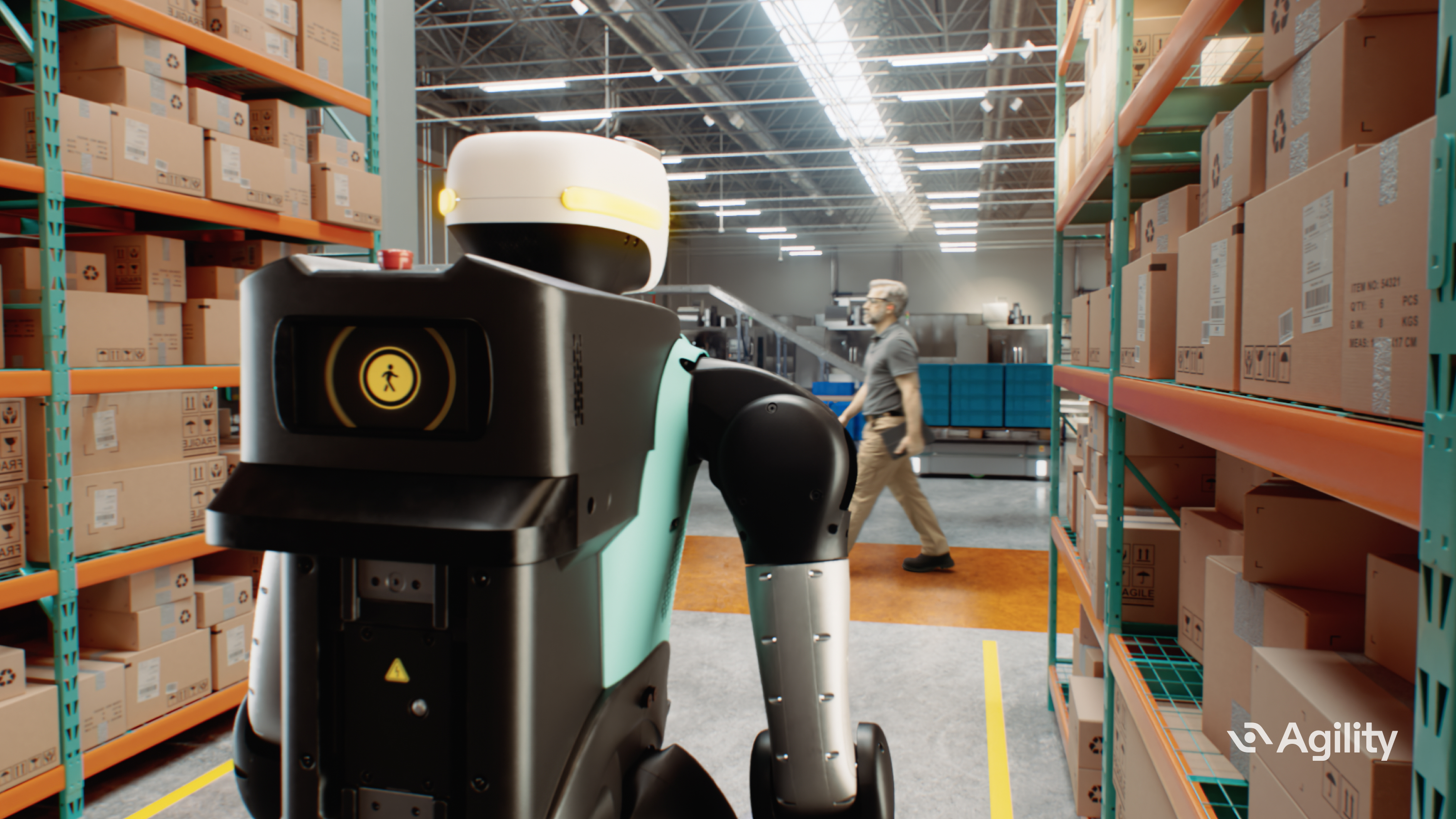
Agility Robotics thanked MarketWatch for looking past the hype and pointed followers to its article on factory robots, which have long been seen as a safety threat to human workers and which one company says it has solved.
Xpeng CEO Says Robot Firms Underestimate Hardware Complexity, Hails G9L as Global Car
Xpeng Group Chairman and CEO He Xiaopeng said most robot companies severely underestimate hardware complexity, while expressing high hopes for the G9L's global sales, profit, and overseas growth.
Blue Bug Embodied Launches Xiaobai Modular Humanoid Robot From 9,800 Yuan
Blue Bug Embodied has launched Xiaobai, a modular humanoid robot starting at 9,800 yuan (about $1,350), aiming to break the industry's price threshold.
UBTECH unveils Europe's first Walker C1 humanoid in Slovenia
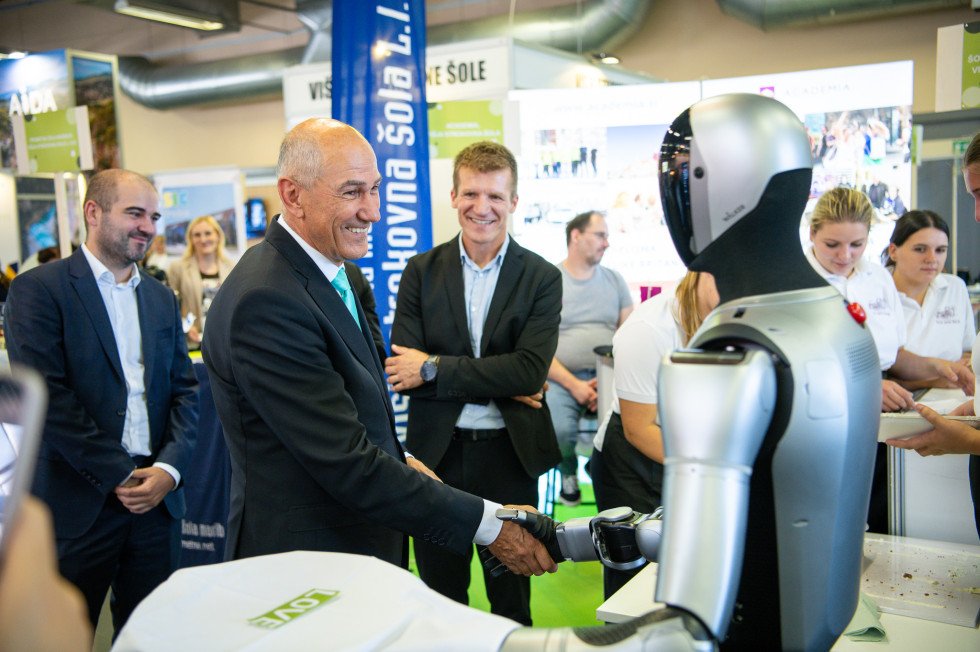
At the 58th MOS Exhibition in Slovenia, UBTECH debuted Europe's first Walker C1 humanoid robot, which stepped out of its transport case on its own and performed a dance, showing its agile motion. Cruzr S2 also appeared, joining Dr. Anze Logar, Minister of Economy, Labour and Sport. Slovenian Prime Minister Janez Jansa and other senior officials watched the demonstration.
Physical AI Arrives: Big Tech Bets on Robots, but Deployment Remains the Biggest Challenge
The physical AI sector is booming, but skepticism about false prosperity grows. As big tech ramps up robotics investments, the real challenge shifts from model parameters to real-world deployment.
Qing Tian Zu Unveils Worken Concept and Ecosystem Plan at RaaS Land 2026
Qing Tian Zu held its 2026 RaaS Land Ecosystem Partner Conference in Shanghai, launching the 'Qing Tian Star Map' ecosystem plan. The company introduced CEO Li Yiyan's Worken concept, which aims to standardize robot productivity by defining completed work as measurable units, and outlined ambitious three-year goals including 10 billion yuan in platform revenue.
LimX podcast: ZenPAI CEO on humanoid marketing's global narrative
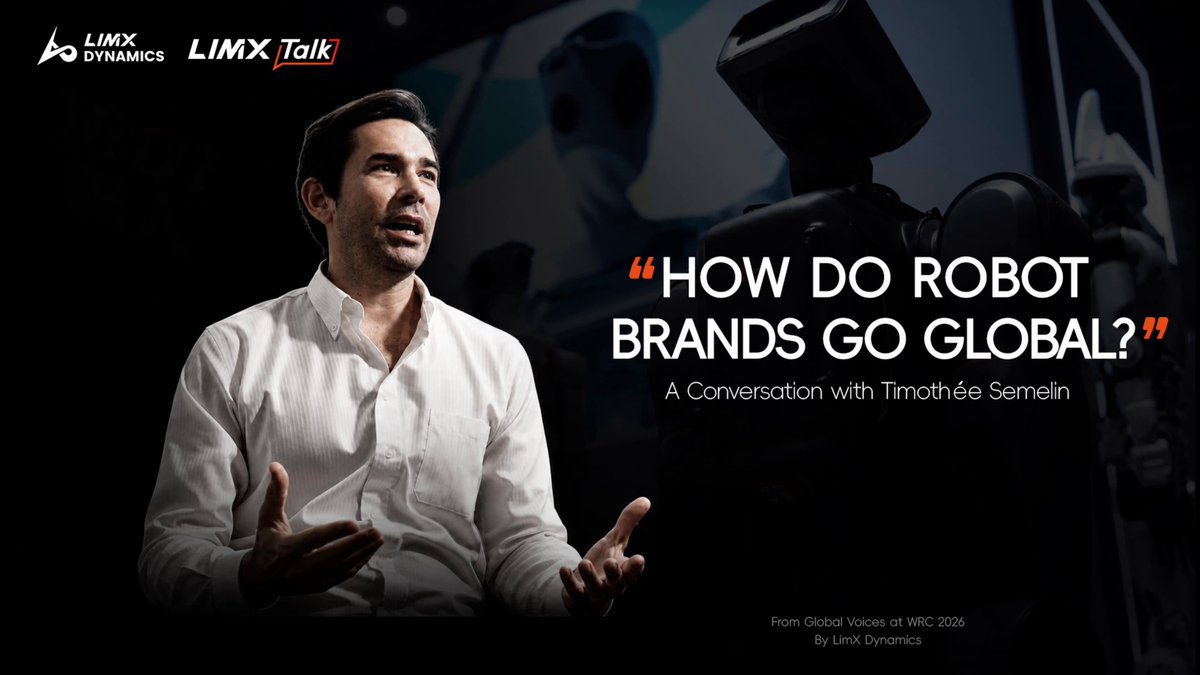
In a new episode of its podcast, LimX Dynamics hosts Timothée Semelin, CEO of ZenPAI, on how robotics brands can go global. Beyond speed, payload and intelligence, he says brands must answer who the technology is ultimately for, pointing to social acceptance, long-term reputation and a consistent global narrative: behind every robot is a human.
DEEP Robotics launches Watchkeepers Series to crowdsource robot sites
DEEP Robotics has launched its Watchkeepers Series, calling on people worldwide to share the places where robots are needed most. The company says it is ready to send robots into harsh environments and remote, rarely visited corners, standing shoulder to shoulder with frontline workers, and invites the public to go where they are needed.

Haier Smart Home Actively Expanding into Home Robotics, Leveraging Smart Home Ecosystem
Haier Smart Home is actively venturing into home robotics, capitalizing on its smart home ecosystem for R&D and application development.
Shenhao Technology Sets Up Hangzhou Embodied AI Firm With 70M Yuan
Hangzhou Shenhao Embodied Intelligence Technology Co., Ltd. has been established with 70 million yuan in registered capital, wholly owned by Shenhao Technology. The new company covers robot manufacturing and AI algorithm development, extending Shenhao's inspection robot business toward more general embodied intelligence.
Morgan Stanley: US-China Humanoid Gap Is Capability, China Shipment Forecast Raised to 50,000
Morgan Stanley's report concludes that the real US-China humanoid robot gap is in capability, not shipment share. The bank raised its 2026 China shipment forecast to 50,000 units, while emphasizing that social license may be as important as technical progress.
Freudenberg Opens Co-Creation Center in Shanghai, Targets 4 Billion RMB Humanoid Robot Revenue by 2035
Freudenberg opened a Co-Creation Center at Shanghai Zhangjiang Robot Valley on September 17, aiming to address reliability bottlenecks in humanoid robot physical systems. The company also signed partnerships with TiHu Robotics and Beijing University of Technology, and set a long-term goal of 4 billion RMB in humanoid robot revenue by 2035.
Barclays: Humanoid Robot Market May Hit $200B in a Decade; China Holds 85% of Deployments
Barclays defines the shift from digital AI to physical AI as Automation 3.0, with humanoid robots designed to fit human environments rather than rebuild them. It estimates the humanoid robot market could reach $200 billion by 2035 in an optimistic case, while China already accounts for about 85% of global deployments.
GMO AIR Launches Japan's First Humanoid Robot Ambulance Service
GMO AIR has launched Japan's first ambulance dedicated to humanoid robots, offering on-site diagnosis, repair, backup units and transport to repair centers. The service aims to minimize downtime as robot fleets scale, turning after-sales support into a mobile, productized capability.
Shenzhen Firm Packages Bionic Robot Head, Saving OEMs 600,000 Yuan
Shenzhen Quanzhineng Technology has packaged a bionic robot head into an integrated module, helping OEMs avoid RMB 500,000–800,000 in development costs and about six months of R&D. Its 403 series supports Chinese, English and Japanese, zero-degree silicone skin and a detachable battery compartment; one export-focused OEM cut logistics costs by 40% and saw monthly overseas orders rise 32%.
JD.com Enters Home Kitchen with AI Meal Plans and 19,888-Yuan Cooking Robot
JD.com has launched 7Fresh Chef, a local-life service that combines AI-generated meal plans, cold-chain delivery of prepped ingredients and an intelligent cooking robot, priced at 19,888 yuan. The model aims to extend dining into the home, but high upfront cost, supply-chain economics and uncertain consumer demand remain key tests.
Middle School Humanoid Robot Football Carnival Opens in Nanning with 3V3 Autonomous Play
The first Middle School Humanoid Robot Football Carnival opened in Nanning on September 17 as a key supporting event of the 23rd China-ASEAN Expo's South A Community exhibition area. Ten Nanning middle school teams using Booster K1 robots competed in a fully autonomous 3V3 format, highlighting AI education and China-ASEAN sci-tech exchange.
Tesla Optimus Team Lands in Ningbo for Supply Chain Audits Ahead of 2026 Production
Tesla's humanoid robot team has arrived in Ningbo to run on-site supply chain audits, placing orders while helping suppliers debug equipment and migrate manufacturing capacity. The company aims to produce about 50,000 Optimus units by 2026, a mass-production signal that is far more concrete than the hype around robotics concept shares.
Hangzhou Robotics School Graduates First Four Robots, Deploying to Nestlé and Korea
On September 17, Hangzhou Robotics School held a graduation ceremony for its first four robot students after more than two months of systematic training. The four robots—two guides, one inspection unit, and one piano performer—will deploy to museums, a Nestlé factory in Tianjin, and entertainment work in South Korea.
Qianxun CEO: BeiDou Shifts to Quality, Spatiotemporal Intelligence as Physical AI's Third Network
At the 5th BeiDou Scale Application International Summit, Qianxun Position CEO Chen Jinpei said the focus is shifting from quantity to quality in BeiDou applications. He proposed a spatiotemporal network as the third network for physical AI, alongside computing and communication networks, and highlighted the integration of spatiotemporal data with large models.
GBA Science Forum Brings Five Embodied Intelligence Projects to Dongguan
The Greater Bay Area Science Forum held a technology transfer event at Great Bay University in Dongguan, focusing on embodied intelligence. Five projects were showcased, and enterprises, universities, and technology managers engaged in matchmaking to bridge information gaps in technology transfer.
Ninth China Robot Summit Opens in Hangzhou to Explore 'Robot+' Era
The 9th China Robot Summit main forum opened in Hangzhou, focusing on the intelligence and quality transformation in the 'Robot+' era. The summit released key initiatives including a collaborative innovation platform for healthcare robots and an embodied intelligence evaluation framework, while discussing the mass production year of humanoid robots.
Tsinghua PhD Founder Builds Robots for Hotel Work
Li Xiaofei, a Tsinghua PhD and autonomous driving expert, founded Shenpu Intelligent to commercialize hotel service robots after co-founding an autonomous driving company and leading cleaning and logistics robot deployments.