Live Briefs 2026-10-03 · Full coverage of embodied AI
Qiyuan Robot Launches Sub-20,000-Yuan Humanoids in Consumer Market Push
Qiyuan Robot, under Shangwei New Materials, launched its Q1 and T1 consumer humanoid robots on Sept. 20, with the lowest price at 19,999 yuan—a record low for comparable models. The launch underscores how embodied AI is entering a consumer phase as components mature, supply chains improve, and prices fall.
Shangwei New Materials' Qiyuan Robot Launches Q1, T1 Personal Robots
Shangwei New Materials' consumer embodied AI brand Qiyuan Robot launched the Qiyuan Q1 and T1 personal robots in Shanghai on Sept 20. The Q1 is priced at 19,999 yuan, and both models ship immediately upon purchase.
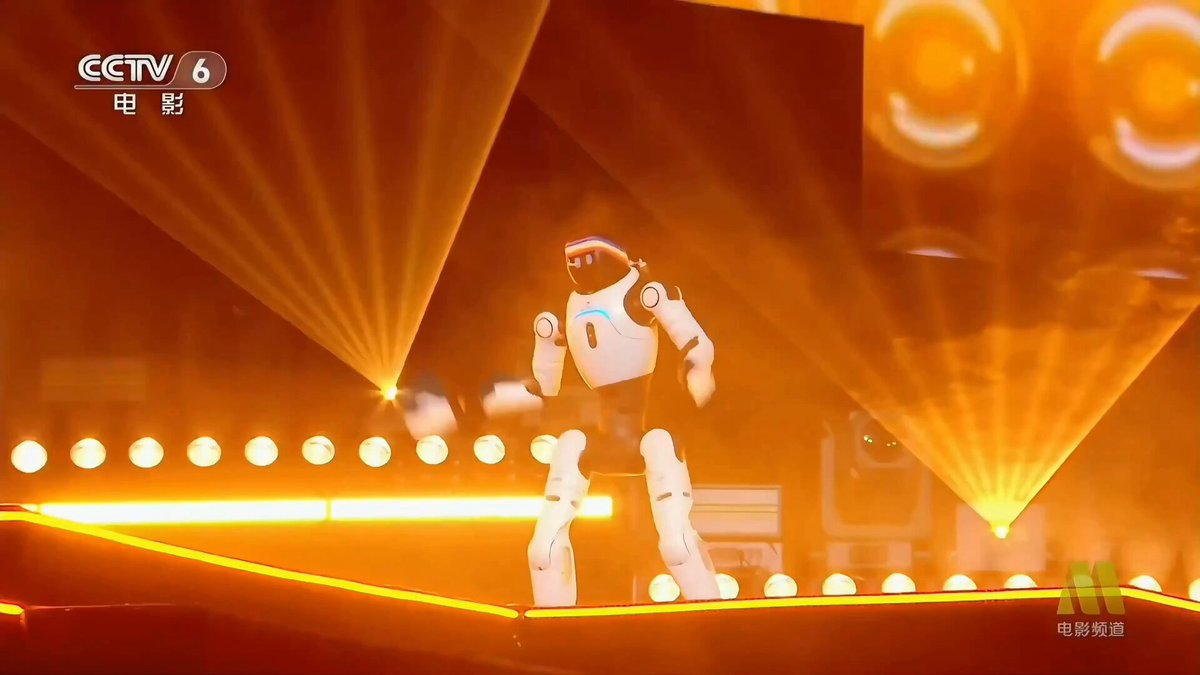
AGIBOT X2 humanoids dance at Greater Bay Area Film Concert
AGIBOT's X2 humanoid robots took the stage at the Greater Bay Area Film Concert, dancing alongside human performers while keeping their movements synchronized with one another. The company says humanoid robots are no longer confined to labs and demos and are starting to share the stage with people.
Qiyuan Launches Q1 and T1 Personal Robots Starting at 19,999 Yuan
Qiyuan Robot launched its Q1 and T1 personal robots in Shanghai on Sept. 20, with base models priced at 19,999 yuan. The Q1 Explorer edition costs 26,999 yuan as the company targets the consumer market.
D-Robotics Sponsors ROSCon Global 2026, Brings RDK Platform
D-Robotics announced that it is a sponsor of ROSCon Global 2026 and will bring its RDK platform to the @OpenRoboticsOrg event. The company says ROS 2 is not an add-on but a core part of the RDK robotics development experience. Across the RDK platform, multiple ROS 2 distributions are supported, while TogetheROS.Bot builds on ROS 2 with hardware-accelerated capabilities tailored for robotics.
D-Robotics highlights Isaac's BETL-001 Beetle lidar robot on RDK X5
D-Robotics spotlighted BETL-001 "Beetle," a scratch-built lidar-scanning robot made by Isaac on the company's RDK X5 development board. The company said the build deserves a closer look and asked followers to guess what ideas it may have sparked while sitting on display, adding that it looks forward to what hackathon participants come up with next.
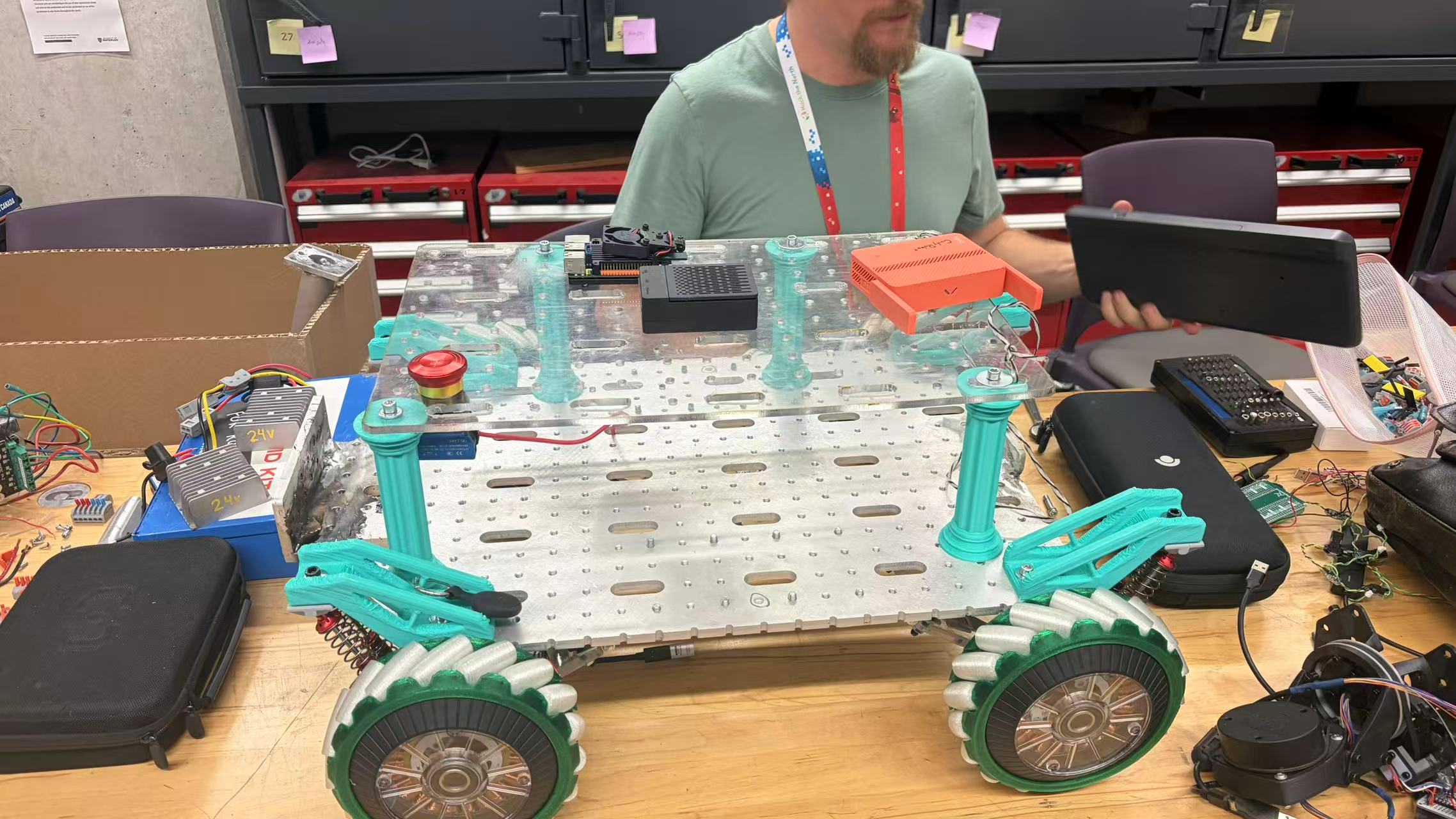
D-Robotics reports from HackTheNorth 2026 with RDK X5 demos
D-Robotics shared a few moments from @HackTheNorth 2026 in Waterloo, described as Canada's biggest hackathon. The team reported developers getting hands-on with the RDK X5 board, plus talks, demos and conversations across the venue over a single weekend.

Over 300 Robots Deploy at World's First Embodied AI Theme Park
AGIBOT and Chimelong Group will open the world's first large-scale embodied AI theme park at Zhuhai Hengqin Chimelong Spaceship Park on September 24, featuring more than 300 robots and the world's largest human-robot opening dance.
AGIBOT A3 Interacts With Celebrities in Real Time at GBA Film Concert
At the Greater Bay Area Film Concert, AGIBOT's A3 robot interacted with celebrities in real time, following the conversation and coordinating its speech, movements and expressions. The company says A3 runs on WITA-Omni, which lets it perceive its surroundings and respond naturally in the moment.

DEEP Robotics deploys smart patrol robots at Haining Leather Market
DEEP Robotics announced a real-world deployment of its robots for smart patrol duty at a shopping complex, Haining Leather Market in China. The post marks another commercial site rollout for the Hangzhou-based quadruped robot maker, following earlier patrol and inspection projects in industrial and public venues.

Qianjue Robotics Raises Hundreds of Millions as Tactile Sensing Heats Up
Embodied tactile startup Qianjue Robotics has closed two consecutive strategic rounds worth several hundred million yuan, following a hundred-million-yuan round announced two months earlier. The funding will scale its visuotactile sensors, data collection, simulation and tactile embodied models, as investors bet on touch as a foundational layer for physical AI.
Inspire Robots and Universities Open-Source HandEdit With 200M Image Samples
Inspire Robots has joined Fudan University, Shanghai Jiao Tong University and other institutions to open-source the HandEdit dataset and benchmark for first-person human-to-dexterous-hand image editing. The release contains over 200 million editing samples across 26 URDF configurations, with Inspire's DFX and G2 hands included in the data conversion pipeline.
Qiyuan Q1 and T1 Robots Connect to Tencent Cloud WorkBuddy
Tencent Cloud announced on September 20 that consumer embodied AI brand Qiyuan Robots has integrated its Q1 and T1 robots with WorkBuddy, making Qiyuan the first embodied AI company to access the platform. Tencent Cloud describes WorkBuddy as the brain for reasoning and dispatching cloud Skills, while Qiyuan robots act as the body for interaction and execution in office and home scenarios.
World's First Large Embodied AI Theme Park to Open Sept. 24
AGIBOT and Chimelong Group will open the world's first large-scale embodied intelligence theme park at Hengqin Chimelong Spaceship Park on September 24, 2026. More than 300 AGIBOT robots will take on roles across seven core scenarios, while a joint research institute and several industry-first achievements, including a 5G-A application, are unveiled.
Hunan Approves Smart Robotics Industry Plan, Porting Construction Machinery Tech to Robots
Hunan's provincial government approved an implementation guideline to accelerate its smart robotics industry, positioning it as a key vehicle for integrating AI with the real economy. The plan emphasizes migrating existing strengths in construction machinery and electronics into the robotics supply chain, alongside scenario opening and demand-supply matching mechanisms.
AgiBot and Chimelong to Launch World's First Embodied AI Theme Park on Sept 24
The world's first large-scale embodied AI theme park, jointly created by AgiBot and Chimelong Group, will officially open on September 24. Over 300 robots from AgiBot's full lineup will begin operations at Chimelong Spaceship Park in Hengqin.
Jensen Huang: Everything That Moves Can Have FSD, but Robots' Hardest Problem Is Not Motion
Jensen Huang argues that every moving thing will gain autonomy, but the core challenge for robots is manipulation rather than navigation. Nvidia's physical AI stack and the partial transfer from autonomous driving show progress, yet contact-rich operations remain the missing half before physical AI's ChatGPT moment.
Xuanji Dynamics Debuts Hypertron-SW01 Quadruped Robot at China-ASEAN Expo, Targets ASEAN Inspection Market
Xuanji Dynamics launched its Hypertron-SW01 quadruped robot and upgraded inspection software at the 23rd China-ASEAN Expo in Nanning. The Shenzhen-based company aims to bring its grid-validated inspection solutions to ASEAN markets, leveraging the expo as a springboard for overseas expansion.
Embodied AI's Real Problem: Lack of Genuine Orders and the Scene-First Path
A Hong Kong-listed founder criticized the industry's prevalent assembled entrepreneurship, which relies on related-party transactions to create fake revenue. As regulators plan to tighten humanoid robot IPO reviews, real orders must pass three tests—quality, real demand, and engineering capability—while companies like Jiyi Intelligent adopt a scene-first approach to grow capabilities.
Huawei Cloud and Fulongma Launch Sanitation Robot With Cloud Brain and Edge Cerebellum
Huawei Cloud and Fulongma Group unveiled a new-generation sanitation robot built on Huawei Cloud's CloudRobo embodied intelligence platform. The system pairs cloud-side scheduling with millisecond-level edge response, under a roadmap targeting full embodied intelligence integration by 2028.
Red Robot Monster Can Crusher Uses Bite Feedback to Encourage Recycling
A red robot-monster can crusher bites and rolls its eyes when fed aluminum cans, turning disposal into an emotional feedback loop. Smart recycling devices show that immediate responses and gamified points can raise correct sorting and participation rates, though one machine cannot fix the broader U.S. recycling shortfall.
MilliTrack Uses Millimeter-Wave Radio to Give Robots Positioning Where Cameras Fail
South Korean startup MilliTrack has developed AMR+, an add-on localization system that uses millimeter-wave radio backscatter to give autonomous mobile robots a reliable position source where cameras and LiDAR falter. Priced at roughly $1,000 per tracker-and-tag kit, it is slated to launch in March 2027 after a CES 2027 demonstration.
Singapore Massage Chain Natureland to Debut Robot Massage and AI Assessment
Natureland Wellness Group plans to launch Natureland Plus by the end of 2026, featuring robotic massage, AI-based client assessment, and smart therapy devices. The new format aims to assist therapists, offer short sessions, and address staff shortages and consistency issues in massage services.
Dongfeng Motor Unveils Plans, Humanoid Robots to Enter Small-Batch Trial Production by Year-End
Dongfeng Motor has introduced several technology plans at its 10th Science and Technology Innovation Week, with humanoid robots and robot dogs as key embodied AI exhibits. The automaker says its humanoid robot will begin factory work in October and enter limited trial production by year-end, aiming for human-level capability by late next year.
Freudenberg: Humanoid Robot Commercialization Hinges on Stable, Safe Physical Systems
Freudenberg CTO Matthias Sckuhr says the next stage of humanoid robot development is an engineering problem, not just an AI problem. The company argues that the reliability, efficiency and safety of physical systems like joints and dexterous hands in real industrial settings will determine commercialization success.
Wang Xingxing: Humanoid Robots' Biggest Shortcoming Is Alignment, Errors in Last Few Centimeters
Wang Xingxing, speaking at the 2026 Private Economy Innovation Development Conference, identified alignment as the biggest shortcoming of humanoid robots. He noted that errors in the last few centimeters or millimeters block generalization and practical deployment, while envisioning a future where robots can tidy unfamiliar rooms without prior training.
XPeng Opens Humanoid Robot Production Line as Pengxing Raises Over $900M
XPeng Group has launched an automated production line for humanoid robots, with its robot subsidiary Pengxing completing a first funding round of more than $900 million at a post-money valuation above $6.3 billion. The move reflects a broader push by Chinese automakers to transfer their manufacturing and supply chain strengths into the humanoid robot sector.
Hangzhou 6B Hall to Host Embodied AI Robot Challenge With Fan Interaction
The 2026 Global Digital Trade Innovation Competition (Embodied AI Robot Challenge) will take place Sept. 23–27 at Hall 6B of the Hangzhou Grand Convention and Exhibition Center. The event combines robot races, combat, soccer, and endurance tests with audience participation, product displays, robot band performances, and live streaming.
URKL Shanghai Humanoid Robot Combat Sells Out 5,000 Tickets
The 2026 URKL humanoid robot combat city tour opened in Shanghai's Baoshan Gymnasium on September 19, selling out 5,000 tickets as Zhongqing's T800 pulled off a kip-up recovery. The event, run under a joint venture between Gucun Industrial and Zhongqing Robotics, highlights how combat tests a robot's structural resilience, balance and self-recovery.
Tesla, BMW, Mercedes Deploy Humanoid Robots: $2–$5/Hour vs $35–$45 Labor
Tesla, BMW and Mercedes-Benz are putting bipedal humanoid robots on production lines, where operating costs of $2–$5 per hour undercut the $35–$45 fully loaded hourly labor cost in Europe and the US. A $15 trillion long-term market is forecast, but scarce physical data, limited hardware durability and union resistance remain the three obstacles before 2026's paid-deployment start.
Keenon's XMAN Humanoid Robot K仔 Wears Couture at Beijing Fashion Show
On September 16, designer Zou Yu YOYO presented the LACAVA Yiding couture show in Beijing, where Keenon's XMAN humanoid robot K仔 appeared in a custom outfit. The 136-cm robot, equipped with 42 biomimetic degrees of freedom, sat front row, highlighting how humanoid robots are moving into fashion and culture.
Weiyi Zhizao Gets CSRC Overseas Listing Filing, Industrial Embodied AI Robot Share 31%
Changzhou Weiyi Zhizao Technology has received a CSRC filing for an overseas listing and plans to issue up to 42.8671 million shares on the Hong Kong Stock Exchange’s main board. The company focuses on industrial embodied AI robots, holds a 31% domestic market share, and grew revenue from RMB 434 million in 2023 to RMB 796 million in 2025 with rising gross margin.