Live Briefs 2026-10-03 · Full coverage of embodied AI
Noetix Robotics to Exhibit at IROS 2026, Booth 914
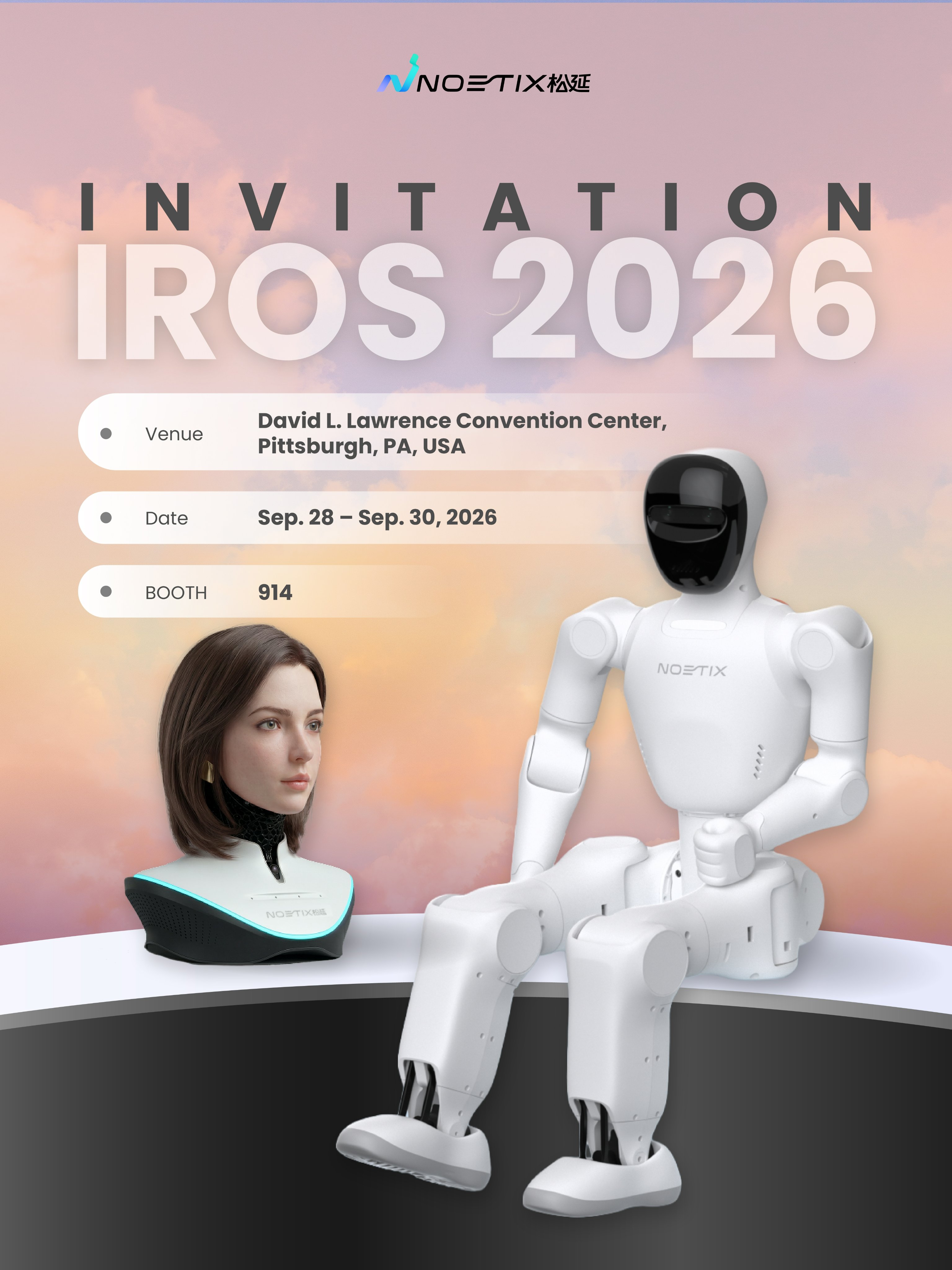
Noetix Robotics will attend IROS 2026 at the David L. Lawrence Convention Center in Pittsburgh, PA, USA, from Sep. 28 to Sep. 30, 2026. The company will be at Booth 914, showing its robotics innovations up close to visitors.
Noetix Robotics compares Boomy and Bumi humanoid robots
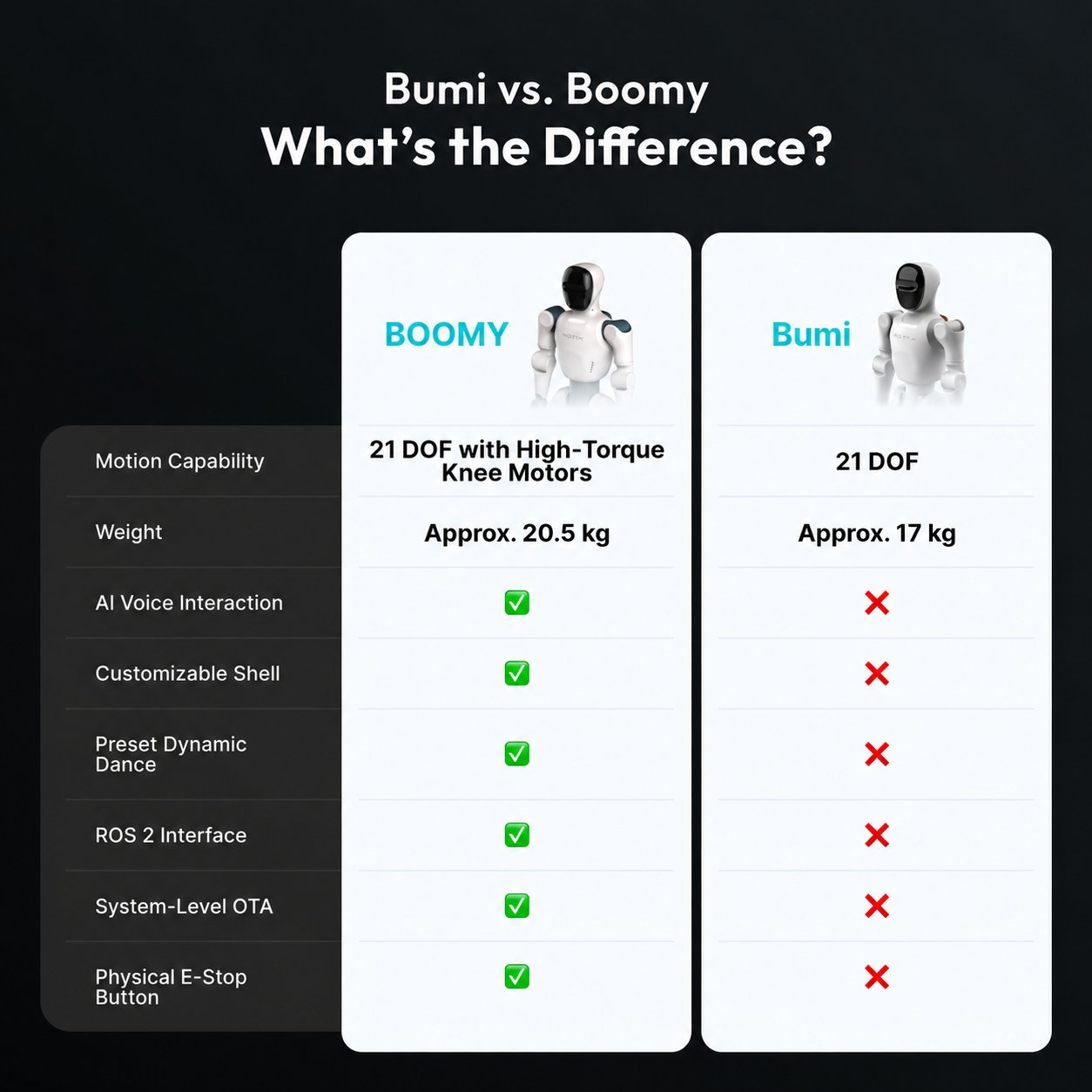
Noetix Robotics has compared its Boomy and Bumi humanoid robots, saying the two belong to the same humanoid family but are built for different ways to explore robotics. Boomy targets everyday interaction, while Bumi is aimed at deeper development and customization, with the post noting the two models suit different types of users.
Special-Purpose Robots Take on High-Risk Missions, Withstanding 500°C and Pulling 6 Tons
Chinese special-purpose robots are taking on dangerous missions, from a 500°C-tolerant robot wolf and a flying lifebuoy to machines that can lift 1.5 tons or pull 6 tons. At a Hangzhou exhibition, more than 300 robots demonstrated designs optimized for task-specific, high-risk environments rather than human-like forms.
Post-95 Tsinghua PhD Leaves Tencent to Build Robot Brains as Marketable Skills
Fangqi Technology, founded by a post-95 Tsinghua PhD who left Tencent, has raised a tens-of-millions-yuan angel round to build a general robot brain. The company proposes a semantic world model and Turing learning paradigm to enable cross-embodiment skills, aiming to become a skill exchange for robot body makers.
Cyber Mid-Autumn at Digital Trade Expo: Robots Recite Poetry, Paint, and Companion
At the fifth Global Digital Trade Expo, a humanoid robot recited a Mid-Autumn poem and lunar robots simulated moon-surface movement, drawing families into a cyber-future holiday. Other exhibits included a dexterous hand painting Hangzhou motifs and a home companion robot designed to support solitary elderly people.
Sichuan Cooking Robot Recreates Wok Hei with Sensors, Vision and 10,000 Recipes
A Sichuan company has developed a cooking robot that can produce wok hei, the smoky aroma prized in Chinese stir-fry. It relies on sensors, machine vision, and a database of more than 10,000 recipes to mimic a chef’s judgment.
Amazon to Build $100M Robot Manufacturing Facility in Indiana
Amazon plans to invest $100 million in a new Indianapolis robot manufacturing facility, creating about 500 jobs and starting production in 2027.
PitPro Deploys Robotic Tire Changers at Kal Tire in Calgary
PitPro Automation has installed its first robotic tire-changing system at a Kal Tire store in Calgary, Alberta. The company says it can replace four tires in 15 minutes, roughly 90% faster than manual work, and is targeting chain shops facing severe labor shortages.
Mondo Beni Review: A Flipping Robot Camera with Terrible Obstacle Avoidance
The Mondo Beni is a small bipedal robot that records video while tracking users, but its obstacle avoidance is terrible. The reviewer found it fun but fundamentally flawed, with mediocre camera quality and a high price, making it hard to recommend unless Mondo fixes the obstacle avoidance.
IndexBox Forecasts 16.8% Growth for AI Surgical Robot Market by 2035, Surgeon Shortage Main Driver
IndexBox's latest report predicts the global AI surgical robot market will grow 16.8% by 2035, driven primarily by a worldwide shortage of surgeons. The market is entering a structural expansion phase, with demand accelerating and shifting toward hybrid procurement models.
The Robot Works unveils Goose, a home robot that learns from geese, not humans
The Robot Works has unveiled Goose, a home robot prototype that favors a low, long-necked form over a humanoid body. Designed to reach low and high spaces without complex balance control, Goose uses camera eyes, an orange beak-gripper, and a polka-dot scarf to make its behavior and purpose legible.
IEEE Spectrum Weekly Robot Videos: A Goose, a Ball-Balancing Robot, and a Flour-Digging Excavator
IEEE Spectrum's Video Friday roundup features Goose, a small home robot, plus Skydio's F10 fixed-wing drone and a swarm of tiny robots. Other highlights include a $6,500 dexterous hand, Boston Dynamics' Stretch durability testing, underwater collaborative arms from ULOHA, Astribot demonstrations, and a record-breaking Unitree humanoid performance at WorldSkills Shanghai 2026.
LUUM Uses Robots and AI to Automate Eyelash Extensions
California-based LUUM is using robots and AI to automate eyelash extensions, handling precise single-lash placement while human professionals manage consultation, preparation, customization, and finishing. The service is available in Dallas, the Bay Area, and Orange County, with New York City and Chicago coming soon; LUUM says robots will eventually work three to four times faster than human lash artists.
Solar-Powered Seeding Robot Achieves 98.8% Seed Positioning Accuracy
Researchers developed a solar-powered seeding robot that integrates precision seed metering with sustainable energy. Tests show spacing accuracy of 98.08% to 98.80%, with optimal performance at low speeds and wider spacing.
Florida Deploys Robotic Rabbits to Lure Invasive Burmese Pythons
Researchers are testing robotic rabbits in the Florida Everglades to attract invasive Burmese pythons. The solar-powered decoys mimic rabbit heat, scent, and movement and cost about $4,000 each.
Robot Soccer Misjudgments at Digital Trade Expo Challenge Show Imperfection as Part of Competition
The Embodied AI Robot Challenge at the 5th Global Digital Trade Expo in Hangzhou drew more than 100 teams and featured 14 official events spanning speed, competition, and endurance. Organizers framed misjudgments, loss of balance, and route replanning not as failures to hide but as part of a competition designed to expose real engineering problems.
AgiBot's OmniHand Wins 7 Golds, But Dexterous Hands Face Factory Test
AgiBot subsidiary Critical Point's dexterous hand OmniHand won seven golds at the World Humanoid Robot Games. CEO Qiao Tianjie says dexterous hands are key for robots to use human tools, but reliability, algorithms and commercialization remain major challenges.
Wearing a Headband for 12 Hours of Chores, Author Becomes Robot Trainer
Mifeng Technology launched Mifeng Pai, a crowdsourced platform that recruits ordinary people as robot trainers. In a 12-hour trial, the author wore MEgo gear to record chores and earn money.
SenseMart OS Debuts With 0.3 Staff per Store, Half-Year Payback
SenseTime ecosystem company SenseMart Shanhui has launched SenseMart OS, a retail operating system for unmanned stores. Its Shaomaigou robot stores average 0.2–0.3 staff per location and can pay back in about six months to a year at premium Shanghai sites.