Live Briefs 2026-10-02 · Full coverage of embodied AI
Institutions Favor Small-Cap Stocks in September, Eye Robotics and AI Opportunities
In September, over 2,700 listed companies received institutional research, a sharp increase from August. Institutions showed growing interest in small-cap stocks under 10 billion yuan, particularly in machinery, electronics, and basic chemicals.
Solid-State Battery Industrialization Gains Momentum; Warm Isostatic Pressing Equipment Emerges as Key Enabler
All-solid-state batteries are seen as a core direction for the lithium battery industry, with a small-scale passenger vehicle adoption window expected in 2027–2028. Emerging applications such as humanoid robots and low-altitude aircraft are also becoming important testbeds, while equipment makers like Lyric Robot and Lead Intelligent have begun shipping warm isostatic pressing equipment seen as key to solving solid-solid interface challenges.
FF Robotics to List at $200M; Auto Business Become Shared Mobility & Smart Cabin Operator
Faraday Future plans to spin off its robotics unit for an independent listing at a valuation of $200 million, while its automotive business will upgrade to become a shared mobility and smart cabin technology operator.
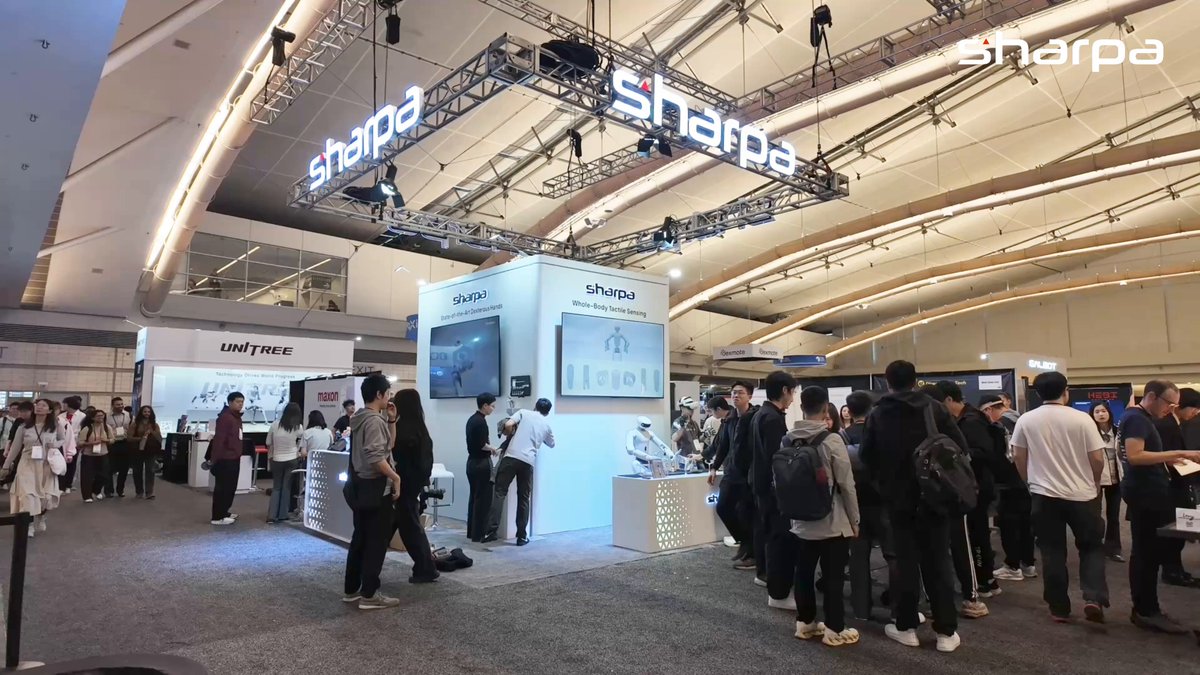
Sharpa demos robotic dexterity with latest hardware at Booth 514
Sharpa posted clips from Day 1 of its exhibition, showing its latest hardware running real-world manipulation tasks with fast reactions, precise manipulation and rich physical interaction.
Gecko Robotics Adopts NVIDIA Agent Safety Layer for Inspection Robots
NVIDIA unveiled its Open Agent Safety Platform, built on the open-source OpenShell runtime and the Sentry watchdog, to govern robots running AI agents. Gecko Robotics is among more than 100 organizations testing the framework, applying enforceable boundaries to its climbing, crawling, flying and swimming inspection robots, including the U.S. Navy's Komodo.
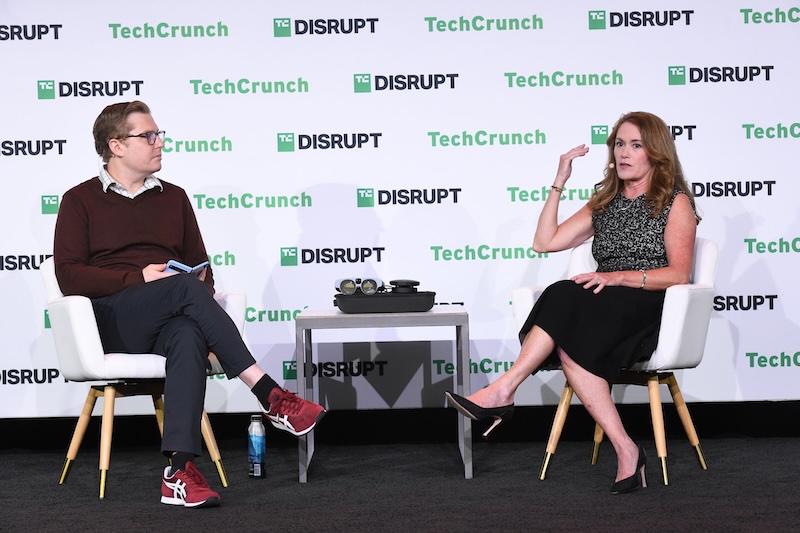
Agility: Digit takes on the hardest manufacturing jobs to fill
Agility Robotics says hundreds of thousands of manufacturing roles sit unfilled as the workforce retires and fewer people step in. The company says its humanoid robot Digit exists to take on that work. CEO Peggy Johnson made the case in a conversation with @bheater and @A3Automate.
Cambridge Team Explores Whether Soil Can Process Information Without a Brain
Cambridge researchers are investigating soil as an intelligent system, studying its structure, chemistry, and microbial networks. The work aims to inspire bio-inspired computing, precision agriculture, and environmental sensing.
Soft Exosuit Makes Standing Up Easier for Older Adults
A soft robotic exosuit is designed to assist older adults with standing up from a chair. The device aims to respond intuitively and stay synchronized with the user's hip and leg movements.
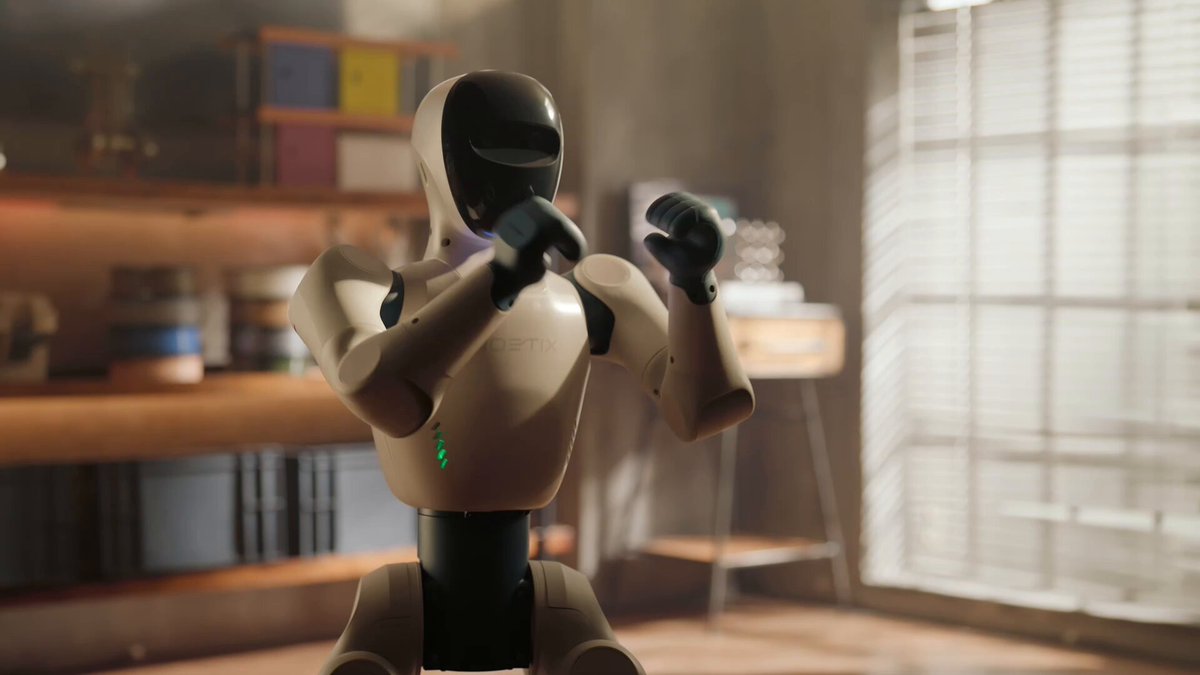
Noetix's Boomy humanoid debuts with 21 active joints
Noetix Robotics has shown off Boomy, a compact humanoid built for real motion. The robot combines 21 active joints in its body, covering everything from steady bipedal walking to full-body movement, and can walk, turn, move and perform. The company says more real-world demos are coming soon.
Robbyant, AFDE Sign MoU on Embodied AI in Middle East
Robbyant and the Arab Federation for Digital Economy (AFDE) signed a framework MoU at the 5th Global Digital Trade Expo. The two sides will work on deploying and localizing full-stack embodied intelligence and robotics solutions in the UAE, the GCC and the wider Middle East, covering model localization, workflow adaptation, real-world applications, responsible collaboration in data and model training, and regional ecosystem development.

ChangSheng Bearing Says No Tesla Robot Collaboration, Seeks Embodied AI Partners
ChangSheng Bearing said on September 28 that it currently has no collaboration with Tesla in robotics and will seek embodied intelligence partnerships based on its own market strategy.
Anhui Backs Robot Companies' Global M&A to Integrate Supply Chain Resources
The Anhui provincial government has issued guidelines to promote high-quality development of the robotics industry, supporting M&A and global integration of supply chain resources while encouraging cross-sector investment.
Anhui supports auto industry's cross-border expansion into robotics, deepening vehicle-robot collaboration
Anhui Province released guidelines to promote high-quality development of the robot industry, encouraging automakers to expand into robotics as a 'second growth curve.' The policy aims to deepen vehicle-robot collaboration through industrial, innovation, talent, and service chain initiatives.
Noetix Robotics Opens Boomy Pre-Launch Survey Before Kickstarter
Noetix Robotics is preparing the Kickstarter launch of its Boomy robot and has opened a pre-launch survey. The company asks users what matters most to them, how they would use Boomy, and what they want to see before launch. The survey takes 3 to 5 minutes, and 5 participants will win an exclusive NOETIX Tyvek tote bag.

RoboSense E2 and EM4 LiDAR Support NVIDIA Holoscan Bridge
RoboSense says its E2 and EM4 digital LiDAR now support NVIDIA Holoscan Sensor Bridge (HSB), enabling low-latency sensor-to-compute connectivity with NVIDIA edge AI platforms. The company states it is the first shipping LiDAR maker to integrate with NVIDIA HSB, building on its existing presence across NVIDIA Jetson, DRIVE and Omniverse platforms.

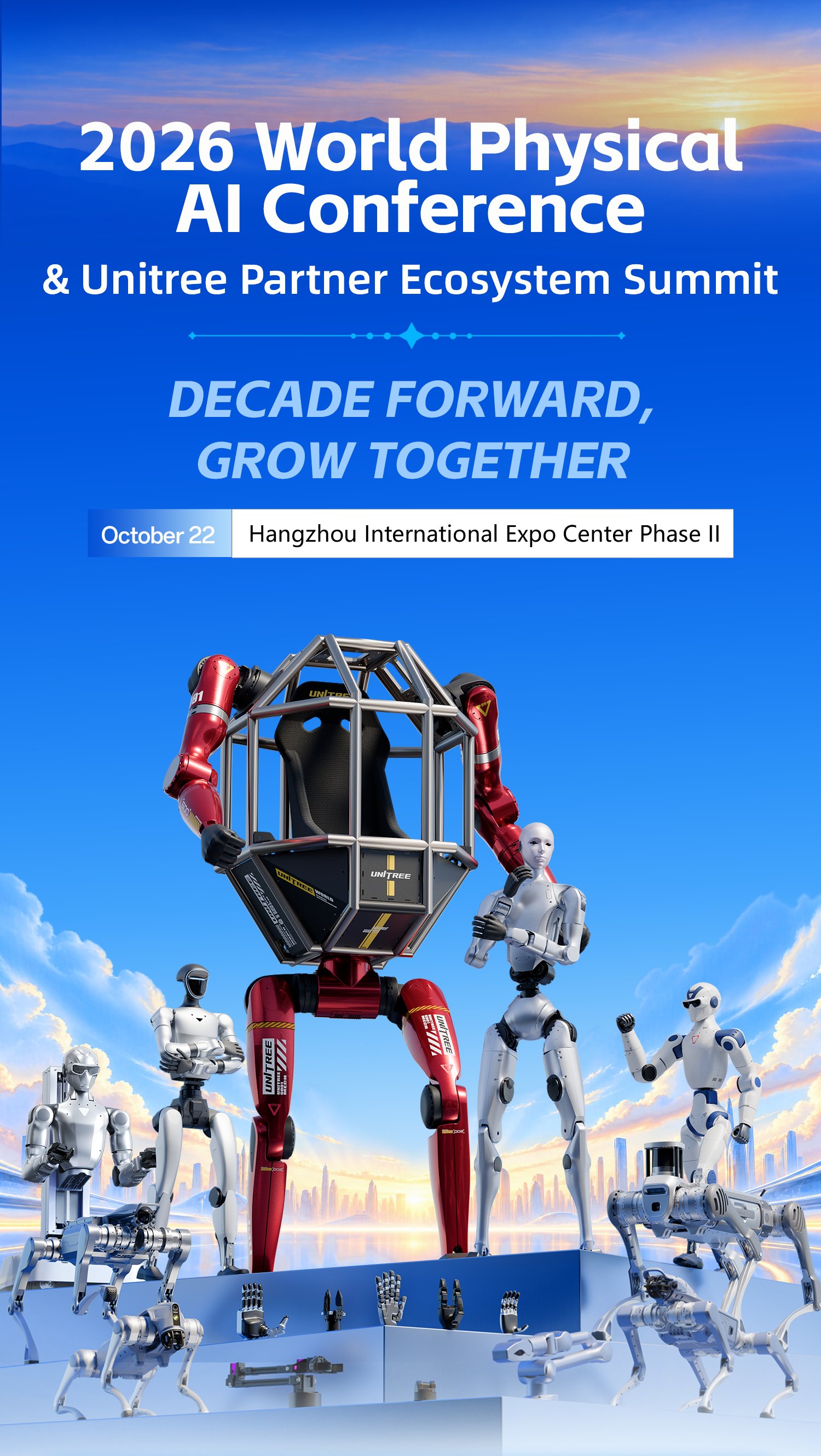
Unitree to Host 2026 World Physical AI Conference, Partner Summit
Unitree announced the 2026 World Physical AI Conference and Unitree Partner Ecosystem Summit, scheduled for October 22, 2026. The company invites people to register by scanning a QR code in the post and says it looks forward to seeing attendees.
DEEP Robotics Backs 2026 Global Open-source AI Challenge
The 2026 Global Open-source AI Challenge has officially concluded, with DEEP Robotics supporting the event end to end. The company said the competition used real-world challenge scenarios to test the true deployment capabilities of embodied intelligence, helping drive a full-industry application loop.

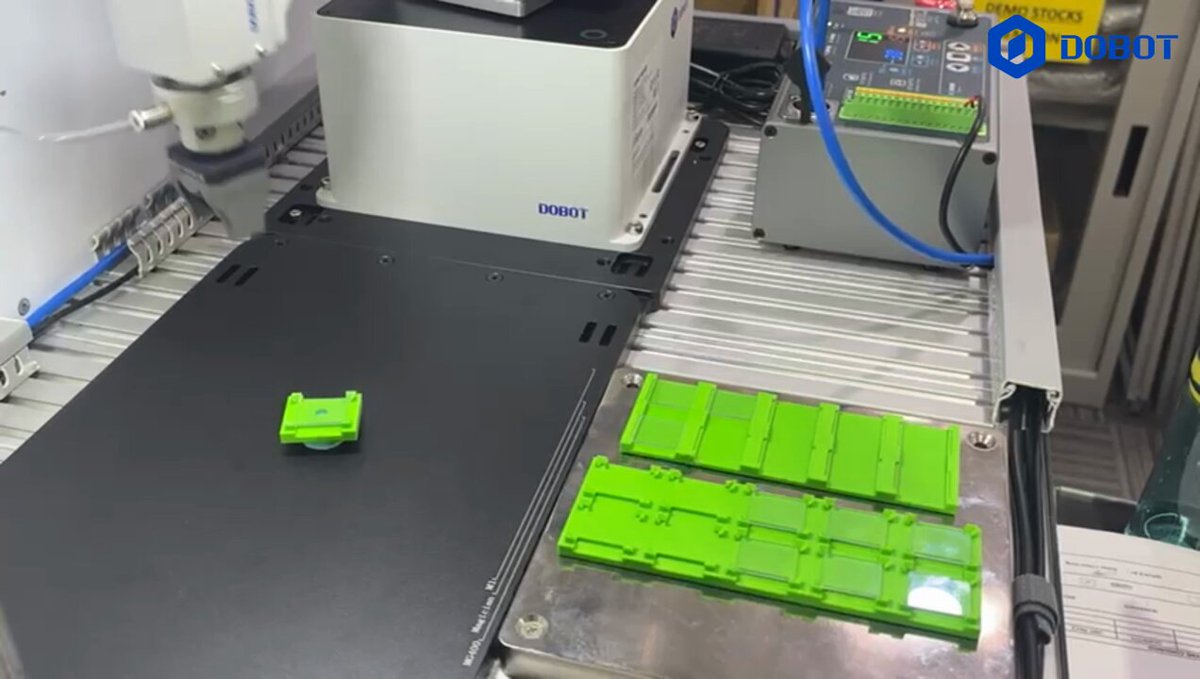
DOBOT MG400 and Vision Kit bring ±0.05 mm precision to glass handling
Dobot Robotics says its DOBOT MG400 desktop four-axis robot, paired with the Vision Kit, detects changing positions and orientations of glass parts for precise pick-and-place. The combination offers ±0.05 mm repeatability, aimed at glass handling that needs more flexibility and at compact, flexible automation setups.
Jingshi Technology's VIVA Hand Achieves Real-Time Human-Robot Four-Hand Piano Duet
Jingshi Technology has unveiled its VIVA dexterous hand, claiming the world's first real-time human-robot four-hand piano duet. The company also announced a VIVA × CADA milestone, shifting robots from executing preset motions to artistic expression and continuous learning.
Shiyun Circuits: Humanoid Robot PCB Capacity Ready, Enters Mass Supply Stage
Shiyun Circuits (603920.SH) announced that its PCB products for humanoid robots are ready for mass production, with sufficient capacity. The company has completed three generations of product iterations since 2020.
Dongwei Technology Says It Has Not Directly Supplied Robot-Related Firms
Dongwei Technology (688700.SH) said on an investor interaction platform that it mainly produces high-end precision electroplating equipment and has not directly supplied products to robot-related companies.
1.7B Yuan in Orders vs 90B in Funding: Robotics' Real Bubble Is Collections
China disclosed 218 winning humanoid and embodied robotics bids worth 1.72 billion yuan in H1 2026, while the sector raised over 90 billion yuan — a 52-fold gap between money and real orders. The deeper risk lies in collection: government-linked buyers are stretching payment terms past twelve months, turning order announcements into cash-flow fiction.
Yuankee Vision's Chen Pu: Robot Training Data Must Upgrade from 2D to 4D with Sub-Millimeter Precision
At a seminar in Beijing, Chen Pu of Yuankee Vision emphasized that robot training data must evolve from 2D to 4D with sub-millimeter precision to build a 4D data foundation. He highlighted that current bottlenecks include single training scenarios, insufficient dynamic data, and inconsistent underlying foundations, and outlined Yuankee's approach to multimodal data collection.
Hangzhou Elderly Living Alone Get Robot Roommates in Three-Year Trial
A Hangzhou social experiment places companion robots Yuanluobo and Yuanbao in 30 homes of elderly people living alone, starting with Zhao Yongfu in Sijiqing Subdistrict. The project, led by Zhou Chaonan and Su Jun, plans to reach 300–500 households nationwide and track results for three years.
Restroom Cleaning Robots Secure 500 Million Yuan in Orders
At the 5th Global Digital Trade Expo, Star Species Robot reported 500 million yuan in orders for its restroom-cleaning robots, with over 100 devices already operating in Hangzhou and 500+ new intent orders, mostly from overseas. The article argues that small, clearly bounded scenarios like restroom cleaning and garment handling are practical paths to commercialization, but warns that orders must be distinguished from actual revenue and that success requires five key metrics.
China’s 354,000 Industrial Robots Breach the ‘Big Four’ Fortress
China's 354,000 domestically produced industrial robots are challenging the long-held dominance of the global “Big Four,” signaling deeper import substitution and price pressure. The shift marks a structural test for Fanuc, Yaskawa, ABB and KUKA in the world’s largest robot market.
Robotics Industry's Five-Year Talent Gap: Why Companies Still Won't Cultivate Talent
For five years, the robotics industry has complained of a talent shortage, yet many companies remain reluctant to train their own staff. Short project cycles, poaching risks and cost concerns push firms toward hiring rather than cultivating talent.
Solid-State Batteries May Debut in Humanoid Robots Before Electric Vehicles
Samsung SDI is accelerating solid-state battery development with mass production targeted for the second half of 2027, naming humanoid robots as a primary application. Because current humanoid robots run only two to four hours per charge, robots may become the first large-scale commercial use before electric vehicles.
ULTRA Framework Nominated for IROS 2026 Best Mobile Manipulation Paper
The ULTRA framework has been accepted to IROS 2026 and nominated for the Mobile Manipulation Paper Award. It enables a single controller to either track reference motions or generate whole-body loco-manipulation actions from just a target position and perception.
Shenzhen Robotics Valley Cuts Tactile Sensor Cost From 100,000 Yuan to 199
Shenzhen's Nanshan Robotics Valley, home to over 200 supply-chain companies, has helped drive tactile sensor prices from about 100,000 yuan per imported unit down to as little as 199 yuan.
Unitree's Market Value Halves From Debut Peak as Investors Reassess Valuation
Unitree Robotics' market value has fallen from 444.9 billion yuan on its trading debut to 203.6 billion yuan. First-half 2026 revenue rose 48.54% year on year, but non-recurring-adjusted net profit dropped 19.34%.
Tesla Ramps Optimus Production to Hundreds Weekly, Targets 1,000 by Year-End
Tesla has raised Optimus production to several hundred units per week at its Fremont factory, roughly ten times the small-batch testing rate in Q2. Management aims to launch a continuously running automated line by year-end with capacity above 1,000 units weekly.
Panda Robot Somersaults Steal Spotlight at UESTC Robotics Roadshow
From Sept. 26–27, the University of Electronic Science and Technology of China hosted a robotics and AI industry-academia integration event at its Shahe campus, part of its 70th anniversary and second alumni culture festival. Nearly 30 robotics firms exhibited, and a somersaulting panda robot drew particular attention.
At Digital Trade Expo, Robots Shift From Performing to Working
The Fifth Global Digital Trade Expo in Hangzhou featured over 2,000 exhibitors and 50,000 professional buyers, with robots demonstrating tasks from soccer to surgery. A reporter observed that the industry is moving from showy motion to practical work.
Automakers Flock to Embodied AI, Armed With Three Legacy Passes
Automakers are increasingly entering embodied AI, leveraging existing supply-chain experience and commercialization scenarios. The overlap could reduce duplicated investment and help build a shared AI ecosystem.
World's First Embodied AI Robot with Fully Domestic Electronic Architecture Debuts in Yichang
On September 28, the world's first embodied AI robot built on a fully domestic electronic architecture made its debut in Yichang, Hubei Province. The architecture covers the operating system, networking, tool software and AI computing chips, enabling isolated integration of control and AI computation.
CRRC Unveils Next-Gen AI-Integrated Metro, Debuts Embodied AI in Rail Transit
At the 15th InnoTrans in Berlin, CRRC unveiled a next-generation AI-integrated metro train—the first to apply embodied AI in rail transit—alongside a hydrogen fuel-cell hybrid locomotive and an intelligent flatcar. The metro uses over 600 sensors and onboard AI to monitor conditions and predict faults.
Ophthalmology Robot Restores Near-Blind Eye in 3 Minutes with Micron Precision
A surgical robot developed by the Eye Center of Zhejiang Provincial People's Hospital filters hand tremors to 10-micron precision. In July 2023, it completed Asia's first clinical ophthalmology robot surgery, performing a 3-minute macular injection on a nearly blind patient; 32 such procedures have been done to date.
World's First Embodied AI Robot with Fully Domestic Electronic Architecture Unveiled
On Sept. 28, a launch event in Yichang, Hubei, unveiled the world's first embodied AI robot powered by a fully domestic electronic architecture. The architecture, described as the robot's nervous system, spans operating system, networking, tool software and AI compute chips, offering a domestic alternative to foreign solutions.
RoboSense Joins NVIDIA HSB Ecosystem, Bridging Key Perception-Compute Link for Robots
RoboSense's digital LiDAR E2 and EM4 have been adapted for NVIDIA's Holoscan Sensor Bridge (HSB), making RoboSense the first LiDAR partner in the HSB ecosystem. This integration connects high-precision 3D perception with NVIDIA's edge AI computing, advancing real-time perception and simulation development for robotics.
Hong Kong Stocks Open Higher; Tencent Music, NetEase, Horizon Robotics Lead Gains
Hong Kong's Hang Seng Index opened 0.18% higher at 24,554.58 points, while the Hang Seng Tech Index rose 0.29%. Tencent Music, NetEase, Horizon Robotics, and Tencent Holdings each gained more than 1%.