Live Briefs 2026-10-02 · Full coverage of embodied AI
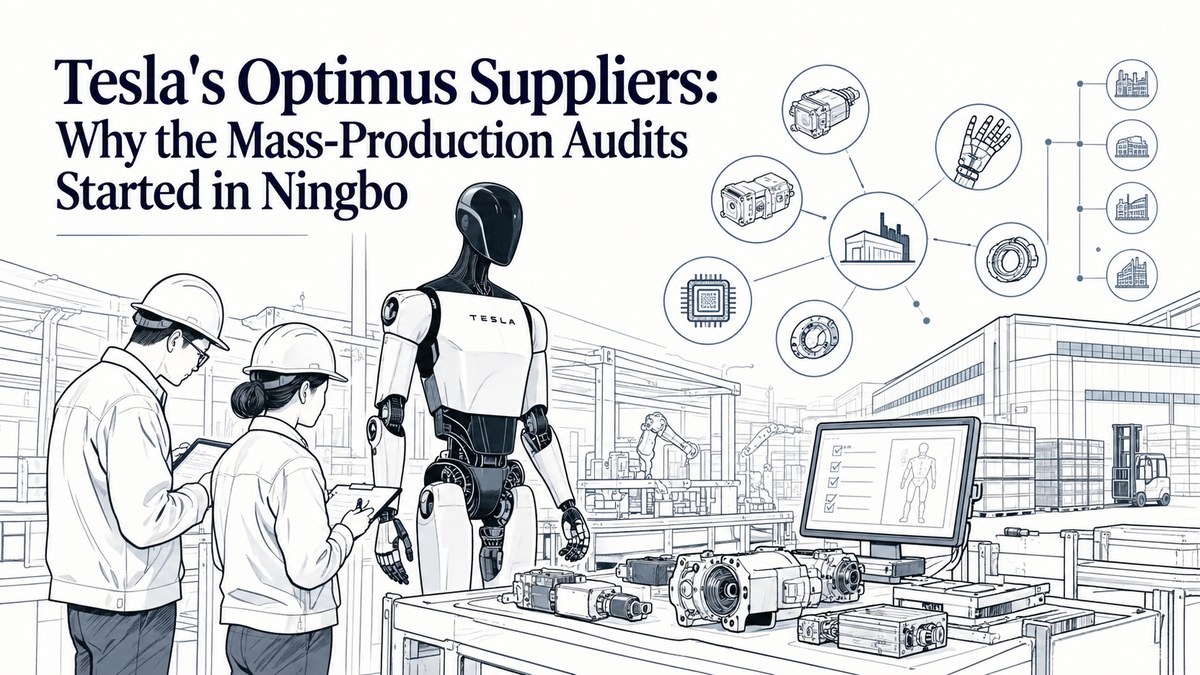
Tesla's Optimus Suppliers: Why the Mass-Production Audits Started in Ningbo
On Sept 16, 2026, a Tesla team arrived in Ningbo, a port city in Zhejiang province, and began a mass-production audit of its robot suppliers the next day. The names reported from that round, Tuopu Group, Sanhua, Joyson Electronics, Zhejiang Rongtai and Xinquan, are almost all long-standing suppliers to Tesla's car business. Why would a robot have to clear the production lines of auto parts makers first? Because what an audit measures is cycle time, yield and cost, and those three sit with companies the car industry has spent decades hardening. Tesla's own description of the task is that "almost every part is new, with no ready supply chain." The list is therefore more than a purchase order. It is Tesla looking for a manufacturing path it can repeat. Article structure: - 1. The audit: four departments on site, three answers - 2. The list: why it is almost all auto parts makers - 3. The threshold: how far an audit is from mass production
Global News Before Friday US Market Open: China-US Talks, Central Bank Moves, Tech Advances
Before Friday's US market open, key developments include China-US communication on a leaders' meeting, China's State Council addressing aging, the EU seeking to restrict Chinese hybrid car imports, the BOJ hinting at consecutive rate hikes, AI advances from OpenAI and Anthropic, Toyota's plan to deploy 400,000 robots, and market movements with tech stocks rebounding and the yuan strengthening past 6.7.
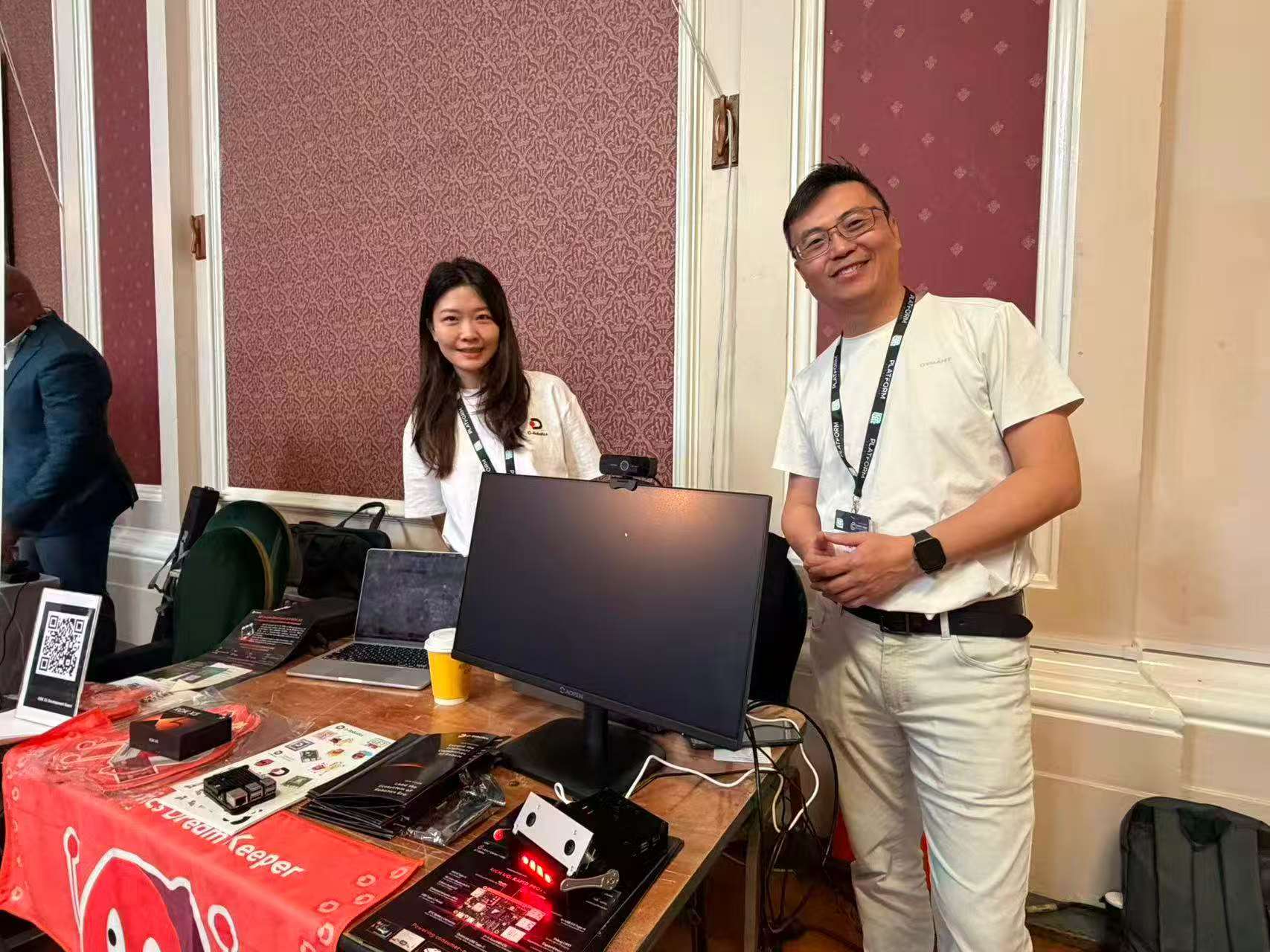
D-Robotics debuts at Cambridge Tech Week with RDK robots
D-Robotics exhibited for the first time at Cambridge Tech Week in Innovation Alley, UK, spending two days meeting the local tech community. Its booth drew developers, university researchers and robotics startup teams, who showed strong interest in the RDK series' edge-AI capabilities and the portfolio of RDK-powered robotic solutions.
UBTech Secures Over 50 Million Yuan in Overseas Orders, Accelerating Global Commercialization
UBTech has secured over 50 million yuan in overseas orders from Europe, Japan, and South Korea for its humanoid robots. The company reported strong H1 2026 financials, with revenue doubling and humanoid robot sales soaring, as it accelerates its global commercialization strategy.
UBTech Secures Over 50 Million Yuan in Overseas Orders for Humanoid Robots
UBTech has signed contracts with customers in Europe, Japan, and South Korea, securing over 50 million yuan in overseas orders for its humanoid robots, including the Walker C1 and U World U1.