Live Briefs 2026-10-03 · Full coverage of embodied AI
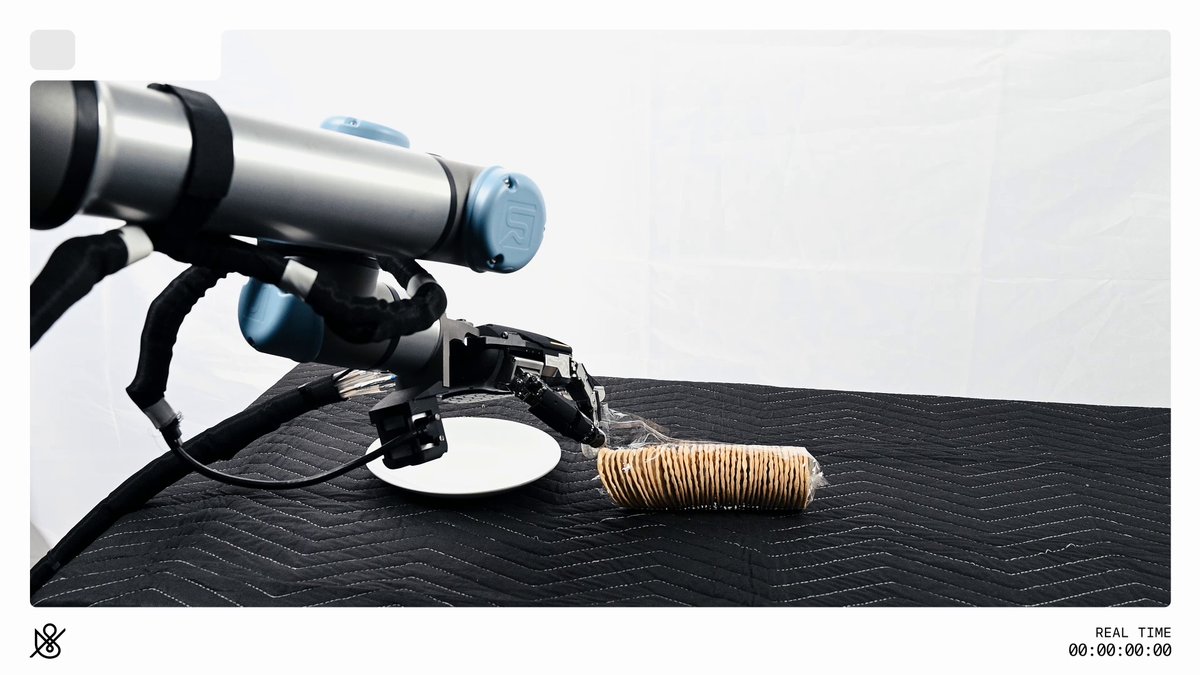
Sanctuary AI Shows Delicate Object Handling with Robots
Sanctuary AI's latest video demonstrates robots handling brittle crackers and soft grapes, highlighting precise force control and continuous adjustment for manipulating delicate, irregular objects.
Six-Legged Robot Learns to Walk by Mimicking Stick Insects
Researchers have developed a six-legged robot that learns to walk by imitating the gait of a stick insect. The work demonstrates how insect-inspired control systems could lead to more adaptable and efficient robots.
Motion-Imitation Framework Teaches Three Robots Dynamic Movements like Cartwheels and Backflips
A new motion-imitation framework enables three legged robots to perform dynamic movements such as cartwheels and backflips. The framework addresses the challenge of quickly learning complex whole-body actions, potentially enhancing the agility of legged robots.
LimX Dynamics' TRON Camp Doc Explores VLA with a Vase Task
The third episode of LimX Dynamics' TRON Camp 2026 documentary follows participants as they teach TRON 2 a dual-arm flower-arranging task, illustrating how VLA models connect perception, language, and action.

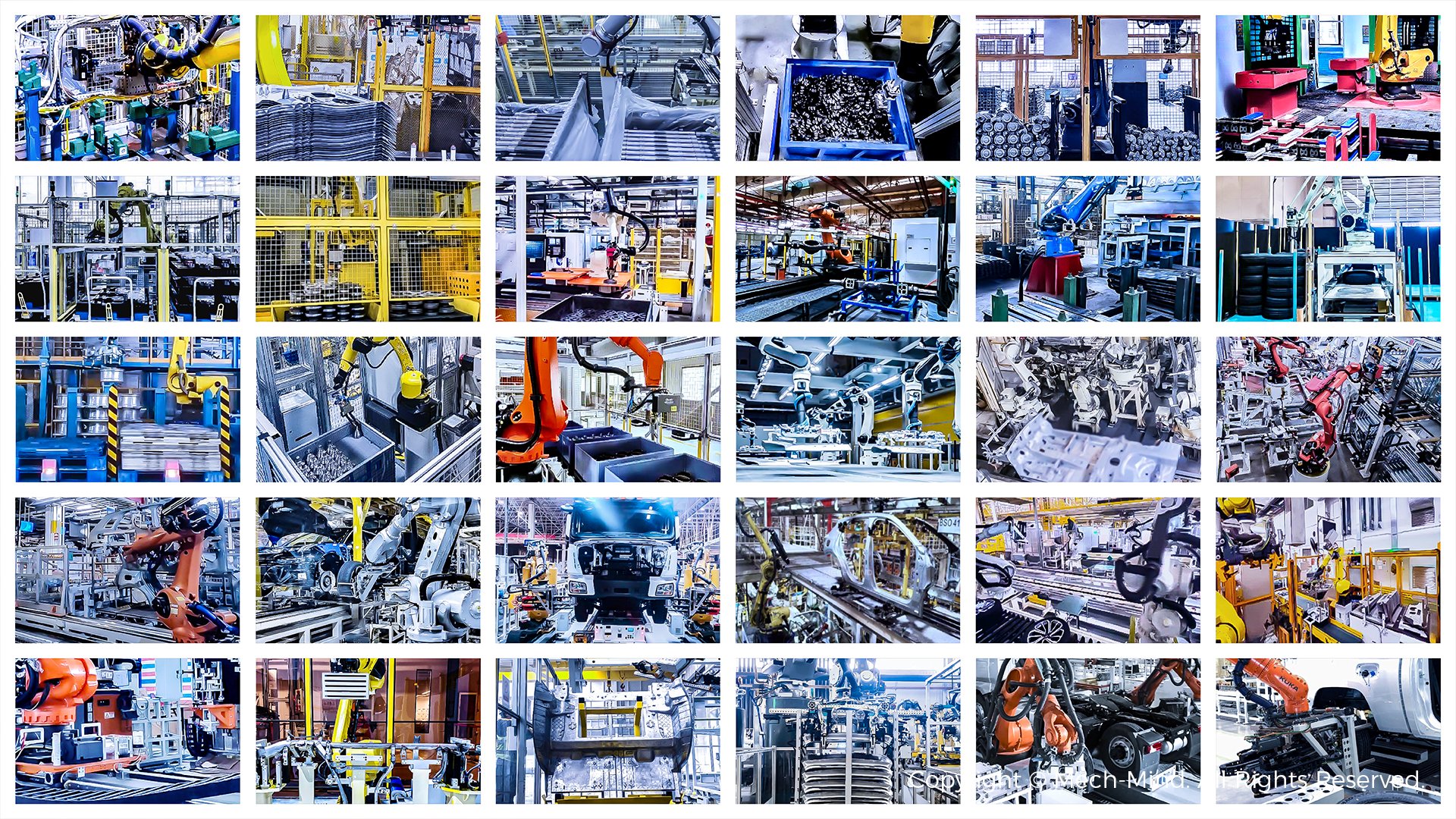
Mech-Mind: 29,000+ Deployments Validate Embodied AI Flywheel
Mech-Mind Robotics reports over 29,000 deployments worldwide, showcasing its embodied intelligence across diverse real-world applications. Each deployment generates data to improve perception, planning, and manipulation, fueling a flywheel of stronger generalization and more applications.
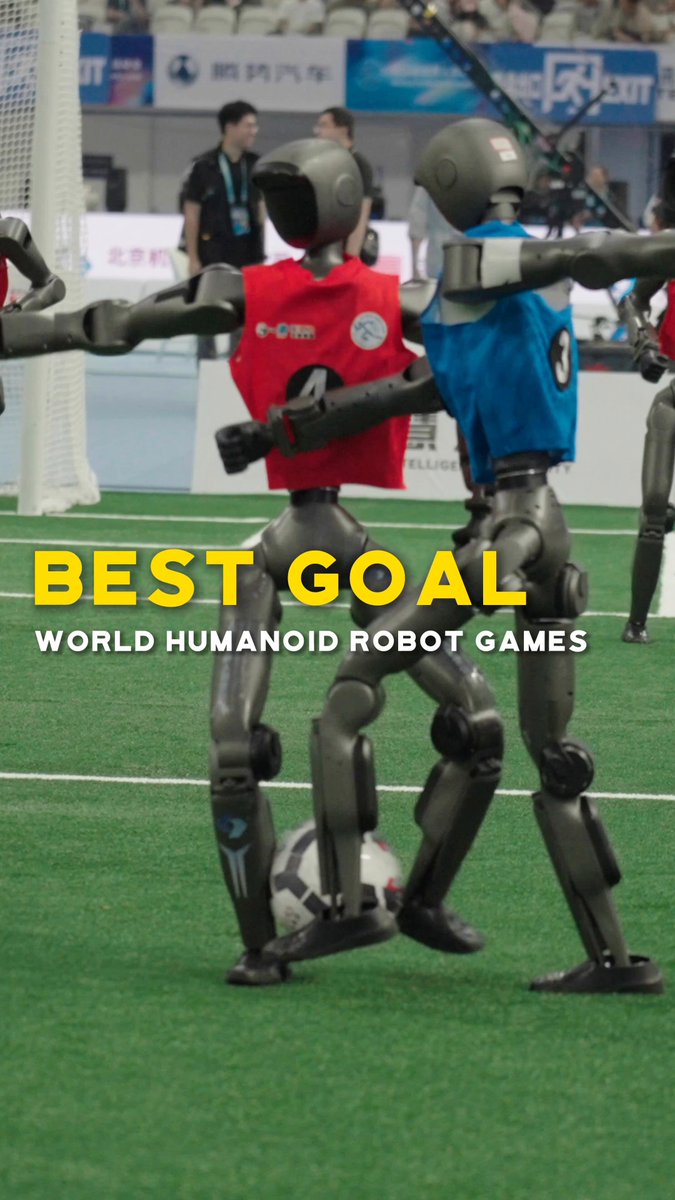
Booster Robotics Robot Scores Nutmeg Goal
Booster Robotics has shared a clip of its robot performing a nutmeg and scoring a goal in a football-themed demonstration, highlighting the machine's agility and motion control capabilities.
How Green is Your Robot? New Tools Assess Robotics Sustainability
Robots are increasingly used for environmental tasks, but their own environmental footprint remains under-examined. New projects and tools aim to quantify and improve robot sustainability across the full lifecycle.
Figure AI Unveils Index: A Bold Plan to Mine Real-World Data for Robots
Figure AI, backed by OpenAI and NVIDIA, reveals its Index data engineering project to collect diverse real-world physical interaction data for training general-purpose robots. The initiative aims to build a foundational dataset that could rival ImageNet in robotics.
Figure publishes detailed write-up of Index robot dataset
Figure introduced Index as the largest useful robot training dataset in the world and published a detailed write-up. The write-up explains how Index addresses the data problem for training general-purpose robots.
Figure Collects Real-World Data in 108 Countries
Figure has accumulated real-world data from 108 countries, as shown on a live global map on its website. The data supports its efforts to scale general-purpose robots.

Figure Comes Out of Stealth to Reveal Exclusive Data Pipeline
Figure has taken its real-world data collection pipeline out of stealth. Over the past four months, the company built a Figure-exclusive system to collect data at higher throughputs, addressing a gap in scaling general-purpose robots.

Skild AI Unveils S1, a Foundation Model That Learns from One Example
Skild AI introduced S1, a new foundation model that learns from a single example. The model can be taught unfamiliar tasks lasting up to 10 minutes, using just one video prompt, with no fine-tuning required. The company shared a real-time demonstration of S1 operating via in-context learning.
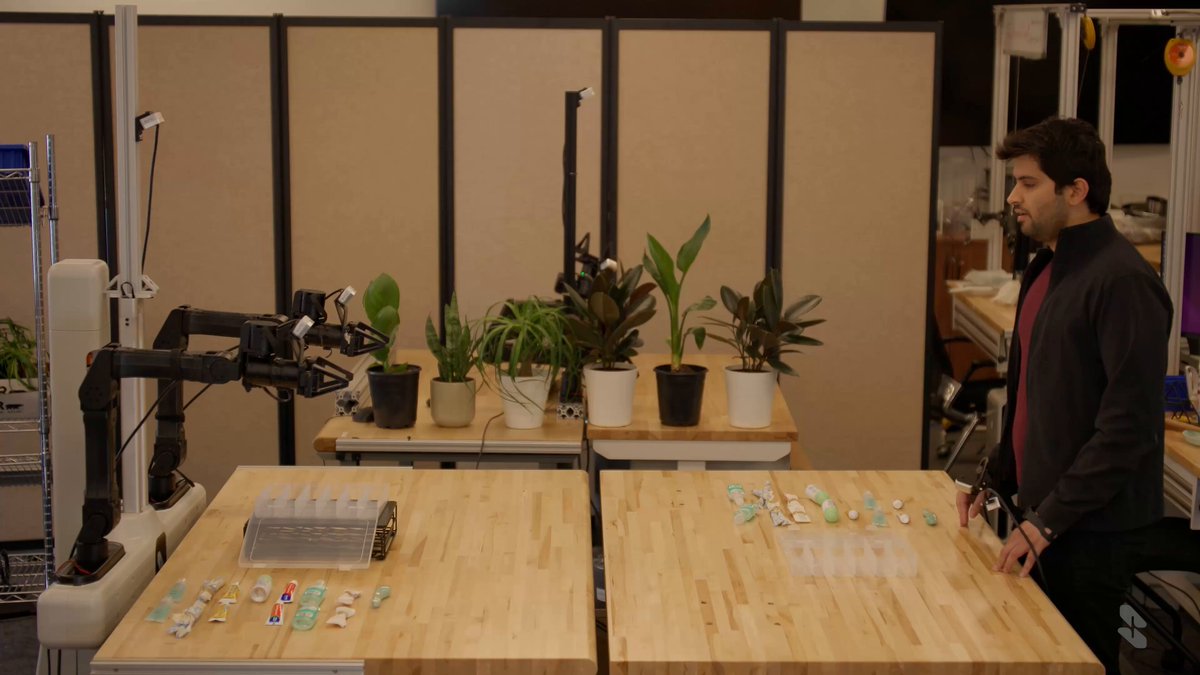
Skild AI: one-prompt S1 beats 50-100h VLA fine-tuning
Skild AI found that current VLA models must be post-trained with 50-100 hours of data collection and fine-tuning to match the accuracy of S1, which achieves the same with just one example of prompting.
S1 goes beyond video prompts: withstands, improvises, more precise
Skild AI highlights S1's behavior: it does not simply replay video demonstrations, but uses common-sense understanding to withstand perturbations, improvise after mistakes, and sometimes execute tasks with more precision than the human demonstrator.
Skild AI: S1 step-change over VLAs, exponential on novel tasks
Skild AI says S1 is a step-change improvement over conventional VLAs: it matches language-prompted VLA performance on known tasks, and exponentially outperforms them on novel tasks as pre-training scales. The company sees this as a path toward scaling laws for robotics.

Skild AI: S1 learns new tasks like a language model from one video
Skild AI explains that S1 learns new tasks in a manner similar to a language model: given a video demonstration as a prompt, it generates robot actions to accomplish the task in any environment and embodiment.

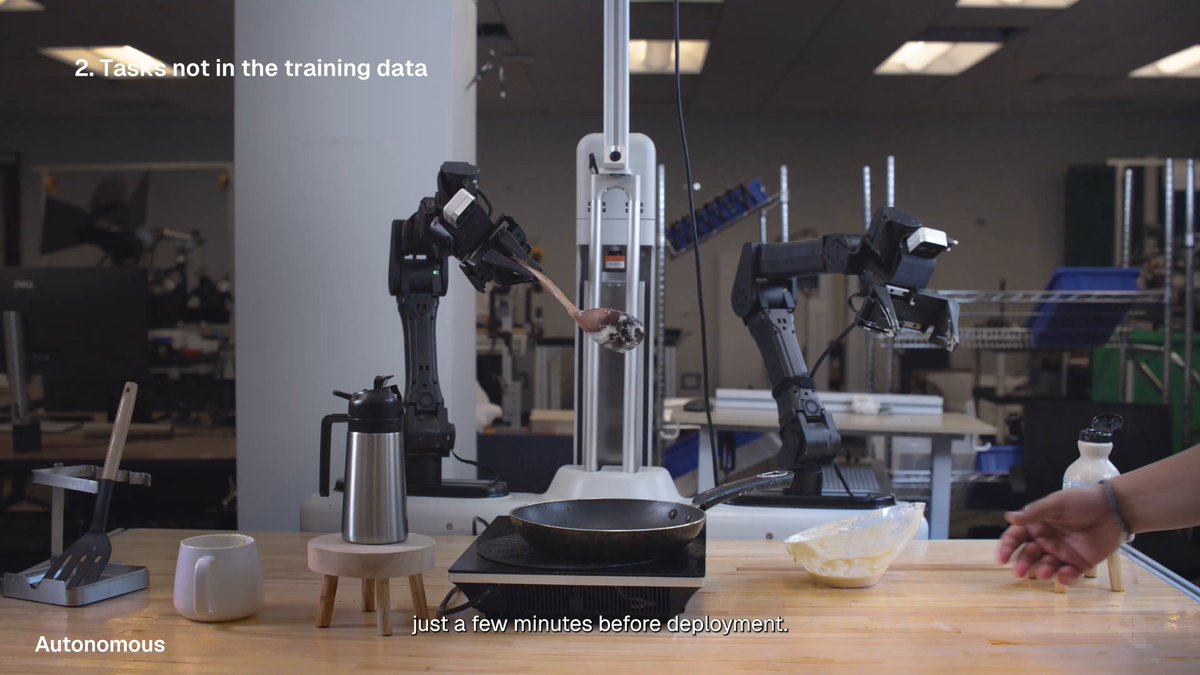
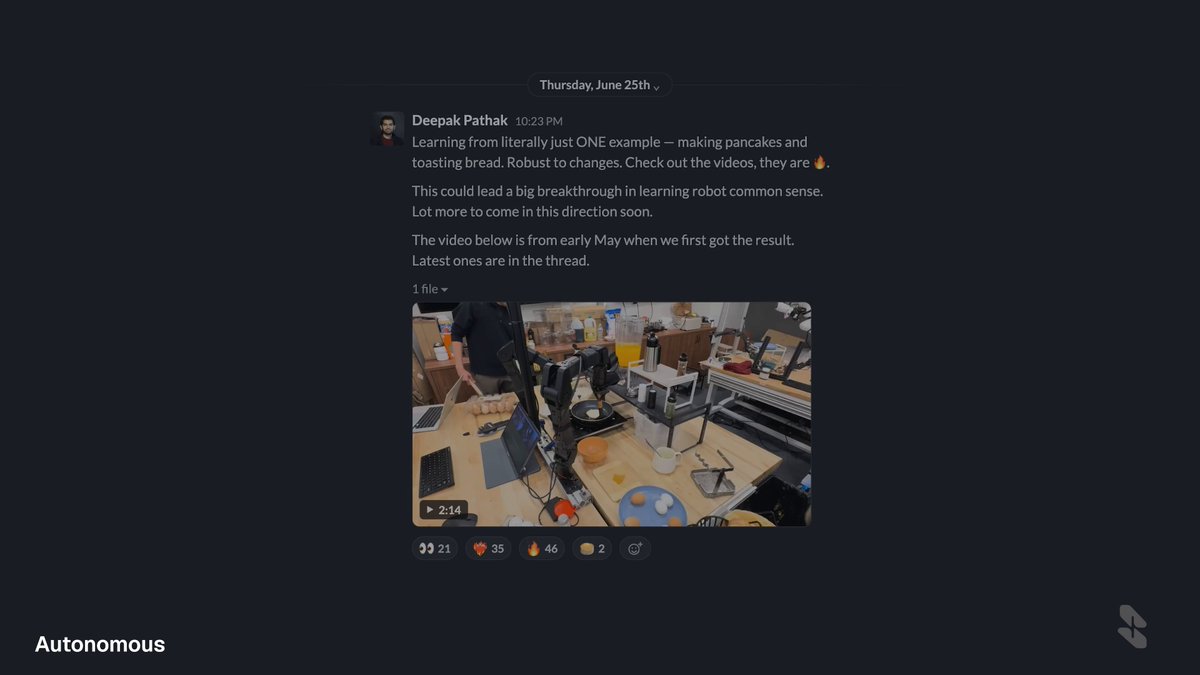
S1 flipped a pancake from one video prompt; not in pre-training data
Skild AI recounts the first time S1 flipped a pancake. The team initially assumed the skill was in pre-training data, but a full search found no examples. S1 inferred the out-of-distribution task from a single video prompt.
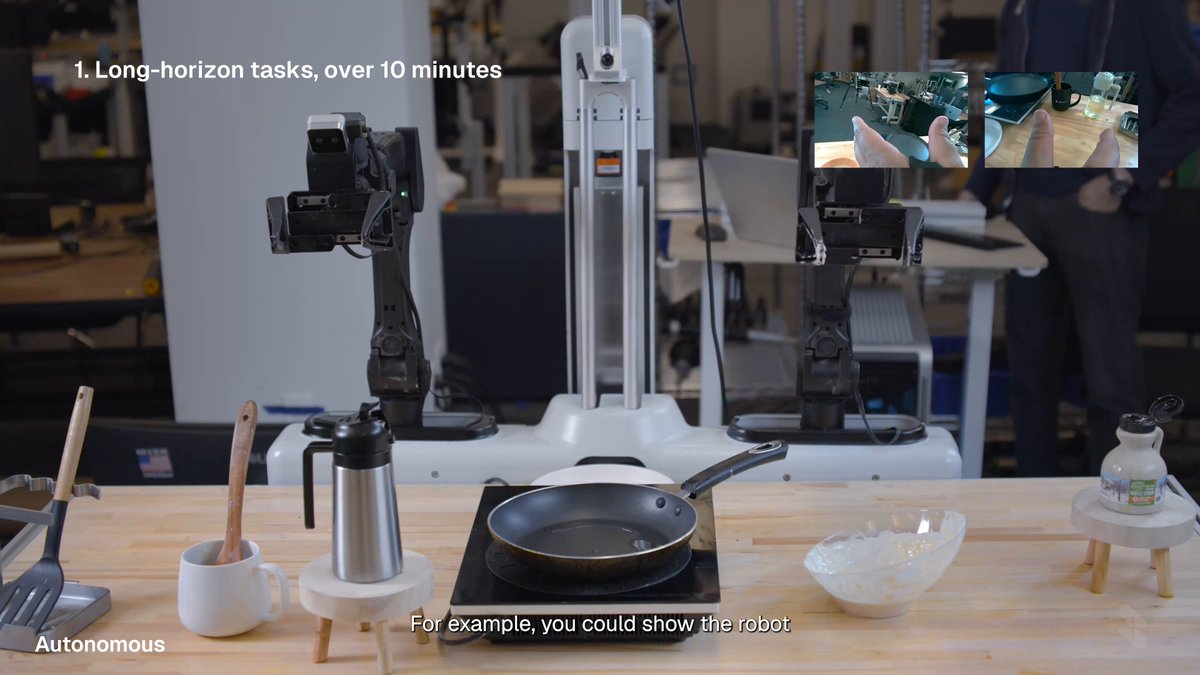
Skild AI robot learns 10-minute tasks by composing pretrained skills.
Skild AI says its AI system can be taught extremely long-horizon tasks over 10 minutes long. By composing skills learned in pretraining or creating new ones, it makes coffee, pots a plant, fries pancakes, and more, covering tasks never seen during pretraining.
Chinese Humanoid Robot Sets 100m Sprint Record of 8.86 Seconds
A Chinese humanoid robot sprinted 100 meters in 8.86 seconds in Beijing, setting a new robot record and beating the fastest human time. The achievement highlights rapid progress in robot motion control and hardware.
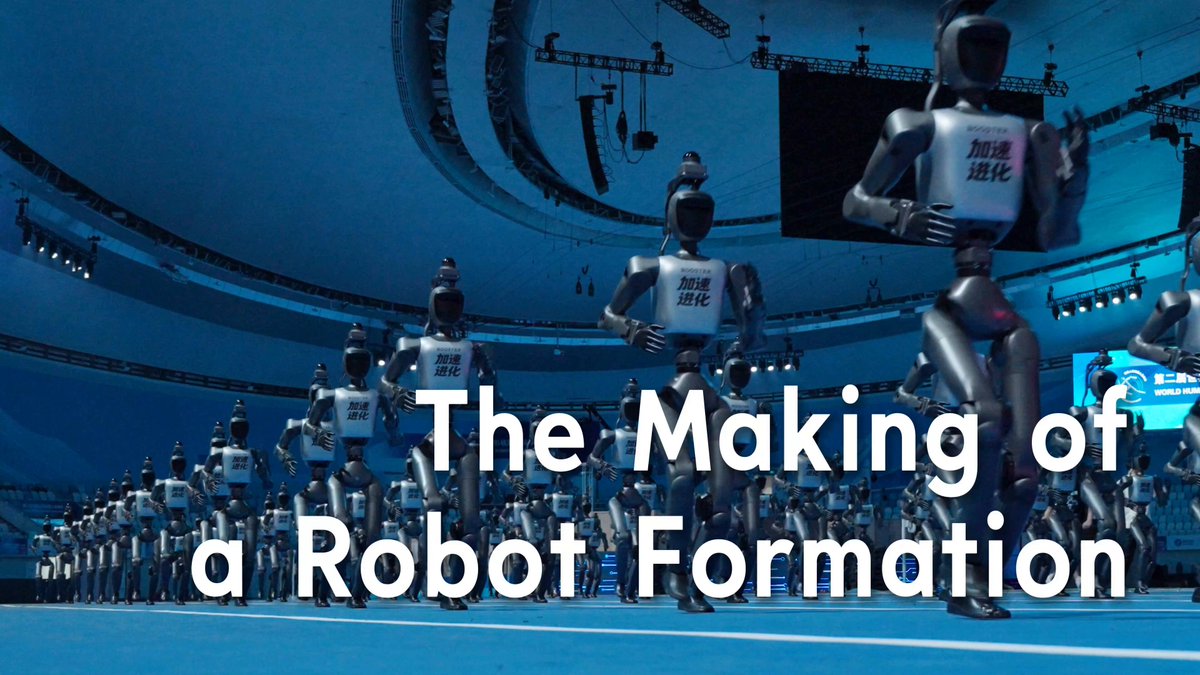
Booster Robotics Showcases 80-Robot Synchronized Formation
Booster Robotics released behind-the-scenes footage showing 80 robots transitioning from individual movements to a synchronized formation, highlighting multi-robot coordination technology.
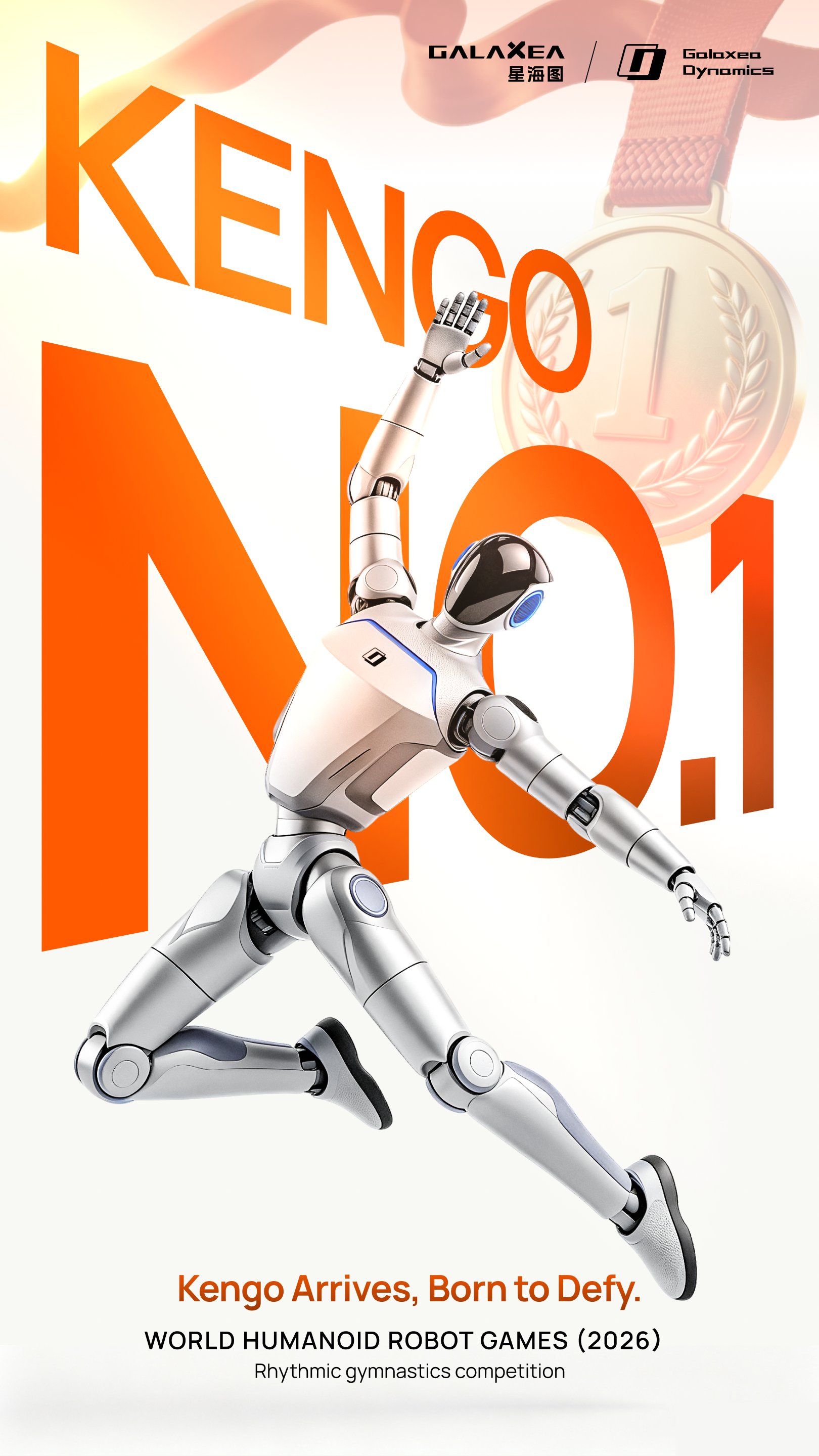
Galaxea's Kengo Robot Seals Gold with Floor Routine
Galaxea Dynamics showcases its robot Kengo executing a flawless floor exercise routine, claiming a sealed gold medal.
NEURA Robotics Highlights NEURA Gym for Real-World Robot Training
NEURA Robotics details the requirements for deploying robots in real-world settings, including physical environments that mirror real operations, capturing experienced workers' methods, and a pipeline to validated models. The company highlights the NEURA Gym as an in-house facility where all these elements are in place, enabling robots to be trained for specific use cases.