Live Briefs 2026-10-03 · Full coverage of embodied AI
What Bricklaying Taught Monumental About Construction Robots
Monumental is using bricklaying robots to tackle construction labor shortages, starting with physically demanding tasks that have the biggest hiring gaps. The company shares lessons from early deployments, including adapting computer vision to real-world conditions.
Robbyant open-sources three LingBot-World 2.0 world models
Robbyant released three more LingBot-World 2.0 models: Small, a 1.3B model that brings real-time world generation to a single consumer-grade GPU; Bidirectional, a high-quality source for distilling smaller, faster, domain-specific models; and Causal Pretrain, the backbone for post-training, evaluation and adaptation. The company says the series is now easier to run, study, distill and adapt, from pretraining to lightweight deployment.
Robbyant open-sources real-time interactive world model LingBot-World 2.0
Robbyant presents LingBot-World 2.0 as an open-source real-time interactive world model that keeps running for hours, responds to every move (attacking, casting spells, shooting or summoning storms) and keeps evolving through AI agents, scaling to 720p/60fps in its full setup. The company also open-sourced three more models: LingBot-World 2.0 Small (1.3B), Bidirectional and Causal Pretrain.

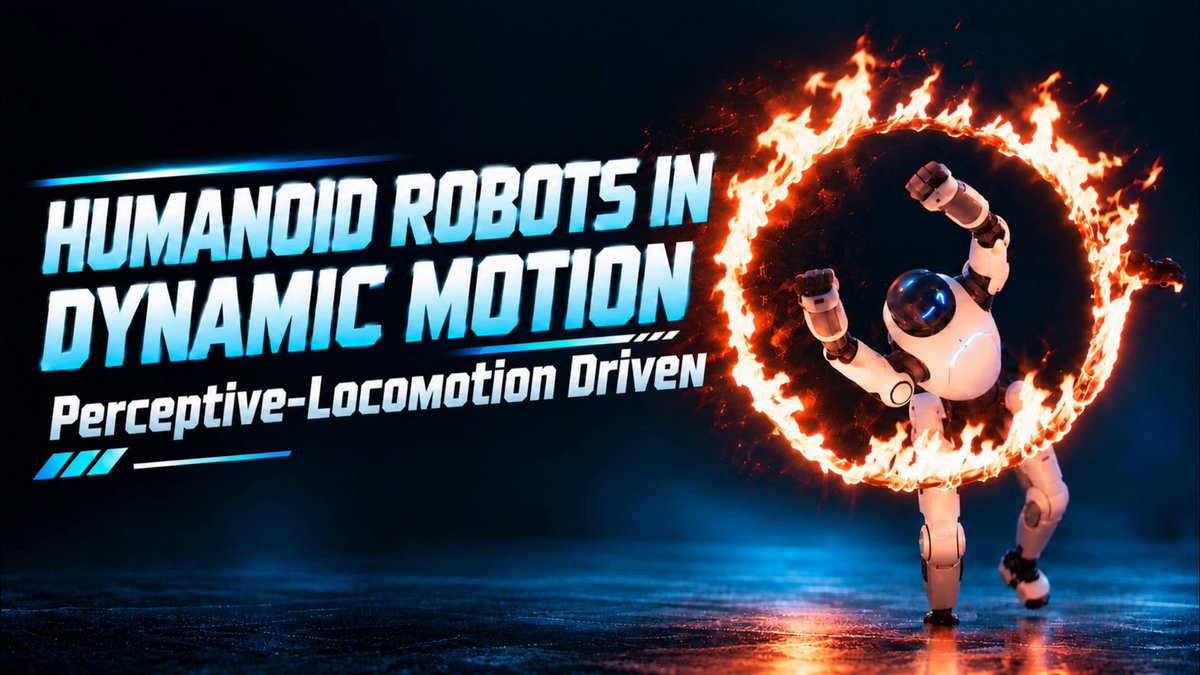
AGIBOT X2 Performs Circus Acts in Vision-Driven Demo
AGIBOT's X2 robot performs circus-style skills in a new demo: jumping through a flaming hoop, pulling off a diabolo trick, jump-roping in sync, and lifting and carrying objects in coordination. AGIBOT says the routine is a serious test of real-time perception, reaction and movement, with its AGILE 2.0 system turning visual input into real-time coordinated motion.
EX Robots Carves Niche in Tourism with Super-Realistic Humanoids
EX Robots, a Chinese startup, is deploying hyper-realistic humanoid robots in cultural tourism and education rather than factories. The company leverages its expertise in silicone skin and facial expression technology to create immersive experiences, targeting emotional connection over industrial utility.
JD Cloud to Deploy 100,000 Moore Threads GPUs for AI Computing
JD Cloud announced plans to build a massive computing cluster powered by 100,000 Chinese-made Moore Threads GPUs. The infrastructure will support large-model training and embodied AI, marking a major push for domestic hardware in cloud computing.
Zhiyuan Launches GE-Act 2.0 World Action Model
Zhiyuan released GE-Act 2.0 on September 9, a world-action model (WAM), marking the first systematic validation of its pretraining and scaling path.
Frog Muscle-Powered Manta Ray Robot Achieves Record Swimming Speed
Researchers at the Shenyang Institute of Automation have developed a biohybrid manta ray robot powered by living frog muscle, reaching a swimming speed of 2.7 cm/s—a record for such devices. The robot uses near-infrared laser power and can operate for about seven days.
JD Cloud to Build 100,000-GPU AI Cluster with Moore Threads
At the 2026 JD Global Tech Explorer Conference, JD Cloud announced plans to build a 100,000-GPU cluster powered by Moore Threads' full-function GPUs, marking a milestone for domestic AI infrastructure.
Humanoid Robots' Hardware Limits Are More Daunting Than AI Challenges
While AI algorithms advance rapidly, humanoid robots are constrained by physical hardware limits in data acquisition, dexterous hands, power/weight, and mass production. Even as AI gets smarter, robots' bodies may not keep pace, hindering practical deployment.