Live Briefs 2026-10-03 · Full coverage of embodied AI
Figure: Helix 2.5 works 4 hours in 30 homes, no retraining
Figure shared footage of its Helix 2.5 model operating for 4 consecutive hours across 30 homes without any additional training. The company presents the run as evidence that the vision-language-action model generalizes to real household environments out of the box.

Video Friday: Two Birotors Make a Quadrotor, Plus Robotics Highlights
IEEE Spectrum's weekly Video Friday roundup features a quadrotor built from two birotors, a showcase of humanoid safety, and an undulatory robot that shifts water to climb. Other highlights include telepresence robots, underwater quadrupeds, and a robotic optics lab.
Open-Source Benchmark Tests Whether AI Agents Can Engineer Working Robots
TechXplore Robotics reports an open-source benchmark that tests whether AI coding agents can engineer working robots. It shifts evaluation from digital programming tasks to physical robotics, where agents must handle hardware, sensing, and real-world constraints.
Icarus Robotics Flies ISS-Bound Joy Robot in Microgravity for the First Time
Icarus Robotics flew its free-flying Joy robot on four parabolic flights, logging 66 parabolas and about two minutes of weightlessness. The Brooklyn startup says the tests validated Joy's arms, state estimation and flight control ahead of a January 2027 handover to NASA.
Anthropic Builds Biology Lab to Let Claude Control Robots for Drug Discovery
Anthropic has reportedly established a biology lab for physical experiments to advance drug discovery, aiming to have its Claude AI control robots and run lab tests with minimal human involvement, according to Reuters.
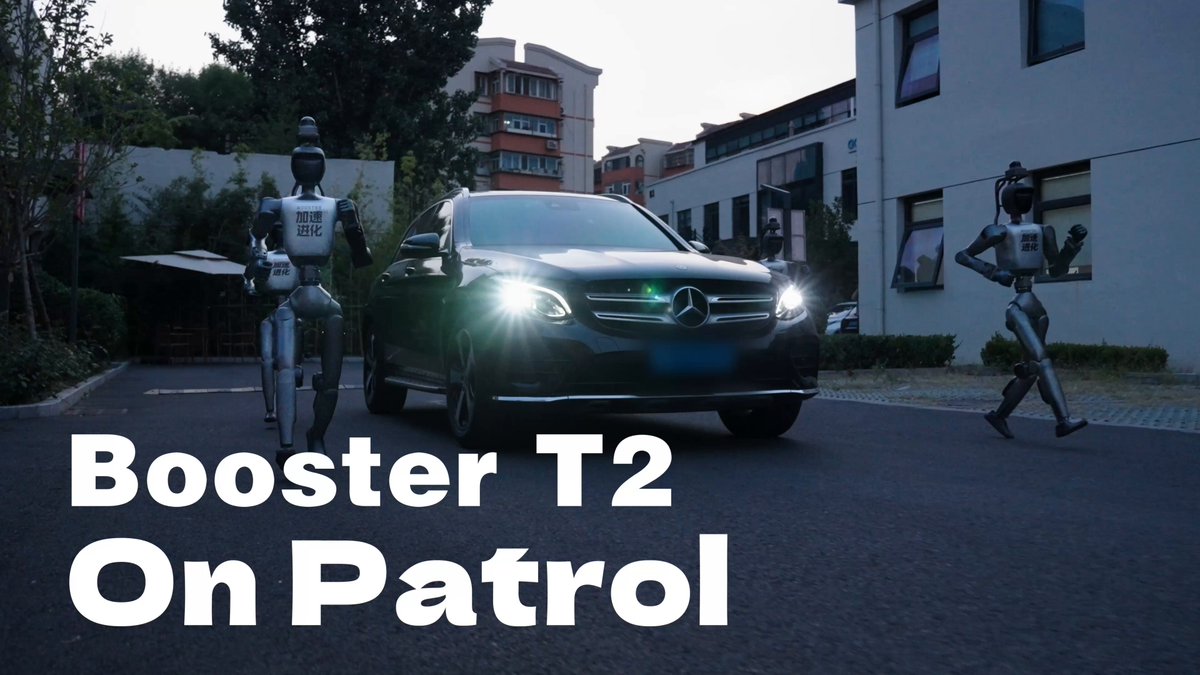
Booster Robotics T2 stands watch, spotting out-of-place objects
Booster Robotics posted footage of its T2 robot on watch duty, monitoring its surroundings and identifying objects that do not belong in the scene. The clip highlights the humanoid's perception and recognition capabilities for surveillance-style tasks. No performance figures were disclosed.
EPFL Researchers Propose Sustainability Robotics as New Performance Metric
Researchers at EPFL propose a new discipline called 'Sustainability Robotics', which evaluates robots by their overall contribution to sustainability goals. They argue that robots must be minimally invasive, accessible, and symbiotic, and that sustainability should become a key performance metric.
Tiangong Robot Dances with Human Performers at Beijing Art and Technology Week
Tiangong, a humanoid robot, appeared at the opening of the second Beijing Art and Technology Week and danced alongside a human performer. The demonstration used motion capture and transfer learning, signaling a step from industrial robotics toward cultural performance.
Figure Releases Helix 2.5, Robots Zero-Shot Tidy 30 Unseen Homes
Figure released Helix 2.5, a model that enables robots to perform household chores autonomously in 30 rented Bay Area homes without extra training. Testing shows a single Index-pretrained foundation model adapted to three behaviors, raising zero-shot task success from 8% to 56% while using half the task-specific data of Helix 02.
Hong Bo: Beijing Patient Controls Shanghai Robot via Brain-Computer Interface to Deliver Water
A spinal cord injury patient in Beijing used a domestic NEO brain-computer interface to control a robot in Shanghai 1000 km away, delivering a bottle of water. At a Shanghai academic conference, Tsinghua professor Hong Bo presented the demonstration and said the technology chain for the Avatar Project is fully connected.
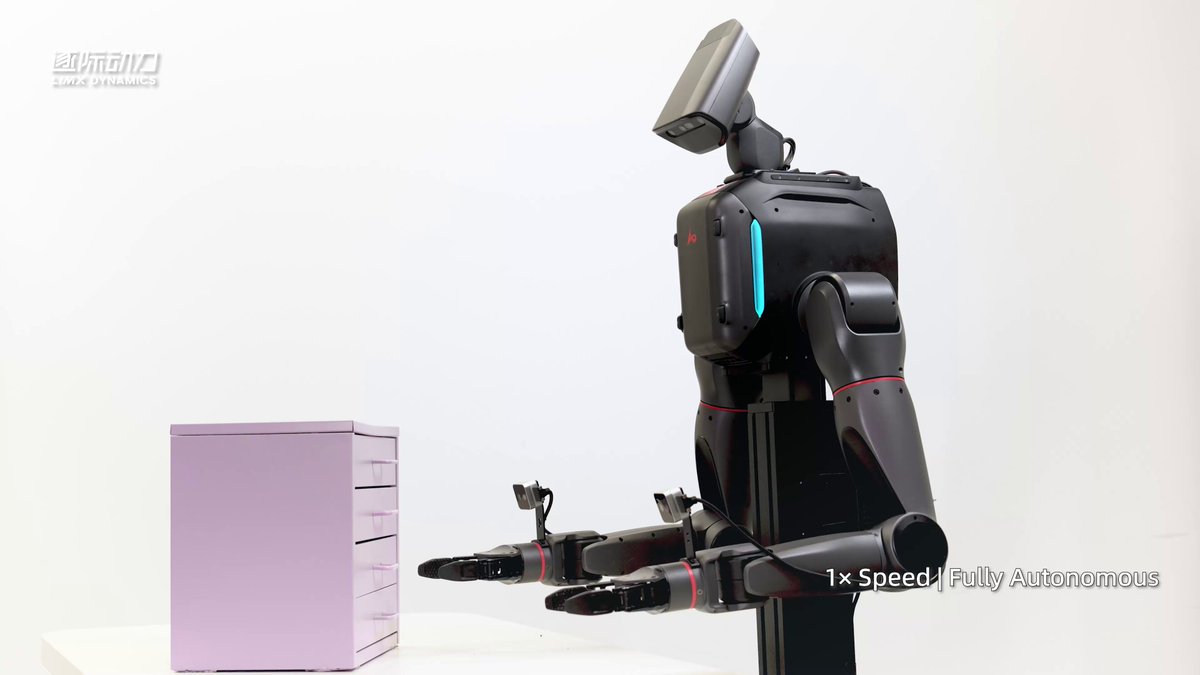
LimX Dynamics TRON 2 demo: autonomous drawer opening and toy retrieval
LimX Dynamics released EP.4 of its TRON 2 VLA demo series, showing the robot autonomously opening a drawer and retrieving a toy. The VLA pipeline runs four steps: identify the drawer, pull it open, locate the target object and retrieve it precisely. The company says the demo completes a full temporally constrained task sequence, so the robot must work out the correct order of actions. One wrong step means it cannot get the toy.