Live Briefs 2026-10-03 · Full coverage of embodied AI
Amazon to Invest $100M in New Indiana Robotics Manufacturing Facility
Amazon plans to invest more than $100 million in a new 585,000-square-foot advanced manufacturing facility in Greenwood, Indiana, expected to create 300 skilled jobs. The plant will produce components for Amazon's fulfillment and robotics network and is scheduled to open by 2028.
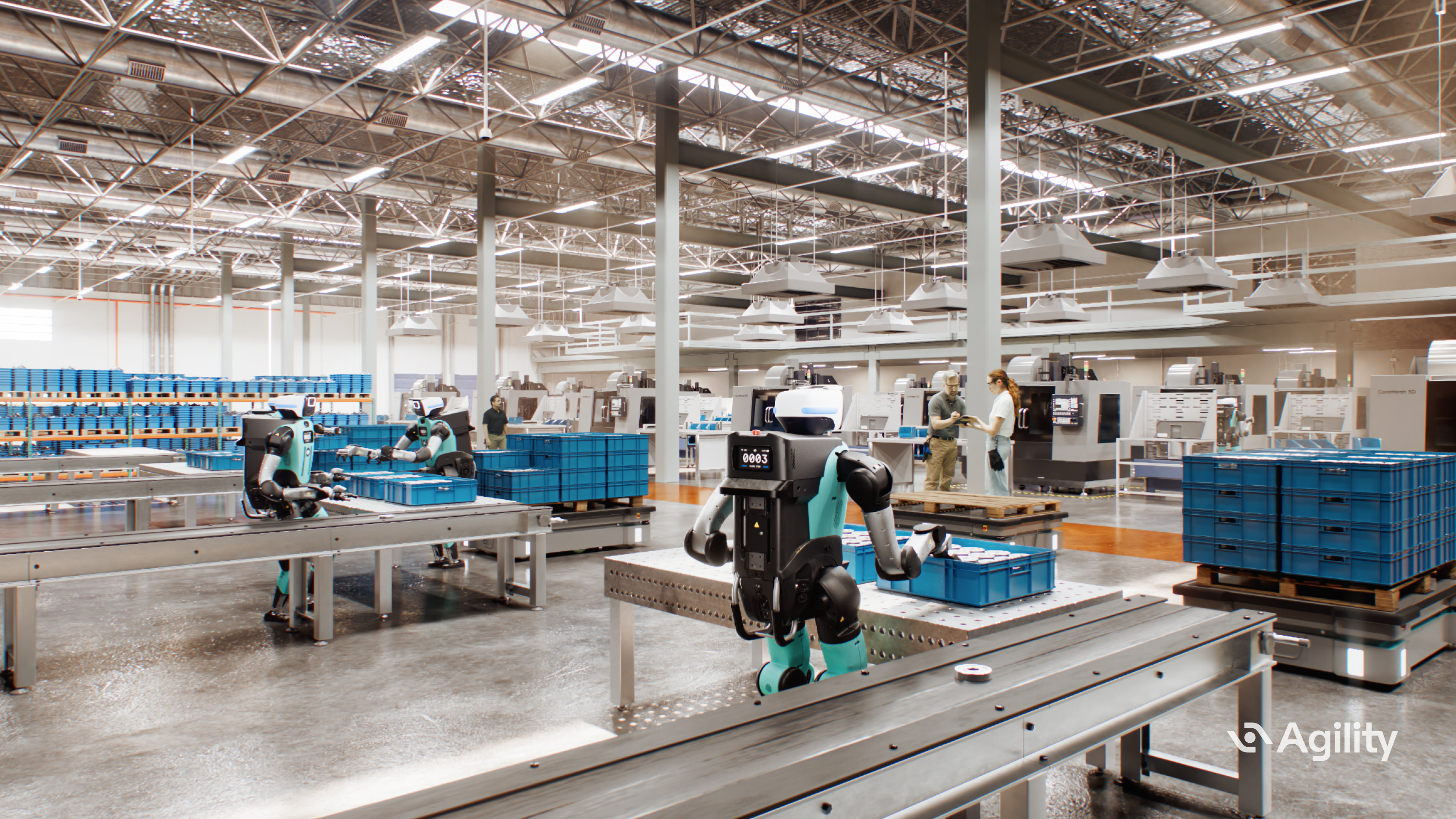
Agility's Digit Demos Plant Work at Schaeffler Symposium
Agility said its humanoid robot Digit joined the Schaeffler Group Automotive Symposium last week to demonstrate the work it performs across Schaeffler plants. The company framed the partnership as making production more flexible, efficient and scalable while advancing automation.
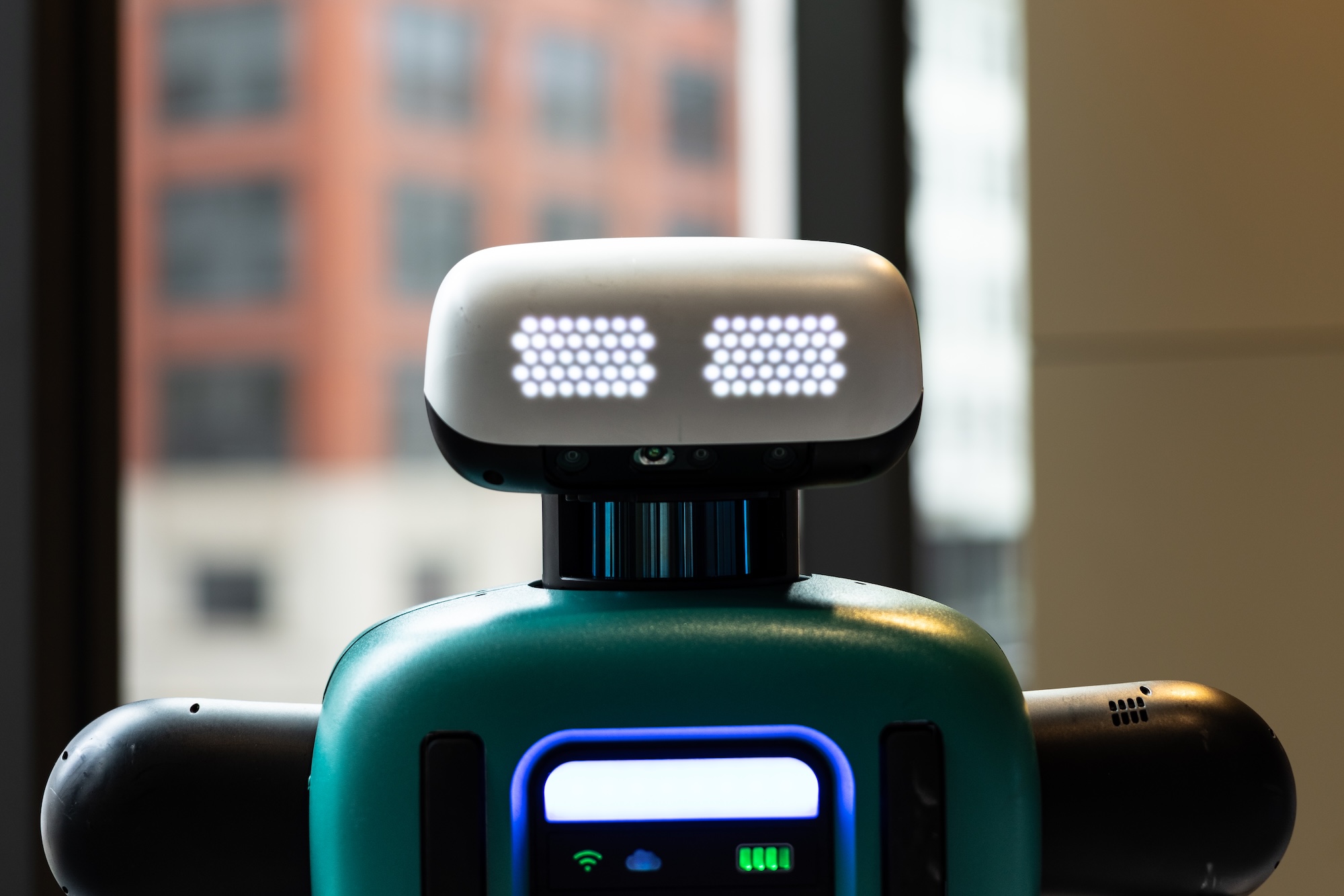
Agility: Digit 5 built to work beside people, no safety cages
Agility says the biggest obstacle between humanoid robots and real work is not intelligence, better hands or a bigger battery, but a safety fence. Digit 5 is being built to remove that fence: it notices people, yields to them and works in the same space they do. Forbes coverage of the launch cited $300 million in orders.
US Stocks Open Slightly Higher; Tesla Jumps 2% on Optimus Robot Production Surge
US stocks opened slightly higher on Monday, with Tesla surging over 2% on reports that it has increased Optimus humanoid robot production by about 10 times in recent months. Memory chip stocks also rose, with SK Hynix and Micron each up more than 1%.
Tesla Ramps Up Optimus Humanoid Robot Production 10x, Targets 1,000 Weekly Units
Tesla has increased production of its Optimus humanoid robot by about tenfold in recent months, despite challenges with hand design and suppliers. The company produced hundreds of units in August and aims to build a production line capable of over 1,000 robots per week by year-end.
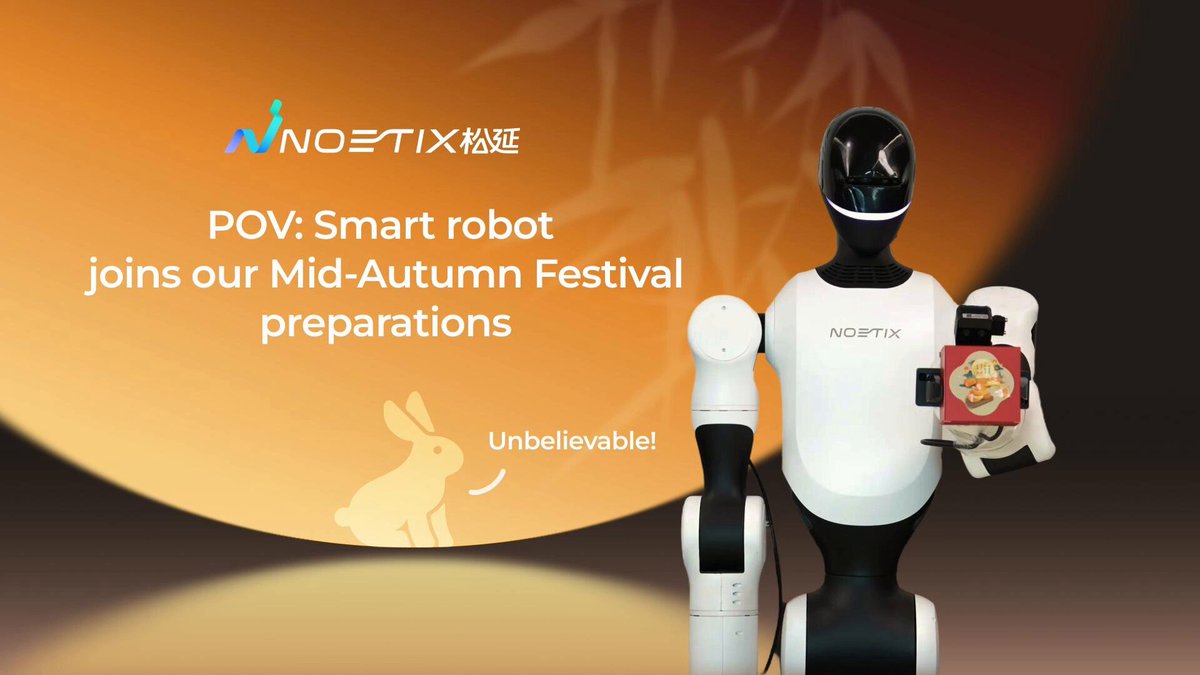
Noetix robot joins Mid-Autumn Festival preparations
Noetix Robotics posted a POV-style clip of a smart robot joining the company's Mid-Autumn Festival preparations, asking viewers whether it is unbelievable and inviting them to watch the robot work. The festival-themed post pairs moon and robot emojis with the "watch it work" framing.
AgiBot and Chimelong Open Embodied AI Theme Park With 300 Robots
AgiBot and Chimelong Group opened what they call the world's first large-scale embodied AI theme park, deploying over 300 robots across seven cultural tourism scenarios. On the same day, AgiBot delivered its 20,000th general-purpose embodied robot, an Expedition A3 Ultra, to Chimelong at Hengqin Chimelong Spaceship Park.
Shenzhen Robots Take Over Tennis Courts as New Battleground
Shenzhen robot companies are bringing AI tennis robots to international events and the consumer market. From the Billie Jean King Cup to the China Open, startups like Wo'an Robotics and Inhans Dynamics are racing to define the future of tennis training with hardware, AI, and new business models.
Qi Teng Robotics Unveils Yuan Yu Zhi Xun Industrial Embodied AI Platform, Topping 10,000 Deployments
Qi Teng Robotics unveiled Yuan Yu Zhi Xun, described as the first application-level embodied intelligence platform for industrial scenarios, at its brand launch conference in Chongqing. The company also debuted two explosion-proof robots and said it has deployed more than 10,000 industry solutions across over 40 countries and regions.
Intrinsic Open-Sources Intrinsic Core for Physical AI Robotics
Intrinsic, Google's AI robotics group, has open-sourced key parts of its platform under the name Intrinsic Core. The release includes hardware-agnostic control, pose estimation, motion planning, grasp planning, simulation, camera calibration, and ROS drivers, plus a reference design for machine tending.
Foxconn and IAT Launch Turnkey Robot Platform to Bridge Mass-Production Gap
Foxconn and IAT have launched a turnkey full-stack robot platform in Beijing Yizhuang, operated by Beijing Futekang Intelligent Robot Technology Co., Ltd. The platform aims to bridge the gap between prototypes and mass production by integrating precision manufacturing, automotive-grade R&D, and industrialization services.
Unitree's Wang Xingxing: Millimeter Errors Are Robotics' Core Bottleneck
Unitree founder Wang Xingxing told the Global Digital Trade Expo that embodied AI will have its own ChatGPT moment once robots can handle 80% of tasks in 80% of unfamiliar settings. He argues the field's core bottleneck is a few-millimeter mismatch between AI models and the physical world.
CITIC Securities: Medical Device Sector Turning Point, Brain-Computer Interfaces and AI Healthcare in Focus
CITIC Securities says the medical device sector has reached a turning point, with 2026 offering earnings and valuation repair opportunities. It highlights innovative devices, overseas expansion, brain-computer interfaces, AI healthcare, surgical robots, and exoskeleton robots as key themes, while listing policy, R&D, approval, macroeconomic, and geopolitical risks.
Tesla Sources Chinese Components for US Humanoid Robot Production, Audits Three Ningbo Suppliers
Tesla has started sourcing components from China for its humanoid robots assembled in the US, aiming to accelerate production at its Fremont factory. Three Ningbo suppliers—Joyson Electronics, Tuopu Group, and Sanhua Automotive—received orders before undergoing factory audits, highlighting China's growing role in the global robotics supply chain.
Tesla Sources Chinese Parts for U.S.-Made Humanoid Robots, Audits Ningbo Suppliers
Tesla has begun sourcing Chinese components for its U.S.-made humanoid robots, with three Ningbo auto suppliers receiving orders before factory audits. The move is expected to help ramp Optimus production at Fremont and highlights China's influence in the humanoid robot supply chain.
2026 Global Digital Trade Innovation Competition Announces Embodied AI Robot Challenge Promotion List
The 2026 Global Digital Trade Innovation Competition has released the promotion list for its Embodied AI Robot Challenge, covering the 23rd–24th. Leaderobot reported the announcement, though further details on teams and results were not immediately available.
UBTECH's Three Moves: Orders, Capacity and Earnings Test Humanoid Robot Business
UBTECH Robotics announced a RMB 150.8 million state-owned order, over RMB 50 million in overseas orders and the start of a 10,000-unit humanoid robot factory within four days. Its latest results show revenue doubling and humanoid robot revenue up 1,445%, suggesting the company is moving from concept to commercialization.
Tesla App Leak Reveals Optimus Gen 3 With 22-DoF Hands
A Tesla app leak appears to reveal production-ready Optimus Gen 3 renders. The new design shows 22-degree-of-freedom hands, simpler panels, and preparations for mass production.
SenseTime's SenseMart Launches SenseMart OS, a Retail Robot Operating System
SenseTime's retail subsidiary SenseMart launched SenseMart OS, a physical operating system for robot-run stores, on September 23 in Shanghai. The system has already been deployed in over 20 stores across multiple Chinese cities, integrating robot hardware, software, and operations.
Over 100 Teams Compete in Hangzhou Robot Challenge; 6-Hour Endurance Race Mirrors Industrial Scenarios
The 2026 Global Digital Trade Innovation Competition's Embodied AI Robot Challenge kicked off in Hangzhou, with over 100 teams competing in 14 events including legged robot racing and humanoid basketball. A 6-hour endurance race tests robots' long-term reliability, mirroring future industrial and service scenarios.
Mengfengpai Launches Data Crowdsourcing to Teach Robots via Head-Mounted Devices
Mengfengpai launched a data crowdsourcing infrastructure that includes head-mounted and gripper collection devices, a user-facing app, and a data governance engine. The company also announced a 100-million-yuan subsidy plan and a scenario data alliance to scale embodied AI training data to billions of hours.
ModelBest's Zou Zhensheng: Embodied AI Scaling Hinges on Reliability and Customer Economics
At a Sept. 23 seminar in Beijing, ModelBest engineering vice president Zou Zhensheng said the last mile of embodied AI scaling depends on reliability and whether customers can justify the economics. He outlined data-mix strategies, a scenario ladder and ecosystem collaboration, predicting that over the next two to three years edge models will advance along a perception-thinking-action loop, with automotive, consumer electronics and robotics becoming major commercialization scenarios in turn.
Qizhi's 20,000th Robot Rolls Off Line, Powers World's First Embodied AI Theme Park
On September 24, Qizhi's 20,000th general-purpose embodied AI robot, Expedition A3 Ultra, rolled off the line and was delivered to Chimelong Group. The same day, the world's first large-scale embodied AI theme park opened, with over 300 Qizhi robots deployed for regular operation, marking a shift from R&D validation to mass production and large-scale delivery.
Unitree's Wang Xingxing: Embodied AI's Core Bottleneck Is Millimeter-Level Precision
At the 5th Global Digital Trade Expo, Unitree founder Wang Xingxing predicted embodied AI will reach its own 'ChatGPT moment' once robots can handle 80% of tasks in 80% of unfamiliar scenarios. He identified millimeter-level discrepancies between AI outputs and the physical world as the key bottleneck.
AI Demand Fuels High-End PCB Expansion as Robots Become Standard
AI computing demand has pushed PCB makers into a new wave of high-end capacity expansion, with over 101.2 billion yuan in planned investment since 2026. Robot suppliers such as Yifei Technology are moving onto those lines, as China's industrial robot installations hit a record 354,000 units in 2025.
The 19,999-Yuan Humanoid Robot: Who Buys First?
Qiyuan Robotics, a Swancor subsidiary, has priced its Q1 and T1 humanoid robots from 19,999 yuan, with authorized experience stores in seven Chinese cities. Developers and educators look like the first buyers, while thin margins, high return rates and unproven consumer demand cloud the economics.
Changan Automobile Targets 2028 for Humanoid Robot Mass Production
Changan Automobile announced plans to accelerate its push into emerging industries like embodied AI humanoid robots and flying cars, aiming for mass production of humanoid robots by 2028 and commercial route flying cars by 2030.