Live Briefs 2026-10-02 · Full coverage of embodied AI
ForceN to Teach Force and Torque Sensing for Humanoids at RoboBusiness 2026
ForceN founder and CEO Robert Brooks will present a crash course on force and torque sensing for humanoids at RoboBusiness 2026, held Oct. 20-21 in Santa Clara, Calif. The talk covers sensor applications, common failure modes, and lessons drawn from three years of work with leading humanoid companies.
Boston Dynamics: Atlas production ramps up, ProtoOps hiring open
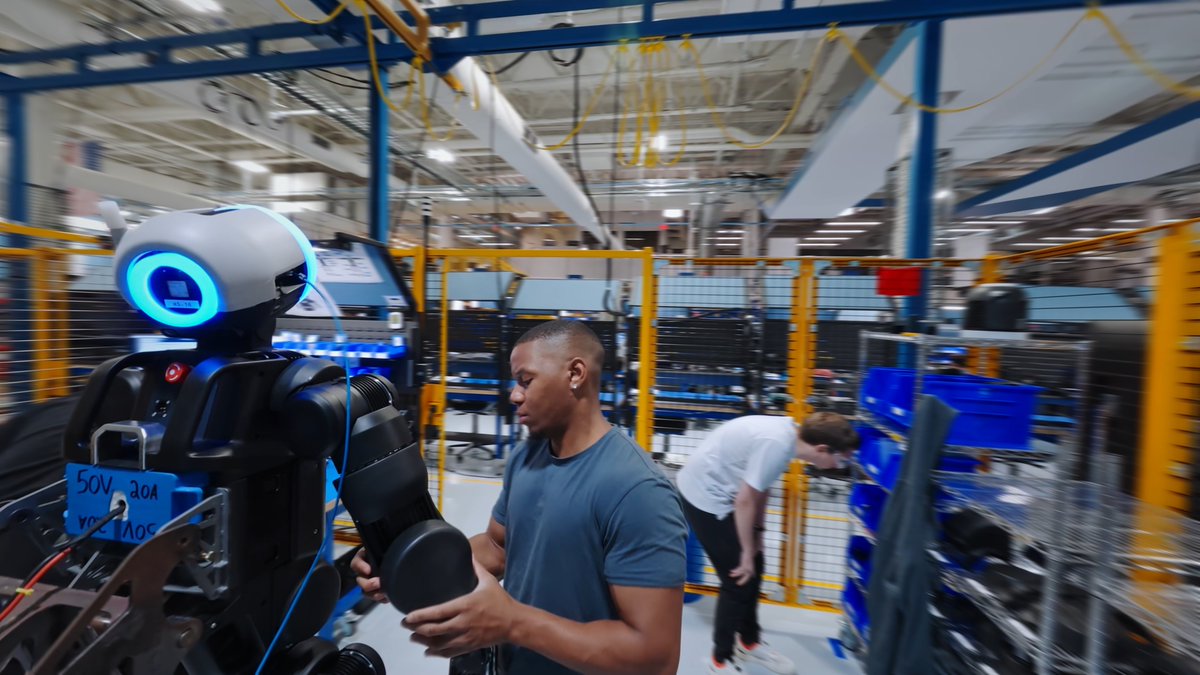
Boston Dynamics said Atlas production is moving from first components to final assembly. The company pointed to open roles on its ProtoOps team and other positions for people who want to build the future of robotics.
Sharpa demos robot bartending, pen spinning at booth
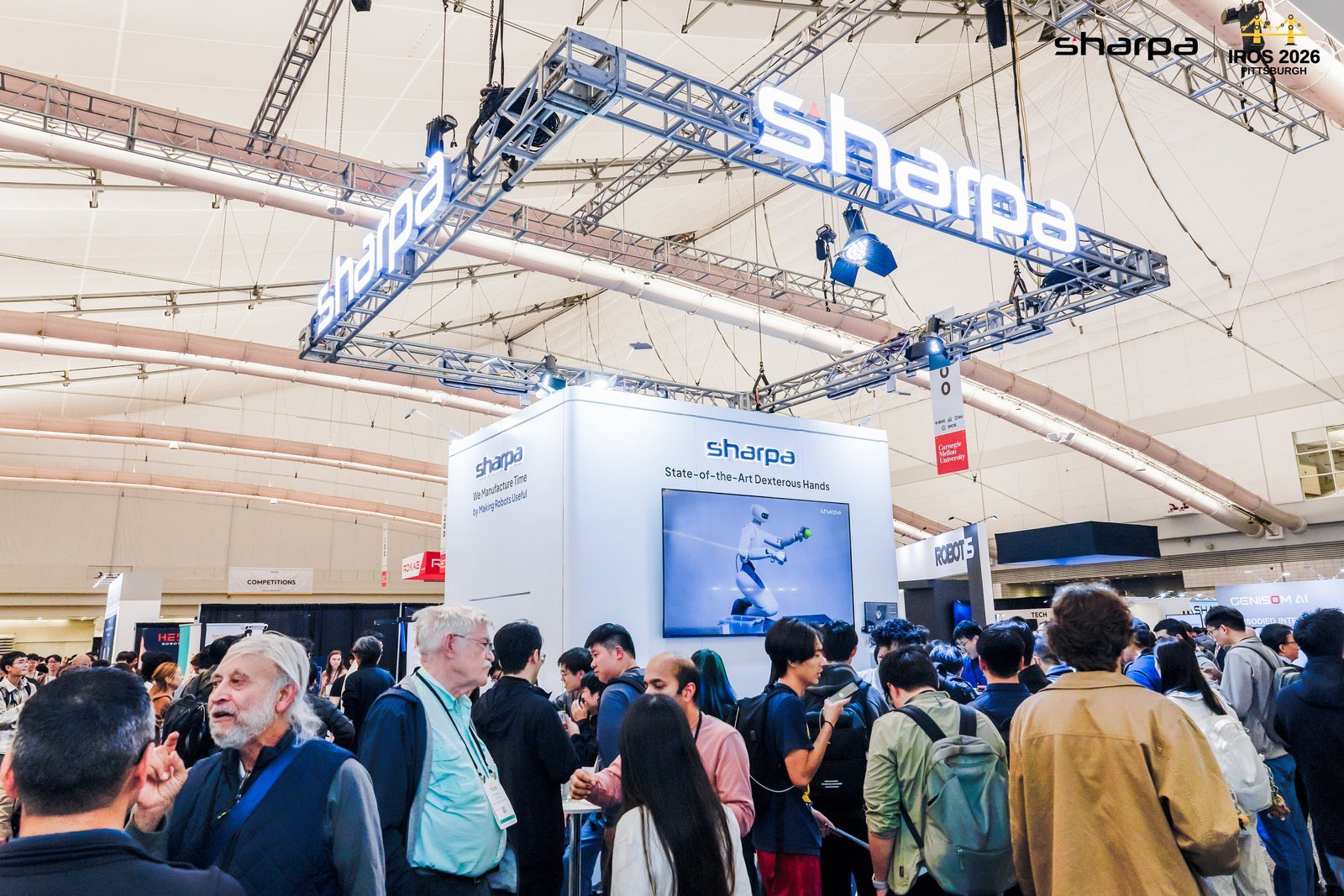
Sharpa kept its booth busy with live demonstrations of dexterous robot skills, including the Catch the Stick Challenge, robot bartending, pen spinning, whole-body tactile response, catching a toy and in-hand rotation. The company reports steady crowds and conversations throughout the day, with more live demos at Booth 514.
Flourish One: $3,555 Raspberry Pi Humanoid Built for Busy Parents
Flourish, a San Francisco–Paris startup, is opening sales for Flourish One, a $3,555 wheeled humanoid home robot that busy parents can train via smartphone in under 30 minutes. The first batch of 50 units will use per-home, cloud-trained skills and phone-based teleoperation to test practical domestic robotics.
AGIBOT X2 humanoids join ASD livestream for cooking demos
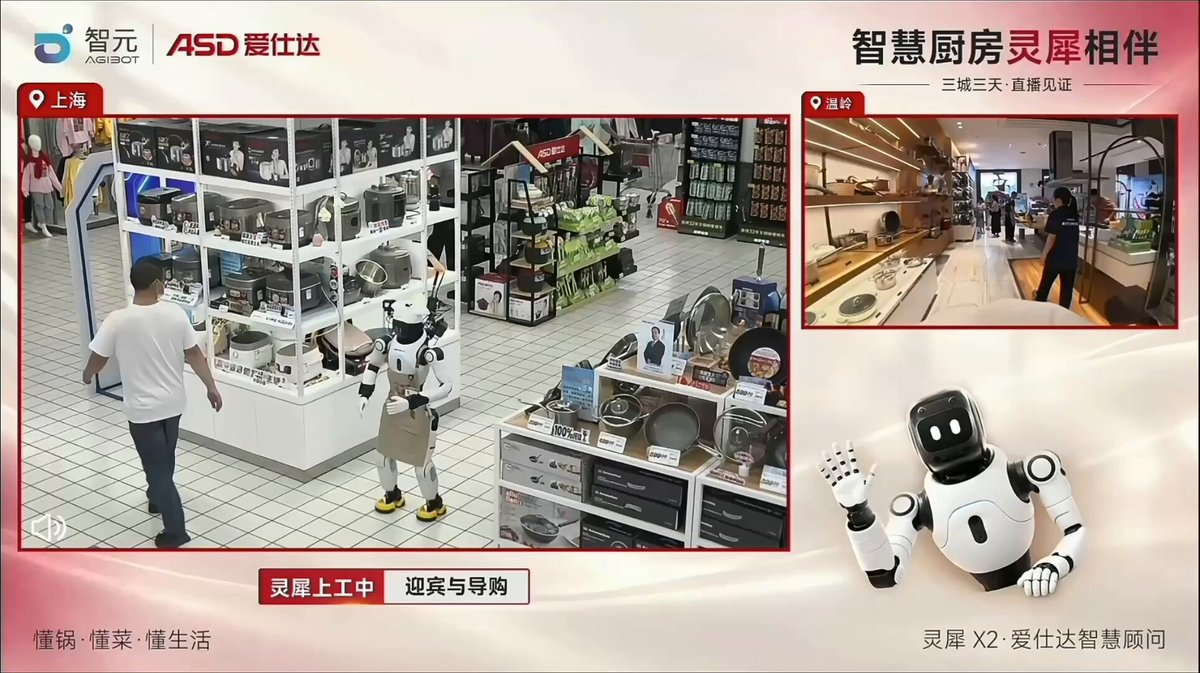
AGIBOT's X2 humanoid robots appeared on a livestream hosted by ASD, interacting with the host, introducing products and taking part in cooking demonstrations. AGIBOT says the appearance shows humanoids moving into everyday, customer-facing environments, where they interact and work alongside people instead of only running preset demos.
Report Surveys Robotics Advances Across Global Manufacturing Sectors
The Robot Report's new report reviews how manufacturing robots have evolved from rigid arms to diverse, AI-enabled systems. It highlights labor shortages, rising robot density, collaborative robots, mobile manipulators, and early humanoid trials, while noting integration and ROI challenges.
National Technology's MCU Products Enter Validation at Multiple Leading Robot Manufacturers
National Technology said its MCU products are being validated by multiple leading robot manufacturers, with the project progressing well. It did not disclose customer names or timelines.
Direct Drive Pioneer Benmo Tech Joins Rare Earth National Team for Robot Power Chain
Benmo Technology (06731.HK) has partnered with China's 'rare earth national team.' The collaboration aims to develop direct-drive power modules for robots, smart homes, industrial automation, and medical equipment.
RoboSense Gains NVIDIA Ecosystem Entry, Robotics Business Emerges as New Pillar
RoboSense announced that its E2 and EM4 LiDARs are now integrated with NVIDIA Holoscan Sensor Bridge, marking another key entry into NVIDIA's ecosystem. With half-year sales surging over 500%, its robotics business may have become a new pillar.
Unitree Robots Bring Chinese Kung Fu and Traditional Culture to America's Got Talent Finals
Unitree Technology reached the finals of America's Got Talent Season 21 with Chengdu Houmisi Dance Crew and dancer FlyingBug, becoming the first Chinese team ever to do so and the first time Unitree humanoid robots appeared on the show. The team earned a Golden Buzzer in the quarterfinals with a kung fu routine, then performed a traditional water-sleeve piece in the finals with its G1 and G1-W robots.
Weiyi Technology Unveils Humanoid Force-Control Arms and Dual-Arm Controller for Industrial and Home Use
Shanghai Weiyi Technology has launched a full series of humanoid force-control arms and a self-developed dual-arm controller, using one underlying force-control architecture for both industrial production and home service. The product matrix ranges from 10 kg to 50 kg dual-arm models with native joint force control, millisecond synchronization, and dual-mode safety.
Huabao New Energy's "Solar-Charging Mars Robot 5000" Completes Functional Prototype
Huabao New Energy (301327.SZ) announced that its "Solar-Charging Mars Robot 5000" has completed a functional prototype. The company continues to advance its "solar storage + robot" fusion strategy by integrating energy storage technology with robotics applications.
China Dominates Global Humanoid Robot Shipments with 77.9% Share in H1 2026
China shipped over 19,000 humanoid robots in H1 2026, accounting for 77.9% of global shipments, according to IDC. Global shipments reached nearly 25,000 units, up 432.1% year-over-year, and IDC raised its 2030 forecast to more than 750,000 units.
Qiteng Robotics Unveils Yuanyu Zhixun Industrial Embodied AI Platform, Deploys 10,000+ Solutions
Qiteng Robotics has launched Yuanyu Zhixun, an application-level embodied AI platform for industrial scenarios, built by its controlled listed company Shengtong Energy. The platform connects simulation and real-world operations through pre-modeling, simulation rehearsal, real-machine operation, and data feedback, while the company also unveiled two new explosion-proof robots and set a 2030 global expansion goal.
Humanoid Robot Sales Hit 36,000 in H1 as Embodied Models Drive 83% of Revenue
Frost & Sullivan's new report shows global humanoid robot sales reaching 36,000 units and $540 million in revenue in the first half of 2026, surpassing all of 2025 in just six months. Embodied-intelligence and full-size models generate roughly 75% to 83% of revenue from about a fifth to a quarter of unit sales, while Chinese vendors hold all five top revenue positions.
LimX Dynamics and Kyland Release China's First Humanoid Robot With Domestic Electronic Architecture
LimX Dynamics and Kyland Technology jointly unveiled China's first humanoid robot built on a fully domestic electronic architecture at a launch event in Yichang, Hubei on September 28. The robot marks the first end-to-end integration of domestic industrial-grade real-time communication in a humanoid's complex systems, pushing domestic electronics from components to whole-machine level.
Buying Robots for Theme Parks Is Easy; Creating a Cyber Star Is Hard
The world's first large-scale embodied AI theme park opened in Zhuhai Hengqin with over 300 robots deployed. While robots may reduce labor costs for theme parks, operational and custom development costs could offset savings, and building a lasting robot IP remains a challenge.
Kyland Technology Launches Fully Domestic Electronic Architecture for Embodied AI Robots
Kyland Technology has unveiled a fully domestic electronic architecture for embodied AI robots at an event in Yichang, Hubei. The architecture integrates domestic operating system, deterministic network, tool software and AI chip technologies, and has passed strict safety tests for control security and fault isolation.
Lingyi iTech's Beijing Super Factory Targets 500,000 Humanoid Robot Units by 2030
The Beijing Lingyi Embodied Intelligence Super Factory, the first in the Beijing-Tianjin-Hebei region capable of scaling from 10,000 to 500,000 units annually, aims to produce 10,000 units in 2026 and 500,000 by 2030. It offers full-chain manufacturing for humanoid robots, addressing the industry's mass production challenges with precision manufacturing expertise from consumer electronics.
Pan Asia Microvent Tech Supplies E-Skin and Flexible Cables to North American Humanoid Client
Pan Asia Microvent Tech said on an investor interactive platform that its high-flex robot cables have entered small-batch supply to a North American humanoid robot leader, and it delivered sensor-equipped dexterous-hand gloves to a domestic customer while winning a 100-set order from a North American client. The company also won a China Telecom AI Research Institute procurement project for 2026 embodied small humanoid and dragon-shaped robot hardware, though it expects embodied intelligence revenue to stay under 10 million yuan that year.
Microgate Responds to Humanoid Robot Query, Builds Biomimetic Dexterous Hand Lab with Guangming Lab
Microgate Technology said on September 28 that a joint laboratory with Guangming Laboratory for micro drive joints and biomimetic dexterous hands remains in R&D and commercial incubation. The project has not yet contributed materially to operating results, and mass production will require reliability validation, cost control and customer adoption.
SenseTime Launches SenseMart OS, Bringing Embodied Intelligence to Retail
SenseTime launched SenseMart OS, a physical operating system for retail that connects robots, equipment, and commercial operations. The SenseMart Go robotic store demonstrates how the system can coordinate embodied intelligence in real-world retail settings.
Bain: AI Industry Must Reach $6 Trillion Revenue by 2031 to Justify Data Center Spending
Bain & Company says the global AI industry must generate $6 trillion in annual revenue by 2031 to justify data center investments. Existing consumer and enterprise AI services could cover $1.8 trillion, leaving a $4.2 trillion gap that may be filled by autonomous machines, robotics, and other emerging fields.
Humanoid Robots Not Yet Mature, Physical AI Turns to Robotic Arms
In September, two contrasting moves in robotics: Skild partnered with Nvidia and Foxconn to deploy AI models on dual-arm robots for precision assembly, while Universal Robots redesigned its platform for easier AI integration. Sanctuary AI shifted focus from humanoid robots to deploying Physical AI on existing industrial arms, achieving over 99.5% success in wire harness insertion.
Shenzhen Luohu Launches Humanoid Robot Soccer Pilot, First Luohu Cup in December
Shenzhen's Luohu District has launched an integrated training-competition-evaluation project for humanoid robot soccer among primary and secondary students, with the first Luohu Cup entering preparation. The initiative, backed by the education bureau and industry partners, aims to bring embodied AI into K-12 classrooms, with the league slated to kick off in December 2026 and finals in January 2027.
ETRI's Medical Humanoid Robot Interface NAMI.I Wins IDEA Design Award
ETRI's medical humanoid robot interface NAMI.I won a main award at the IDEA Design Awards, adding to the institute's 2024 recognition for its MOBY teach-pendant software. The user-centered interface aims to let healthcare workers assign tasks to the NAMI robot without programming, and ETRI plans a hospital demonstration to refine it for commercialization.
Sharpa Unveils D01, W02, AE01 at IROS for Contact-Rich Manipulation
Sharpa introduced three new products at IROS in Pittsburgh: the D01 tactile-aware mobile manipulator, the W02 compact tactile dexterous hand, and the AE01 haptic data glove. Together they aim to close the hardware loop for complex contact-rich manipulation, from whole-body execution and fine hand control to human demonstration data collection.
WOMMER Brings Industrial Two-Finger Grippers Into Teaching Robot Classrooms
WOMMER has introduced industrial-grade pneumatic and electric grippers to education, adapting them for teaching robots. The two-finger end effectors retain industrial rigidity and precision while adding floating modules and durable materials for vocational training.
AgiBot Establishes AI Company in Hengqin with 5 Million Yuan Registered Capital
AgiBot has established a new technology culture company in Hengqin, Zhuhai, with a registered capital of 5 million yuan, wholly owned by its Shanghai affiliate. The move extends AgiBot's regional presence into the Greater Bay Area, likely supporting its cultural tourism operations, including the large-scale robot theme park with Chimelong.
W02 Dexterous Hand: 21 DOF, Full-Palm Touch, 30% Smaller
The W02 dexterous hand features 21 active degrees of freedom, full-palm tactile sensing, and is 30% smaller than its predecessor. It aims to move humanoid robots from lab demos to deployable engineering components for manufacturing, service, and data-collection scenarios.
China's Social Logistics Value Up 4.9% in Jan-Aug, Reaching 243.6 Trillion Yuan
China's total social logistics value reached 243.6 trillion yuan in the first eight months of 2024, up 4.9% year-on-year, according to the China Federation of Logistics & Purchasing. The data reveals stable growth and structural optimization, highlighting the strengthening resilience of industrial and supply chains.