Live Briefs 2026-11-22 · Full coverage of embodied AI
Robots Navigate the Garden of Forking Paths with New Decision-Making Algorithm
Researchers at Leaderobot have developed a navigation system that enables robots to make decisions in complex, branching environments, inspired by Borges' 'The Garden of Forking Paths.' The system allows robots to evaluate multiple paths simultaneously and choose optimal routes in real-time.
Humanoid Robots Can Sprint and Box, But Laundry Is the Real Test
At the 2026 World Humanoid Robot Games, robots showcased impressive athletic feats. However, a more revealing test of their readiness for everyday life is whether they can handle a simple chore like doing the laundry.
RoboAware Learns to Coordinate Embodied Skills from Counterfactual Outcomes
A new arXiv paper introduces RoboAware, a framework that helps embodied agents coordinate modular robot skills by predicting which frozen policy will succeed in the current physical state. It uses counterfactual outcomes to learn skill composition without retraining the underlying policies.
OmniDex Scales Dexterous Hand Grasping to 2.6 Million Cluttered Scenes
A new arXiv paper, OmniDex, targets the data bottleneck in dexterous grasping by scaling learning to 2.6 million cluttered simulation scenes. The work aims to improve robust grasp policies for embodied AI in realistic, messy environments.
Robot-Assisted Radical Hysterectomy Shows Limited Perioperative Benefit in Early Cervical Cancer
A secondary analysis of a phase 3 trial finds that robot-assisted radical hysterectomy in early cervical cancer yields fewer intraoperative complications than open surgery, but the difference is mainly driven by minor events. Postoperative outcomes and one-month quality of life show little separation.
ETH Zurich Robot Hand Walks on Fingertips as Self-Contained Machine
Researchers at ETH Zurich have turned an off-the-shelf robotic hand into a fully self-contained robot that walks on its fingertips and uses those same fingers to manipulate its surroundings. They suggest such a design could let robots operate controls and handle objects in spaces conventional robotic arms cannot reach.
Musk Lands Rockets, but Why Can't His Robots Hold a Cup?
Tesla's 2026 flexible tactile sensor patent aims to make electronic skin conform to finger curves, addressing robots' difficulty grasping cups. Yet the real bottleneck lies in three downstream problems: sensing tangential force, integrating high-frequency touch with vision, and scarce tactile data.
D-Robotics' Uranus simulates robot actions in a learned world
D-Robotics describes action-controllable generation in Uranus, its data-driven robot simulation platform. Instead of testing every idea on physical hardware, users explore what happens next in a learned world, predicting how an action turns into motion, object interactions and changes across multiple camera views, then try candidate policies there.
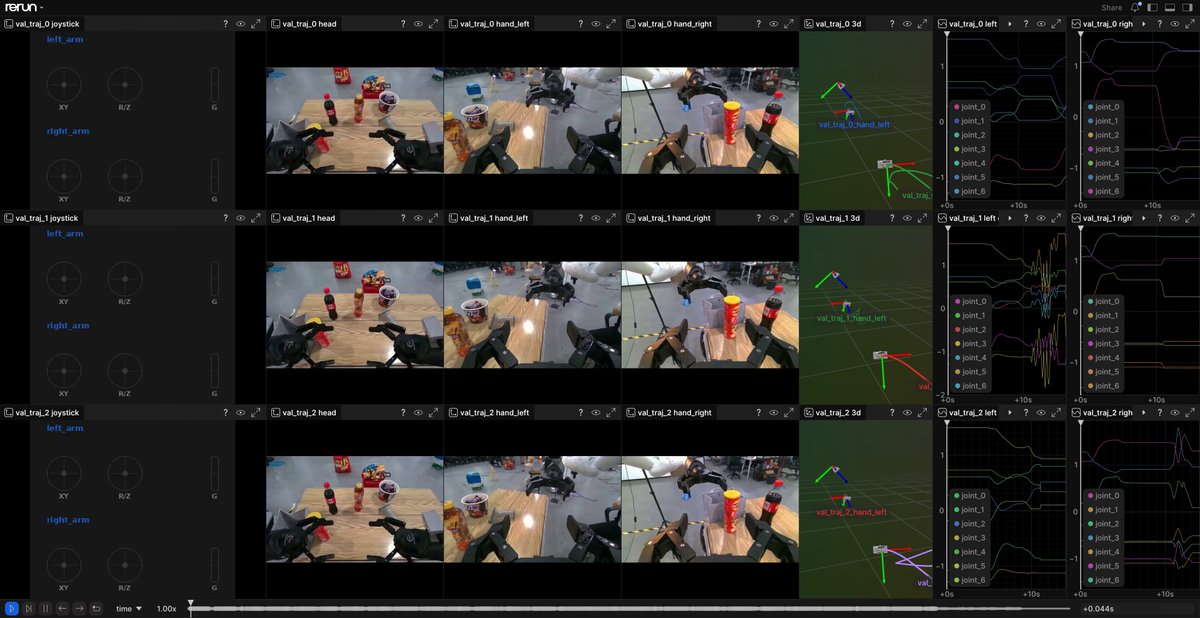
Why Humanoid Robot Demos Still Fail the Generalization Test
In Episode 265 of The Robot Report Podcast, Appen's Jeanine Sinanan-Singh explains why human-in-the-loop training remains essential for robots. She also discusses why impressive humanoid demos do not guarantee generalized robotic behavior.
Boston Dynamics Details New Atlas Hand: 13 DOF, Four Fingers, Sim-to-Real RL
Boston Dynamics has revealed more details about its redesigned humanoid hand for Atlas, a four-fingered, 13-DOF gripper built for mass manufacturing and simulation. In an interview, robot behavior director Alberto Rodriguez explained design tradeoffs, durability testing, and why the hand was built in-house for reinforcement learning.
IEEE Spectrum Video Friday: Robot Decommissioning Takes a Playful Turn
IEEE Spectrum's Video Friday roundup highlights playful robot decommissioning, a $1,000 plastic ball from Devanthro, and a thread-like linear motor. It also features Workhorse's whole-body manipulation, a KUKA car wash, MIT's SANDO navigation system, and a feather star-inspired swimming robot.
Westlake Robotics launches WR1.0 whole-body humanoid model
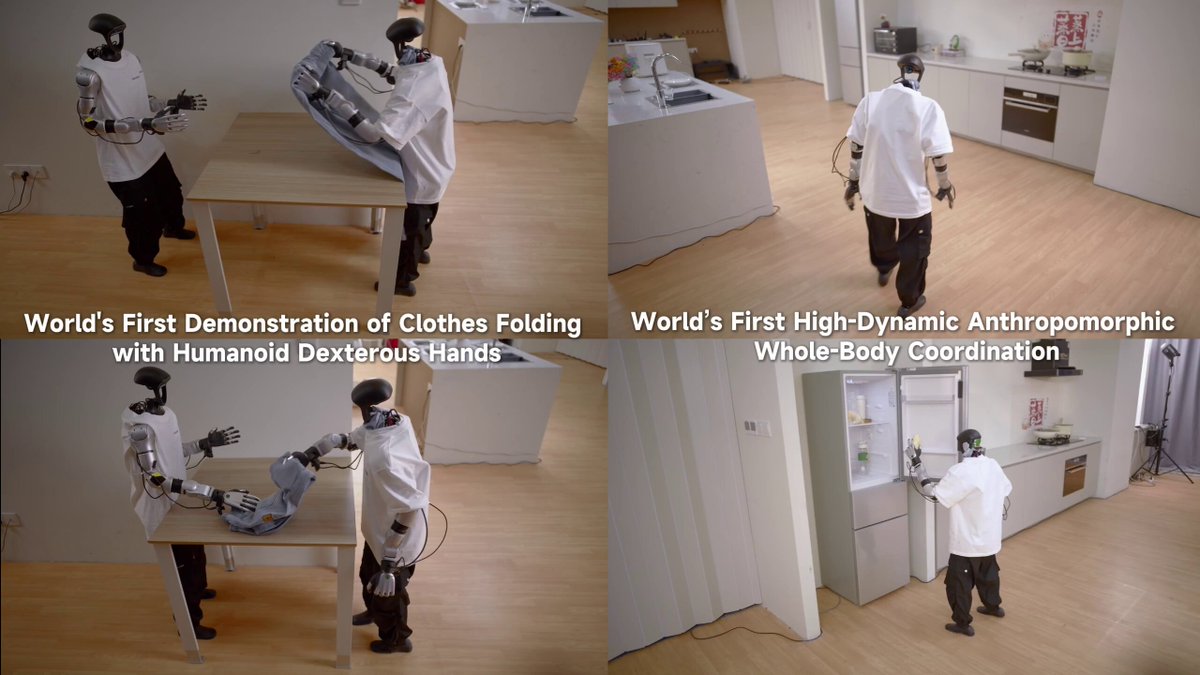
Westlake Robotics has introduced WR1.0, a foundation model for whole-body locomotion and manipulation in humanoid robots. The company says it pairs dynamic, human-like movement with dexterous manipulation, covering coordinated full-body actions and tasks such as folding clothes. WR1.0 is positioned as a step from agile locomotion toward whole-body intelligence, and the team says it will keep pushing the boundaries of what humanoid robots can do.
Mech-Mind demos humanoid autonomous shelf picking in Seoul
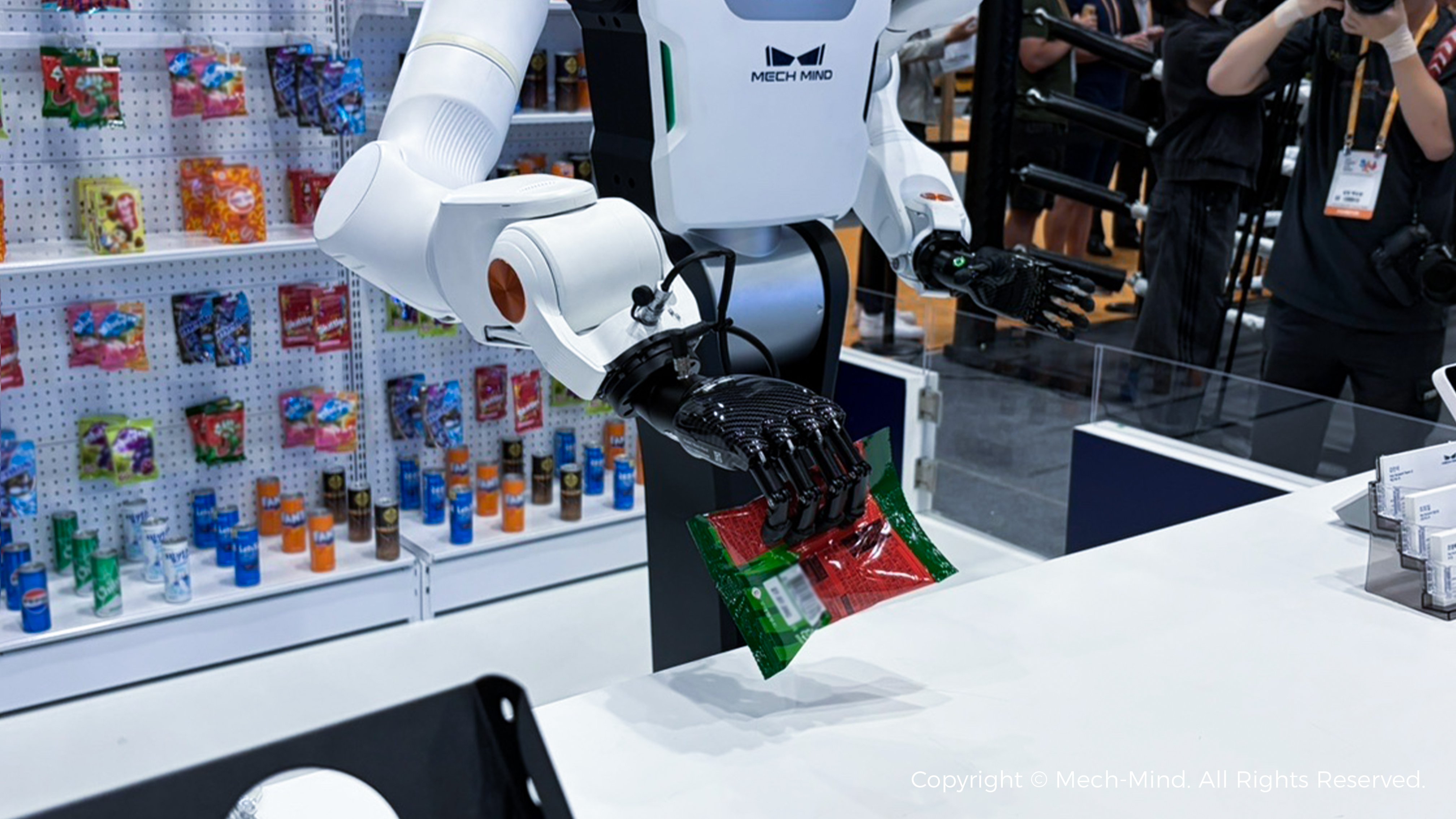
At the 2026 Seoul AI Robot Show, Mech-Mind Robotics presented an autonomous shelf-picking demo for humanoid robots built on its Eye-Brain-Hand system. The demo highlights four capabilities: Eye-Brain-Hand intelligence, which combines perception, task understanding, autonomous planning and precise manipulation; strong generalization for goods that are mixed, randomly placed or hung on hooks; and an end-to-end autonomous workflow.
Why a Single Egg Remains a Bottleneck for Humanoid Robots
As autonomous-driving talent moves into embodied AI, humanoid robots can dance and walk but still struggle to pick up an egg. Leaderobot argues the bottleneck is not motion control but contact-rich manipulation and physical interaction.
CROSSBFM Freezes Source Latent Space to Distill Multi-Robot Behavior in One Hour
Tech Walker reported on October 9 about a paper introducing CROSSBFM, which freezes a source robot's behavior foundation model latent space and uses a unified encoder to treat retargeted data as cross-robot correspondences, distilling multi-robot behavior spaces within an hour. The method aims to bridge separately trained latent spaces that otherwise share no coordinate-to-action relationship.