Live Briefs 2026-10-03 · Full coverage of embodied AI
Light Rare Earth Prices Rise Sharply as Supply-Demand Dynamics Shift
Light rare earth prices, particularly praseodymium-neodymium, have risen significantly since mid-September due to reduced low-priced spot resources and firm quotes from upstream smelters. The price increase highlights the strategic importance of rare earths in new energy vehicles, wind power, and industrial robots.
PCB price hikes transmit smoothly downstream, more industry applications begin to scale
Industry chain research indicates that PCB price increases are transmitting smoothly downstream, with board manufacturers entering a profit recovery window. New growth drivers such as robotics and optical modules are emerging alongside AI computing power, pushing the industry into a 'strong get stronger' phase.
KAIST Four-Legged Robot Completes Marathon on Single Battery Charge
A KAIST team has demonstrated a four-legged robot that completed the Sangju Marathon in South Korea in 4 hours and 19 minutes on a single battery charge. The robot traveled three times as far per charge as existing legged robots, suggesting potential improvements in battery life for legged machines.
ETH Zurich's New Robotic Hand Can Walk, Press Keys, and Move Objects
Engineers at ETH Zurich's Soft Robotics Lab have adapted an off-the-shelf detached robotic hand to crawl, balance, and interact with its environment. TechXplore Robotics reports that the hand can walk, press keys, and move objects on its own, echoing the fictional character Thing.
Skild AI brings its trained robot to life
Skild AI posted a short clip of its robot, saying the machine was brought to life once it was ready. The company, which builds foundation models for robots, gave no further technical detail in the post.

Skild AI brings AlphaGo-style self-play to physical world
Skild AI says it is taking self-play, the method behind AlphaGo, out of games and into the physical world. The company argues self-play can produce emergent, superhuman behavior, and is now applying that idea to robot learning.
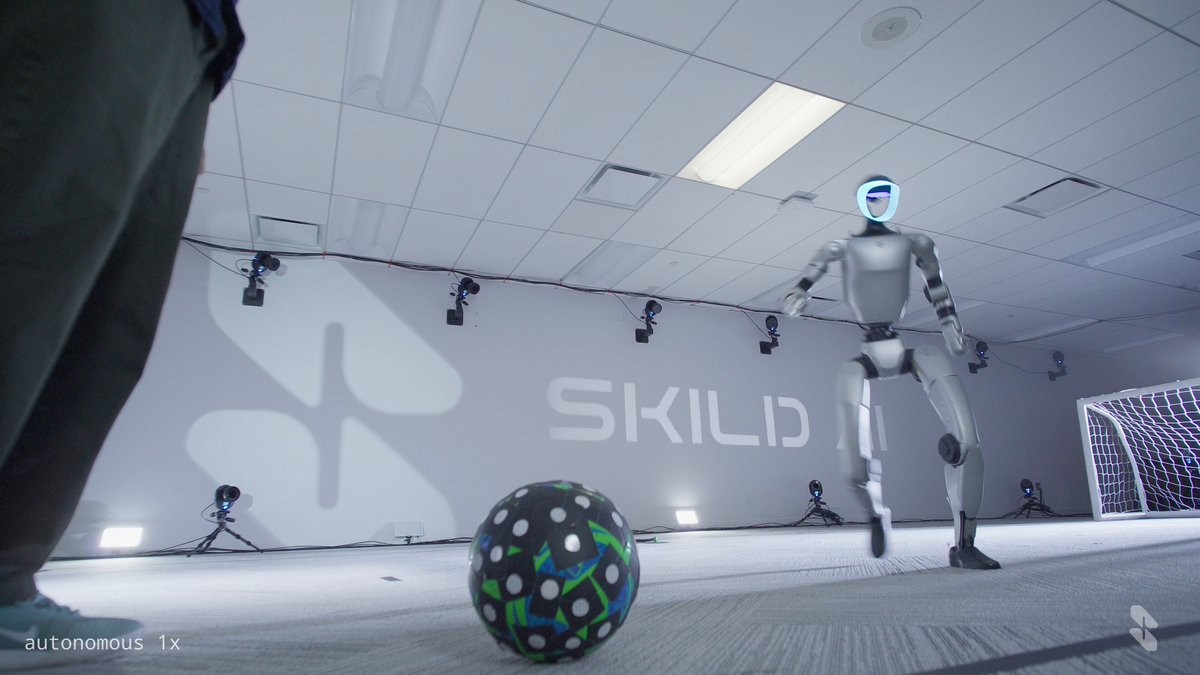
Skild AI trains robot to play football with 140 years of self-play
Skild AI says it trained a robot to play football using self-play. The system went through the equivalent of 140 years of a virtual World Cup during training before the policy was moved onto a real machine.
Agility CTO: data security can't be an afterthought for humanoids
Agility CTO Pras Velagapudi says a robot working in a real facility sees data that must be protected, including faces, address labels and proprietary IP. Once a humanoid leaves the controlled environment, data security can no longer be an afterthought, he argues.

Astribot to debut T1 robot overseas at IROS 2026
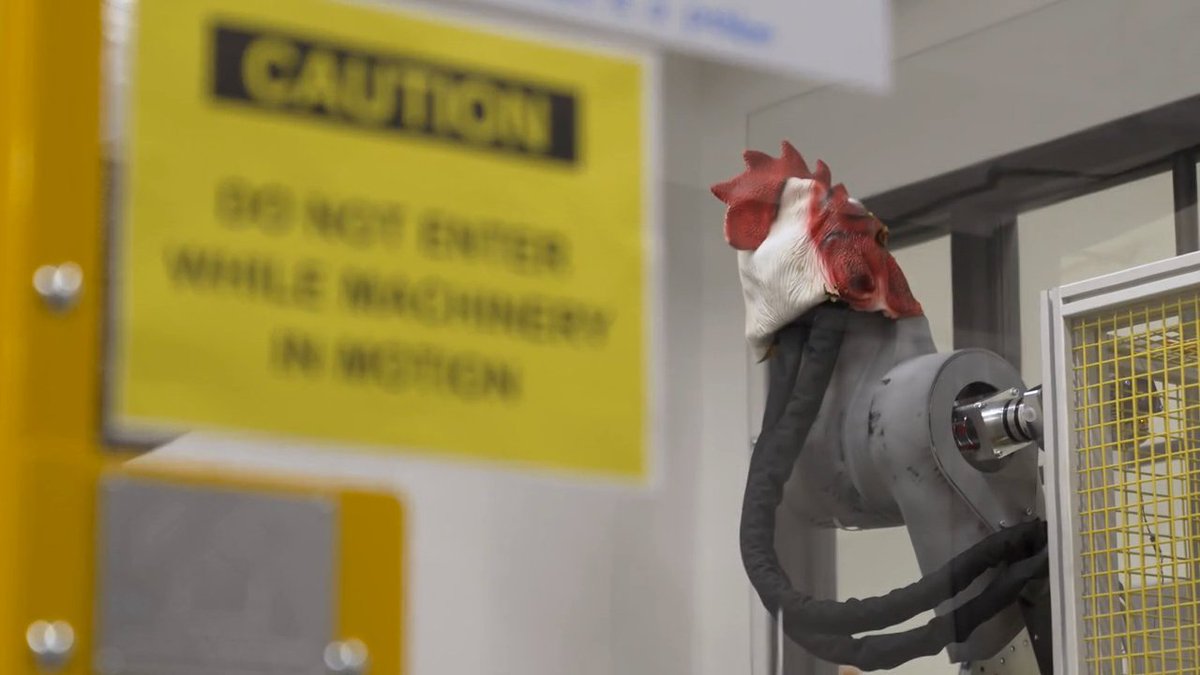
Astribot will attend IROS 2026 in Pittsburgh from September 27 to October 1, marking the overseas debut of its T1 robot, which it calls one platform for endless scenarios. The company will also demo Lumo-2, described as its next world-action model, showing high-precision manipulation live.
Boston Dynamics engineer on Stretch endurance testing
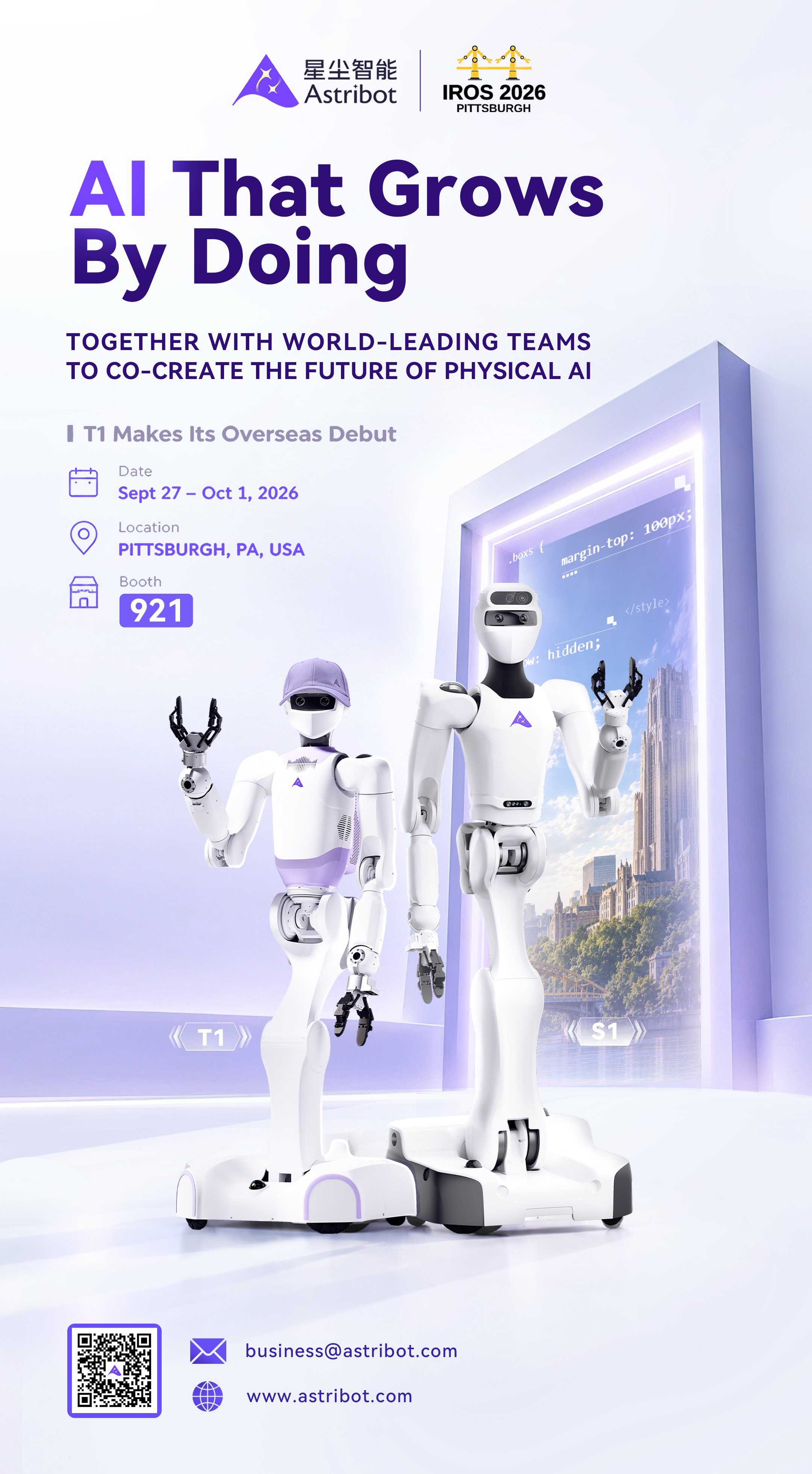
Boston Dynamics mechanical engineer Diane Heinle answers questions about endurance testing for the Stretch robot, explaining how her team simulates years of wear on robot parts during a short time in the lab, and why there are bird heads on the cable testers.
Why China's Robot IPOs Are Slowing Down: What Changed in H2 2026
China's robot IPO window narrowed in H2 2026: 14 companies listed, a STAR Market applicant withdrew, and the test became who pays the revenue.

D-Robotics Completes $400M Series C, Its Third Round in a Year
D-Robotics has completed a $400 million Series C round led by Mirae Asset, with Meituan Strategic Investment, Hefei State Investment, Nanshan Strategic Emerging Investment, and existing investors Hillhouse Venture Capital and 5Y Capital participating. The company has not yet responded to questions about the use of funds or its future plans.
Sanrui Intelligent's CubeMars Robot Joints Target Humanoid Robots, Exoskeletons and Wearables
Sanrui Intelligent's CubeMars brand, launched in 2018, focuses on robot joints used in humanoid robots, exoskeletons and wearables, and has partnered with multiple robot makers worldwide.
Noetix Robotics unveils Boomy humanoid, hits Kickstarter soon
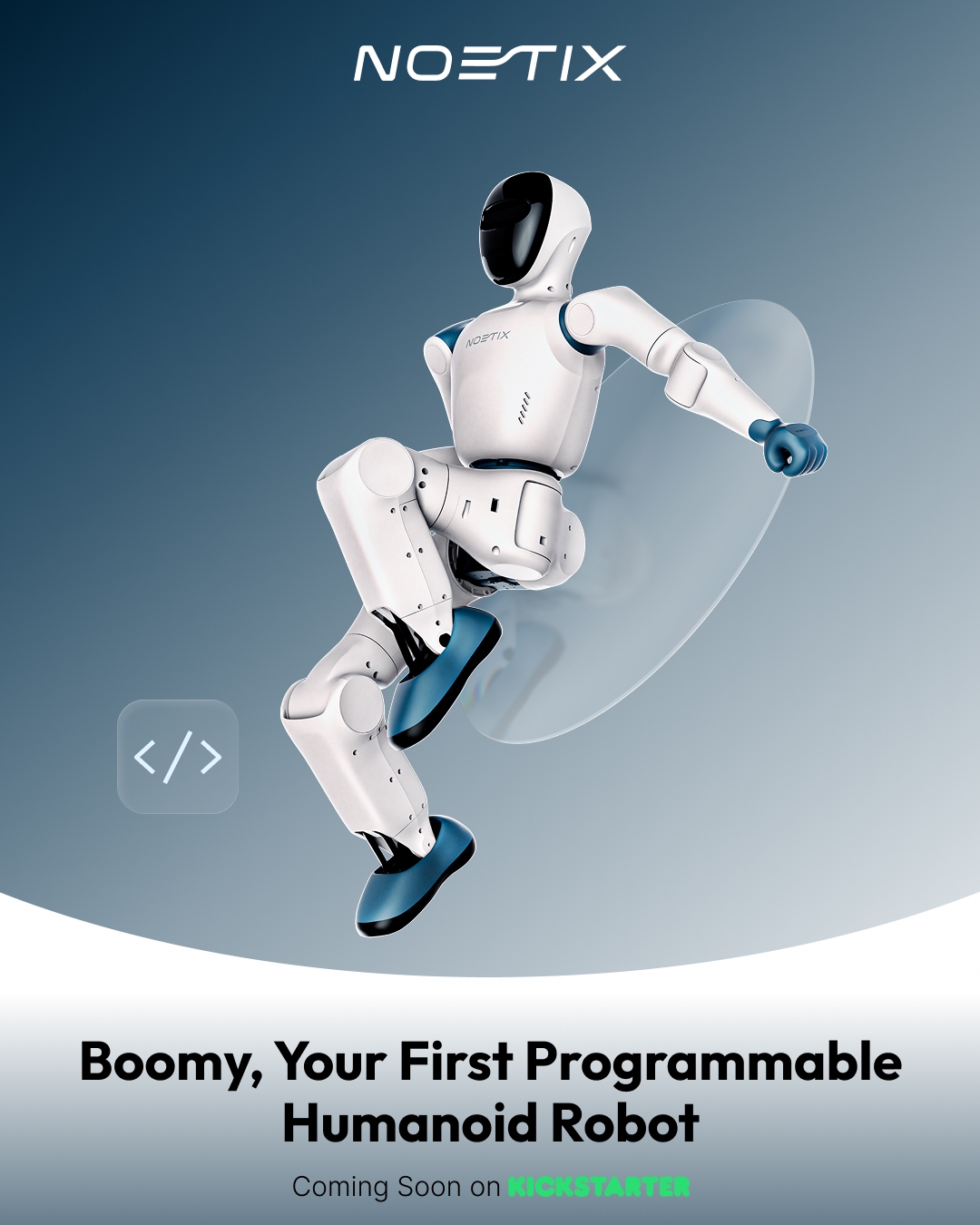
Noetix Robotics has introduced Boomy, a programmable humanoid robot with true bipedal walking, open development, hands-on motion teaching, voice interaction and customizable features. The company says Boomy is built to move, interact and grow with users' ideas, so it can be explored, coded, modded and personalized. It will launch soon on Kickstarter, with demos and development updates to follow.
Lumos Robotics CEO Yu Chao Named to Fortune 2026 40 Under 40
Lumos Robotics announced that founder and CEO Yu Chao has been named to Fortune's 2026 40 Under 40 list. The company said the recognition reflects its different path for Physical AI, grounded in real-world tasks and industrial deployment. At the core is NexCore, its skill evolution engine for Industrial Physical AI, which links real-world tasks, data, models, skills and robotic systems so robots can continuously acquire and improve new capabilities.

Qualcomm to Acquire U.S. Embodied AI Firm Picknik
Qualcomm plans to acquire U.S. embodied intelligence company Picknik, according to a Wallstreetcn flash. The move would expand the chipmaker's reach into robotics software and edge AI.
Qualcomm to acquire PickNik Robotics, pledges to keep MoveIt open-source
Qualcomm Technologies has agreed to acquire PickNik, the developer of the MoveIt manipulation framework, and plans to integrate it with its Dragonwing robotics platforms. Qualcomm says MoveIt 1 and 2 will remain open-source under their existing licenses and community-driven roadmaps.
Lumos Launches Station Lite Real-Robot Validation Platform
Lumos Robotics has launched Lumos Station Lite, a real-robot development and validation platform powered by NexCore. It spans skill development, model deployment, dual-arm execution and task evaluation, helping developers turn embodied AI capabilities into real-world performance. The workflow runs from data to skills, deployment, validation and evolution, aimed at accelerating the industrial embodied AI developer ecosystem.
LimX Dynamics Teases Luna Self-Boxing Feature via OTA
LimX Dynamics has shown an unboxing video for its Luna robot, highlighting a complete accessory set that is ready out of the box. With one tap, Luna can step into and out of its box for intuitive control. The company says the feature will be available soon through an OTA update and invites users to stay tuned.
Humanoid Robots Use Whole-Body AI to Navigate Narrow Gaps and Obstacles
Humanoid robots could assist people in homes, offices, healthcare facilities, and public spaces. Before reliable deployment, they must safely navigate cluttered, dynamic environments using whole-body AI control that coordinates the entire body.
Yale PhD Team's Embodied Startup Bets on Psychological Coach Robots, Avoiding General Humanoids
Shenzhen-based Fanbot Robotics, incubated by Yale University's innovation center, has raised a ten-million-yuan angel round to develop psychological coach robots for students, avoiding the crowded general humanoid robot sector. The startup combines a proprietary multimodal MoodLLM psychological model with companion robots, targeting urgent youth mental health needs amid supportive policy and a fast-growing market.
Kaizhi Data Launches Lighthouse Plan to Gather 1 Million Hours of Embodied AI Data
Kaizhi Data launched the Lighthouse Plan, aiming to build 1 million hours of real-world scenario data with 100 partners in 100 days to support embodied AI training.
FA Robotics and Boyin Hechuang Sign 2,000 Humanoid Force-Control Arm Deal
FA Robotics and Boyin Hechuang have signed a contract for 2,000 humanoid force-control arms. The partnership aims to advance industrial embodied intelligence, with FA providing reliable execution hardware and Boyin contributing intelligent decision-making and software capabilities.
Lens Technology Achieves Small-Batch HDD Glass Disk Shipments, Expands in Embodied AI
Lens Technology announced it has overcome ultra-precision surface polishing barriers, conducted customer validation for HDD glass hard disks, and achieved small-batch shipments. The company also reported deep collaboration with leading customers in embodied intelligence, with cumulative shipments of robot core components ranking among the industry's top.
Massage Robot Debuts in Huizhou, Combining AI Face and Tongue Analysis with Robotic Therapy
A massage robot made its public debut in Huizhou, Guangdong, on September 20, using AI-assisted facial and tongue analysis to generate personalized treatment plans. The system combines 3D vision, force sensing and automated tool changes to perform massage, cupping and shockwave therapy, though experts say fully replicating human tactile judgment remains a challenge.
UCLA's 11-Centimeter Frog Robot Jumps Using Twisted Elastic Rods
Researchers at UCLA and the University of Michigan have developed an 11 cm, 98.2 g frog-inspired robot that stores energy in twisted elastic rods and releases it in sudden jumps. It achieves 2.46 body lengths per second on average across six surfaces and can swim with flexible fins, with design rules scalable to millimeter-scale robots.
Newport Hospital Deploys Rhode Island's First da Vinci 5 Surgical Robot, Fully Donor-Funded
Newport Hospital has become the first in Rhode Island to adopt the da Vinci 5 surgical robot, with the entire cost covered by donations after a year of fundraising. The system will be used for minimally invasive procedures in urology, gynecology, thoracic surgery, and general surgery, while humanoid surgical robots remain in early feasibility studies.
Goldman Sachs Raises Humanoid Robot Forecast to 6.5M, Sees 49% Price Drop
Goldman Sachs has raised its 2035 global humanoid robot shipment forecast from 1.4 million to 6.5 million units and projected average unit prices will fall nearly 49% over ten years. Yet price cuts alone are not enough for scale, as most shipments still go to entertainment and education rather than factories or warehouses.
Musk Predicts 100 Billion Humanoid Robots Within 20 Years
Elon Musk said in a Sept. 23 CCTV Finance interview that everyone could one day own a personal robot. He forecast at least 1 billion humanoid robots in 10 years, 10 billion in 15 years, and 100 billion in 20 years.
Zhongyi Embodied Raises Nearly ¥100M Angel Round to Build Robot Operating System
Zhongyi (Shenzhen) Embodied Technology has closed a nearly 100 million yuan angel round led by Anda Intelligent's controlling shareholder to build an operating-system-level foundation for robots. The company, which does not make robots itself, has also launched a lifecycle service platform aggregating over 40 leading hardware manufacturers.
Stardust OS Hackathon Beijing: 15 Teams Build 10+ Robot Apps in 36 Hours
Stardust Intelligence's Stardust OS Hackathon Beijing concluded with 15 teams producing more than 10 runnable robot applications in 36 hours. The event showcased low-barrier development on the AOS platform, with teams using skill packages and natural-language generation to turn one-sentence requests into deployable robot apps.
Paxini Starts A-Share IPO Tutoring, Valued Above 10 Billion Yuan, Uses Sensor Gloves for Data
Paxini AI Technology has filed for IPO tutoring with the Beijing regulatory bureau of the CSRC, signing an agreement with Guotai Haitong Securities on September 15. The Shenzhen-based tactile sensor company, founded in 2021 and valued above 10 billion yuan, collects real human manipulation data via sensor-filled gloves for training robot dexterous hands and humanoid robots.
Terminator-Style Robot Wins Cage Fight, but a Human Was Controlling It
A 44-second video shows internet personality Frankie LaPenna fighting an EngineAI T800 humanoid in an octagon cage at an event staged by San Francisco robotics company REK, which calls it the first human-versus-humanoid robot fight. The robot, styled to look like a Terminator, was teleoperated by a human, so the bout demonstrated physical capability under remote control rather than autonomous fighting skill.
Ouka Zhihai Completes Series C Round, Nears 300 Million Yuan in 2026 Funding
Ouka Zhihai, a sea-surface embodied AI company, has closed a Series C round in July 2026 led by Xigao Investment, bringing its cumulative funding this year to nearly 300 million yuan.
Guangdong Deploys Over 2,000 Humanoid Robots in Factories, Aiming for 3,000 by Year-End
Guangdong province has already deployed more than 2,000 humanoid robots in manufacturing enterprises, with the number expected to exceed 3,000 by the end of 2026. At the second Guangdong AI Application Matchmaking Conference, Cross-Dimensional Intelligence signed an agreement with Bestar to bring robots into new energy factories, while the province released a list of 388 AI application needs in manufacturing.
Robot Shop Assistants to Staff Huacheng Study AI Kiosks in Guangzhou This Year
Guangzhou Daily Press Group's Information Times and Cloudbutterfly Technology signed an agreement to deploy the Huacheng Study AI embodied intelligence kiosk, expected to launch within the year. The robot shop assistant will sell books, drinks and Guangzhou cultural products, extending embodied AI from retail into routine community services.
CRRC Unveils World's First Metro Train with Embodied AI in Berlin
CRRC launched a green-intelligent digital metro train at InnoTrans in Berlin, calling it the first metro to use embodied intelligence. The train uses multi-source sensors for autonomous perception, cuts weight by about 18 percent, and was shown alongside a hydrogen fuel cell locomotive and an intelligent flat car.
Leju and Hunan University Establish Joint R&D Center for Industrial Embodied AI
Leju Robotics and Hunan University have inaugurated a joint R&D center for industrial embodied AI, focusing on three key areas: wide-area multimodal perception, embodied AI large models, and dexterous manipulation. The center aims to accelerate the application of embodied intelligence in manufacturing production lines.
WorldSkills 2024 Opens with Humanoid Robot Dances, Director Recalls 50m Safety Distance
The 48th WorldSkills Competition opened in Shanghai with a ceremony featuring full-size humanoid robots dancing with humans. Director Hou Jie revealed that in early rehearsals, dancers wore helmets and kept a 50-meter distance from the robots, which have since been refined for close interaction.
UBTech Releases Humanoid Robot Ethics White Paper, Proposes Three Protection Goals
UBTech released a Humanoid Robot Technology Ethics Governance White Paper, proposing a full-process framework for ethical risk management. It introduces three protection goals—controllable action, appropriate anthropomorphism and bounded interaction—and a lifecycle governance model with nine stages.
Unitree Falls 55% From Peak: Humanoid IPOs Now Face the Repeat-Order Question
Unitree's STAR Market stock has retreated about 55% from its debut peak, cooling talk of a regulatory freeze on humanoid robot IPOs — exchanges say they are screening filing quality, not closing the door. Filings and tender data show most humanoid revenue still comes from education and government, leaving repeat industrial orders as the test for the next wave of listings.
Zigong Signs Sodium Battery Deal for 10,000 Humanoid Robots
Zigong has signed a sodium battery intent agreement covering 10,000 humanoid robots, 1,000 intelligent simulation dinosaurs, 100 unmanned vehicles, and 10 energy storage stations. The deal extends sodium-ion batteries from energy storage and EVs into new application categories, leveraging lower cost and higher safety despite lower energy density.
Humanoid Robots Reach $1,400–$2,800, but Home Use Is Just the First Step
Humanoid robots aimed at personal and family use have appeared in Shanghai at prices of roughly $1,400–$2,800, pushing the technology from labs toward consumers. But executives and researchers say that bringing one home is only the first step, with safety, usefulness, and trust still to be earned.
RealMan and Zhuxin IoT Launch "Silicon-Based Duty" Robots for Power Distribution Rooms
RealMan Intelligent Technology and Zhuxin IoT have jointly launched "Silicon-Based Duty," a power O&M brand that places RealBOT series robots in live distribution rooms. Using RealMan's GLN remote operations network, certified operators direct on-site robots for switching, meter reading and inspection, closing the gap between platform alerts and on-site action.
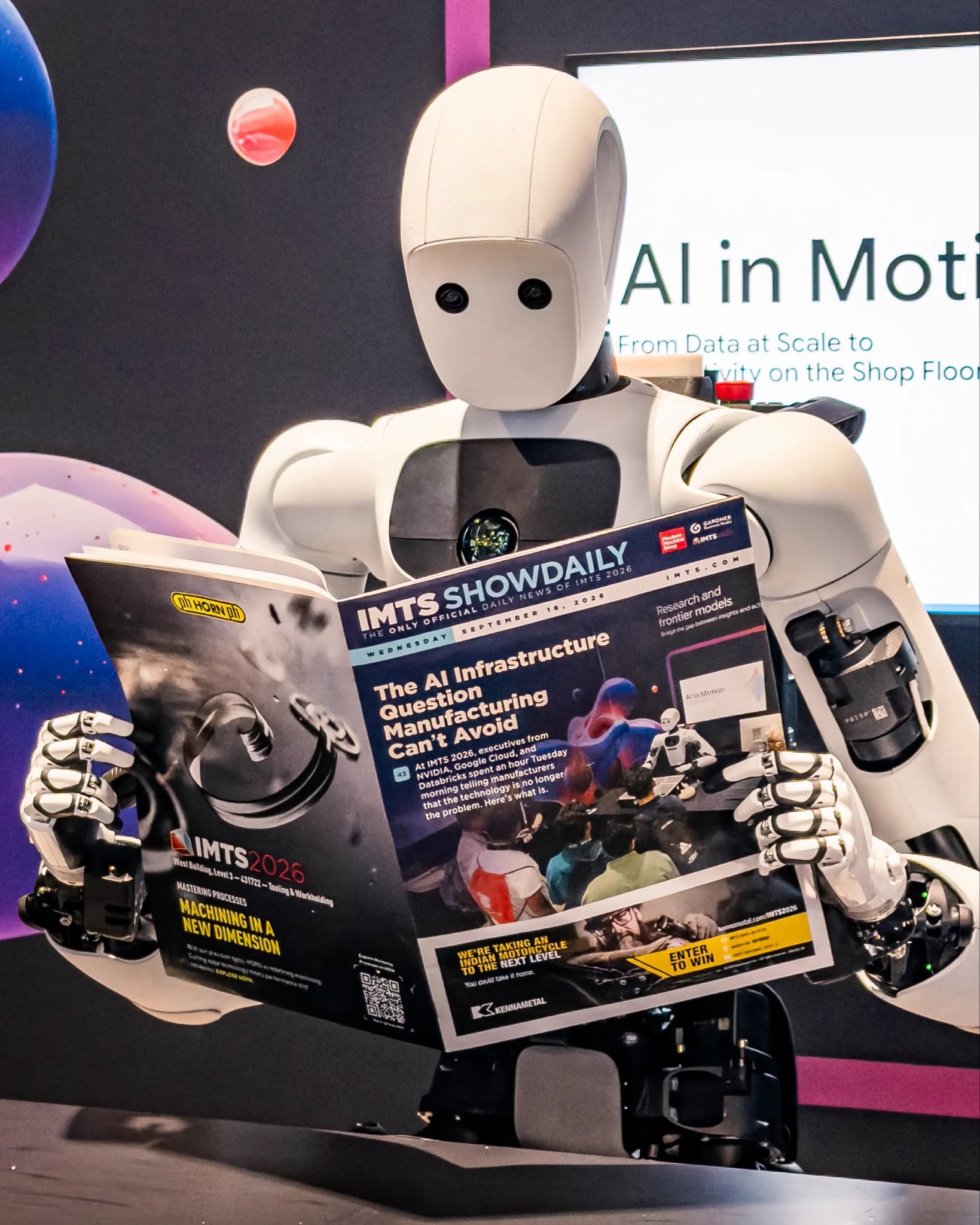
Apptronik's Apollo lands front-page manufacturing cover
Apptronik said its humanoid robot Apollo appeared on a front-page cover story tied to a manufacturing industry event. The company called the week incredible, saying its booth met industry professionals and the next generation of workers, and thanked Chicago.
Apptronik CEO urges US robotics supply chain, Texas build-out
Apptronik CEO Jeff Cardenas appeared on Fox Business with host Lauren Simonetti to make the case for a U.S. robotics supply chain, saying the company wants to build it in Texas. Apptronik is a Texas-based humanoid robot developer.